
US Intensifies Anti-China Efforts in Latin America with Focus on Chile
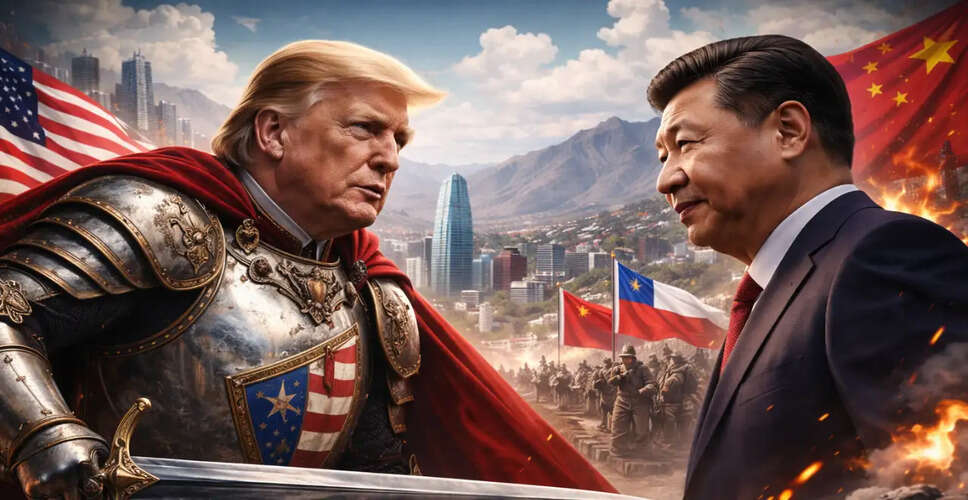
US Takes Action Against Chinese Influence in Chile
The Trump administration has escalated its campaign against China in Latin America, recently targeting Chile ahead of a regional summit in Miami. The United States has enacted visa restrictions on three Chilean officials linked to a Chinese-funded undersea digital cable initiative, citing concerns over national security. The US has cautioned that Chile's failure to scrutinize strategic investments could jeopardize its visa waiver program. This move is perceived as a clear warning for Chile to limit Chinese investments in critical sectors, according to a report by Bloomberg.
This decision reflects a notable shift in US foreign policy as Trump aims to reassert American influence in the Americas and counter China's expanding economic presence, especially in areas like infrastructure, port development, energy, and connectivity. Analysts suggest that the message to Latin American governments is unmistakable: they must navigate their economic ties with China while maintaining relations with the US.
Chile finds itself in a complex position, as China remains its largest trading partner and investor, particularly in commodities and energy, while the US continues to be a vital financial ally. The current tensions arise during a sensitive political transition in Santiago, with regional leaders preparing for discussions in Miami that could shape the future of US-Latin America relations.
A similar trend is observable throughout the region. Whether it involves ports in Panama or Peru, or technology and energy projects in Argentina and Brazil, governments are increasingly pressured by both the US and China. The Chilean digital cable project exemplifies how infrastructure, once viewed solely as an economic matter, has become central to a new geopolitical landscape where technology, trade, and security are deeply interconnected.