
U.S. Indicts Raúl Castro for 1996 Plane Shootdown: A Historic Legal Move
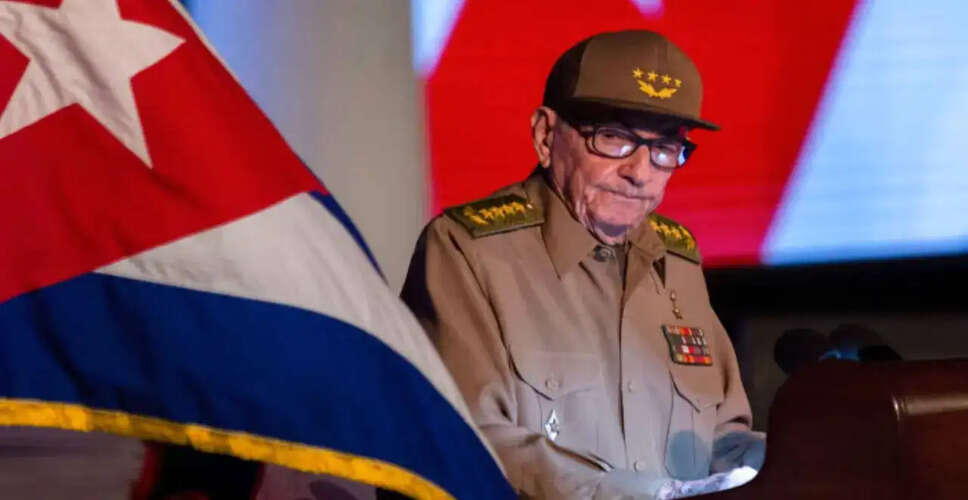

Historic Indictment of Raúl Castro
In a significant legal development nearly 30 years after the tragic downing of two civilian aircraft by Cuban military jets, U.S. authorities have taken a bold step. On Wednesday, a federal grand jury indicted 94-year-old former Cuban leader Raúl Castro on murder charges linked to the 1996 incident. This announcement was made by acting U.S. Attorney General Todd Blanche at Miami's Freedom Tower, a site of great importance for Cuban exiles. Blanche received enthusiastic applause from the Cuban-American community present, including relatives of one of the four victims who lost their lives in the attack. "The United States government has not forgotten these innocent men who were shot out of the sky," Blanche stated.
Background of the 1996 Incident
The events trace back to February 1996 when a Cuban MiG-29 fighter jet shot down two planes operated by Brothers to the Rescue, a Miami-based group of exiles. These planes were conducting surveillance over the Florida Straits, searching for Cuban refugees attempting to reach the U.S. by boat. The attack resulted in the deaths of four individuals, three of whom were U.S. citizens and one a permanent resident, all part of the Cuban exile community. Cuba has consistently claimed that the planes entered its airspace and were part of a larger effort to undermine the communist regime, a narrative that the U.S. has firmly rejected.
Details of the Charges Against Castro
Raúl Castro faces a total of seven charges: four counts of murder, one count of conspiracy to kill U.S. nationals, and two counts of aircraft destruction. At the time of the incident, Castro was the defense minister of Cuba, making him responsible for the military's actions. Alongside Castro, five co-defendants have also been indicted. These charges are linked to a previous criminal case initiated in 2003 against three Cuban military officials, who were never extradited to face justice. This case had remained inactive for over two decades until the recent announcement revived it. "This is an indictment, in some ways, 30 years in the making," Blanche remarked.
Who Is Raúl Castro?
Raúl Castro has spent much of his life in the shadow of his more renowned brother, Fidel Castro, who led Cuba's communist revolution and ruled for nearly fifty years. Raúl officially became president in 2008 after Fidel's health deteriorated and remained in power until 2018. Despite stepping down, Raúl continues to wield significant influence in Cuba, now at the age of 94, residing on the island.
Possibility of a Trial
The pressing question remains whether Castro will ever face trial. Blanche did not clarify how the Justice Department intends to bring Castro to the U.S., stating only that "we expect that he will show up here by his own will or by another way and go to prison." Cuba is not obligated to extradite him, and the Cuban government has shown no willingness to cooperate. President Miguel Díaz-Canel dismissed the indictment on social media, labeling it as "a political maneuver, devoid of any legal foundation, aimed solely at padding the fabricated dossier they use to justify the folly of a military aggression against Cuba."
Context of the Indictment
This indictment is part of a broader strategy by the Trump administration to exert pressure on Cuba, particularly following the capture of Venezuelan President Nicolás Maduro in January. Venezuela has been a vital oil supplier to Cuba, and Maduro's ousting has led to a severe humanitarian crisis on the island, characterized by prolonged blackouts and economic collapse. Washington has also threatened heavy tariffs on nations that continue to export oil to Cuba, intensifying the economic pressure. Some analysts suggest that Trump has considered military intervention in Cuba as his approval ratings face challenges due to the Iran conflict and domestic economic issues. Whether the indictment of Castro is a precursor to such actions or merely a symbolic gesture aimed at the influential Cuban-American community remains uncertain.
Looking Ahead
Blanche indicated that further charges could be forthcoming, noting that investigations of this nature are "never over" and that additional defendants might still be implicated. For the Cuban-American community in Florida, this indictment signifies a long-awaited acknowledgment, regardless of its eventual outcome. Conversely, for the Cuban government, it represents a provocation. The global community is increasingly attentive to the actions the Trump administration may take regarding Cuba in the future.