
US Increases Pressure on Iran's Drone Operations with $15 Million Rewards
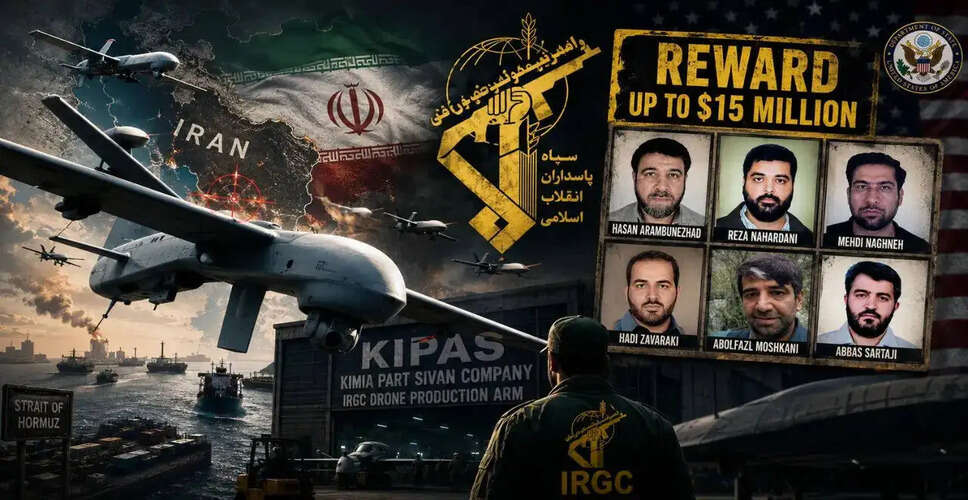

US Targets Iran's Drone Production Network
The United States has ramped up its efforts against Iran's military drone capabilities by offering rewards of up to $15 million for information regarding six individuals linked to the drone production network of the Islamic Revolutionary Guard Corps (IRGC). This announcement was made through the State Department's Rewards for Justice program, which identified these individuals as allegedly associated with Kimia Part Sivan Company (KIPAS), recognized by US authorities as the drone manufacturing division of the IRGC Quds Force.
Help us put a dent in the IRGC’s revenue stream. Send us a tip on these bad boys, who manage this drone manufacturer. pic.twitter.com/gwt0jyUqfx
— Rewards for Justice (@RFJ_USA) May 14, 2026
The State Department claims that these six individuals played significant roles in the testing, development, and supply of drones associated with Iran's military network.
Identifying the IRGC's Key Figures
In a social media update accompanying the announcement, the Rewards for Justice program encouraged the public to share information about the members, associates, and financial activities of this network. The post stated, “Help us put a dent in the IRGC’s revenue stream,” referring to the alleged operators of the drone manufacturer. The individuals named by US officials include Hasan Arambunezhad, Reza Nahardani, Mehdi Naghneh, Hadi Zavaraki, Abolfazl Moshkani, and Abbas Sartaji.
Washington claims that KIPAS is a vital operational element supporting Iran's unmanned aerial systems program, which US officials have accused Tehran of using to bolster proxy groups and military actions throughout West Asia.
The Importance of Iran's Drone Program to the US
Iran's drone capabilities have emerged as a significant security concern for the United States and its allies in the region over recent years. Iranian-manufactured drones and loitering munitions have increasingly been spotted in various conflict zones, including Iraq, Syria, Yemen, and the wider Gulf area. Western intelligence agencies and CENTCOM officials have consistently accused Iran and the IRGC of providing unmanned systems, components, and operational training to allied militant factions across the Middle East.
Despite these accusations, Tehran has maintained that its military program is a legitimate form of national defense. The latest actions by the US reflect heightened anxiety regarding the expanding scope of Iran's drone manufacturing capabilities and its ability to function through complex procurement and front-company networks. The IRGC's Quds Force, responsible for external operations, has long been accused by the US of orchestrating military and intelligence activities that bolster Iran's regional influence. American officials assert that revenues from military exports and defense-related production networks finance broader IRGC operations abroad.