
US Implements New Tariffs on Imports from 60 Countries Amid Global Backlash

Overview of New Tariffs
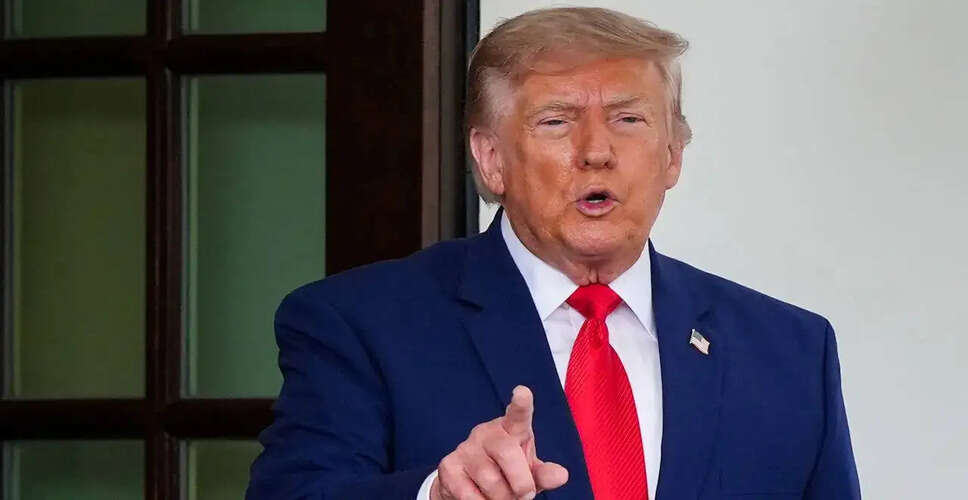
New Delhi: The administration of President Donald Trump announced on Friday the introduction of new tariffs of 10% and 12.5% on imports from 60 trading nations, including the European Union (EU), China, India, and Japan. This decision has sparked significant reactions from various governments worldwide. The U.S. justified these tariffs by claiming that the affected nations have not adequately addressed the importation of goods produced with forced labor, a claim that many of these countries have disputed.
Details of the Tariff Structure
The newly imposed tariffs replace a temporary 10% global tariff that lapsed at 12:01 a.m. EDT on Friday, allowing the White House to re-establish a significant portion of Trump's global tariff framework after the U.S. Supreme Court invalidated his previous "reciprocal" tariffs in February. These tariffs, enacted under Section 301 of the U.S. Trade Act of 1974, encompass approximately 99.4% of U.S. imports, although they exclude certain products such as oil, gas, fertilizers, specific food items, aircraft and parts, critical minerals, and goods already subject to Section 232 national security tariffs like steel, aluminum, copper, and automobiles.
US Trade Representative's Defense
U.S. Trade Representative Jamieson Greer defended the tariffs, stating, "The United States has maintained a forced labor import ban for nearly a century and enforces it rigorously. It is high time for our trading partners to do the same." He emphasized that this action aims to address both human rights violations and trade practices that distort market conditions, ultimately benefiting workers globally.
Tariff Rates by Country
Which Countries Face 10% And Which Face 12.5%?
The U.S. has imposed a 10% tariff on imports from countries such as Argentina, Bangladesh, Britain, Cambodia, Canada, Ecuador, El Salvador, Guatemala, Honduras, India, Indonesia, Jordan, Malaysia, Mexico, Pakistan, Sri Lanka, and Trinidad and Tobago. These nations either have bans or plans to ban forced labor imports but are not effectively enforcing them. Meanwhile, the European Union, Taiwan, Japan, South Korea, and Switzerland face tariffs that, when combined with existing most-favored-nation tariffs, total either 10% or 12.5%. The remaining 38 countries, including China and Vietnam, are subjected to a 12.5% tariff due to insufficient action against forced labor-linked imports or being under greater scrutiny. China has consistently denied U.S. allegations regarding the treatment of Uyghur minorities.
Reactions from Trading Partners
Trading Partners Push Back
The announcement prompted immediate backlash from several trading partners. China expressed its opposition to unilateral tariffs, asserting that trade wars are detrimental to all parties involved. Australia and Brazil labeled the tariffs as "unjustified" and indicated their intention to seek their removal, while Norway stated there was "no basis" for the duties. Canada, which faced separate tariffs on $20 billion worth of goods earlier this week, took a more diplomatic approach, with Trade Minister Dominic LeBlanc stating, "We will continue engaging constructively with the United States on this matter, as well as other outstanding issues, over the coming weeks to the mutual benefit of our citizens." The European Commission maintained a relatively conciliatory stance, noting that the latest duties align with tariff commitments agreed upon in the EU-U.S. Joint Statement.
Legal Basis for the Tariffs
Why The US Is Imposing The Tariffs
The latest tariffs represent the Trump administration's first significant attempt to reinstate broad-based tariffs following the Supreme Court's decision to overturn last year's reciprocal tariff regime. By utilizing Section 301 of the Trade Act of 1974 instead of emergency powers, the administration has chosen a legal pathway that has withstood previous judicial scrutiny. Reports indicate that Trump administration officials have communicated to their Chinese counterparts that the U.S. aims to restore second-term tariffs on Chinese goods to the 20% level agreed upon during the November 2025 trade truce with President Xi Jinping, without exceeding that limit.