
US Forces Intercept Sanctioned Oil Tanker in Indian Ocean
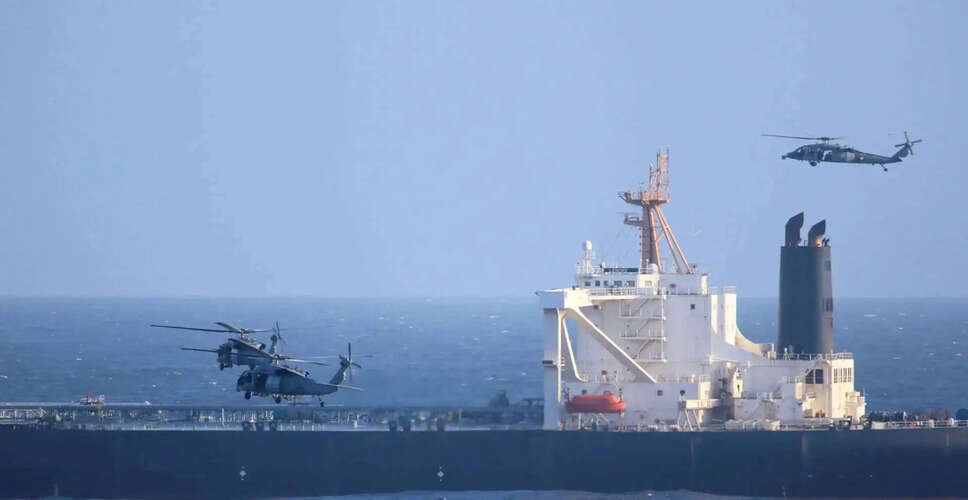

US Military Action Against Oil Smuggling
In a recent operation, US forces successfully intercepted the stateless oil tanker Davina in the Indian Ocean. This operation was confirmed by the US military's Indo-Pacific Command, which also released footage of the boarding of the tanker, suspected of transporting Iranian crude oil. This action aligns with the US naval blockade in the Strait of Hormuz, aimed at restricting maritime traffic to and from Iranian ports. The Indo-Pacific Command stated, “Overnight, U.S. forces executed a maritime interdiction and right-of-visit boarding of the sanctioned stateless vessel MT DAVINA located in the Indian Ocean within the INDOPACOM area of responsibility. We will persist in global maritime enforcement to disrupt illicit networks and interdict vessels providing material support to Iran, wherever they operate,” in a post on X.
Overnight, U.S. forces carried out a maritime interdiction and right-of-visit boarding of the sanctioned stateless vessel MT DAVINA located in the Indian Ocean within the INDOPACOM area of responsibility. We will continue global maritime enforcement to disrupt illicit networks… pic.twitter.com/7sNPNx0doN
— U.S. Indo-Pacific Command (@INDOPACOM) June 5, 2026
The US military emphasized that international waters cannot serve as a refuge for sanctioned entities. They reiterated their commitment to preventing illicit actors and their vessels from operating freely in maritime areas. The Davina was sanctioned by the US Treasury in 2024 for allegedly transporting oil from Iran to China, as reported by AFP.
This supertanker has a capacity of up to two million barrels of crude oil and was last tracked near Sri Lanka's southern coast on June 5, according to MarineTraffic data. Since the onset of the conflict in the Middle East on February 28, following US and Israeli airstrikes on Tehran, Iran's Islamic Revolutionary Guard Corps (IRGC) has effectively blockaded the vital Strait of Hormuz. In retaliation, the US initiated a naval blockade in this critical waterway in April. Prior to the conflict, the Strait of Hormuz was responsible for 20% of the global trade in crude oil and liquefied natural gas.