
US Fighter Jet Downed: Implications for Iran's Air Defense Capabilities
Overview of the Incident
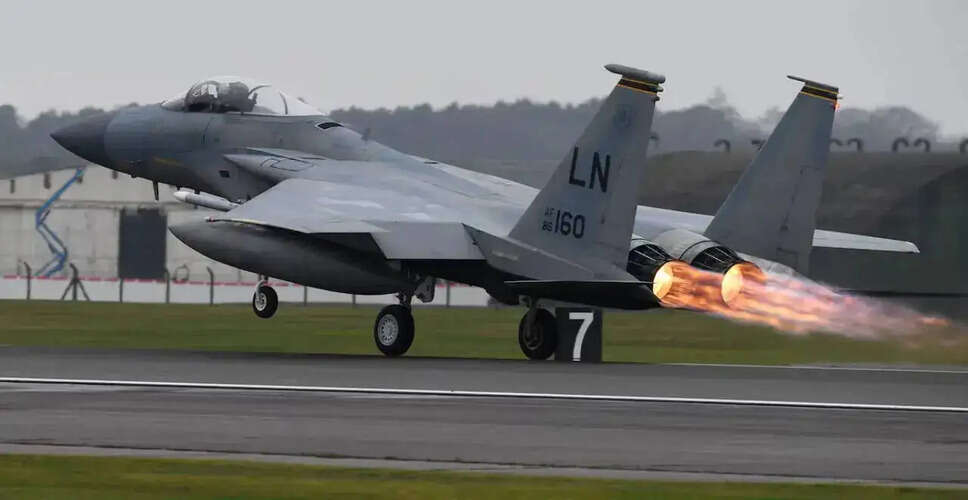
For several weeks, US officials maintained that American forces had complete control over Iranian airspace. However, the recent downing of an American F-15E fighter jet has raised questions about Iran's capabilities. Following the incident, Tehran quickly claimed responsibility, with the Khatam al-Anbiya joint military command announcing via state media that a newly developed air defense system was used to bring down the US aircraft. A spokesperson for the command expressed confidence that Iran would soon achieve "full control" over its airspace, according to reports from Reuters. This incident marks the first confirmed loss of an American combat aircraft to enemy action since the conflict began on February 28, during which the US military has targeted nearly 12,300 locations within Iran.
Possible Weapons Used by Iran
The Weapon Iran May Have Used
Two main theories have emerged regarding the method used to down the jet. The New York Times suggested that Iran might have employed the "Third Khordad," a domestically produced medium-range surface-to-air missile system, to engage the aircraft. This system has been part of Iran's arsenal for several years and is designed to target aircraft at considerable distances and altitudes. The second theory, which raises concerns for US military analysts, posits that Iran may have utilized passive infrared detection technology instead of traditional radar. This distinction is crucial, as passive infrared systems do not emit radar signals, meaning American jets, designed to detect and evade active radar, would have been unaware they were being tracked.
Implications for US Military Strategy
Hidden, Not Destroyed
The downing of the F-15E has sparked a broader discussion about the extent to which Iran's military capabilities have been diminished by ongoing US and Israeli strikes. President Trump has frequently claimed that American forces have dismantled significant portions of Iranian military infrastructure. Defense Secretary Pete Hegseth went further, asserting that the US had achieved "total air dominance" over Iran. However, the recent events have complicated these claims significantly.
Federico Borsari, a non-resident fellow at the Center for European Policy Analysis, noted that Iran has developed a strategy focused on concealment. He stated, "Iran has been basing its resiliency on underground missile cities and tunnels and bunkers everywhere." It is plausible that some of Iran's air defense systems remain operational and hidden across various locations in the country. US intelligence reports have indicated that even facilities that appear damaged after airstrikes have been quickly restored to operational status, sometimes within hours.
Iran's Ongoing Military Activities
What Iran Has Been Doing
The downing of the F-15E did not occur in isolation. In recent weeks, Iran has continued to launch ballistic missiles and drones targeting Israel and Gulf nations. American aircraft have been destroyed on the ground in Saudi Arabia, resulting in injuries to around two dozen US troops. On the same day the F-15E was shot down, Iran targeted a power and water desalination facility in Kuwait. This pattern suggests that despite the damage it has sustained, Iran retains a significant capacity to retaliate.
Until this incident, US and Israeli forces had operated in Iranian airspace with minimal resistance. No American combat aircraft had been lost to enemy fire throughout the conflict, although several had been downed due to friendly fire. This situation changed dramatically in a single engagement, and the exact methods Iran employed to achieve this remain only partially understood. Whether this incident is an anomaly or indicative of a more robust Iranian air defense capability is a question that US military planners will need to address moving forward.