
US Court Overturns Trump's Tariff Strategy, Citing Legal Overreach

Court Ruling on Tariffs
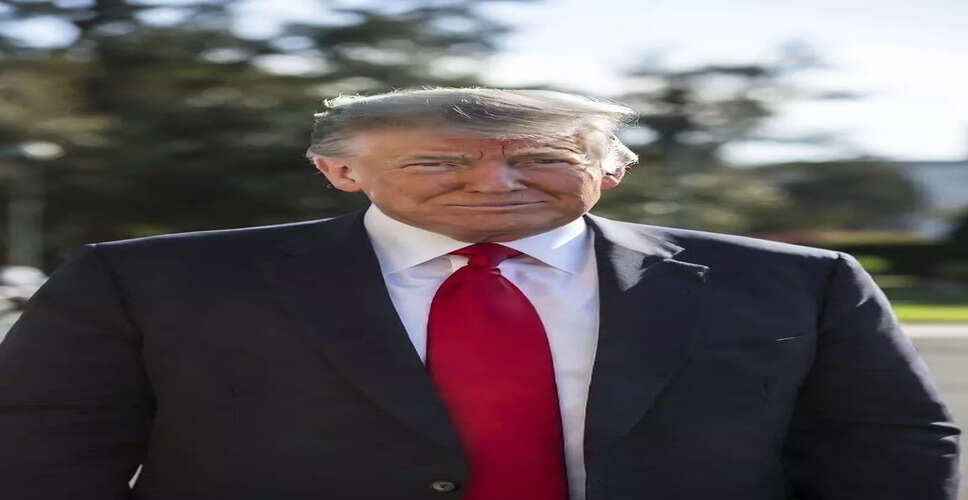
A file image of US President Donald Trump (Photo: @itsrosesm/X)
Washington, May 8: A federal trade court in the United States has invalidated President Donald Trump’s recent attempt to impose global tariffs, determining that the administration overstepped its legal boundaries under a 1974 trade statute while trying to enforce a 10% surcharge on imports.
In a decision rendered by a 2-1 vote, the US Court of International Trade concluded that the Trump administration could not justify the tariffs based on broad trade and current account deficits as outlined in Section 122 of the Trade Act of 1974.
The judges clarified that the legislation was intended to address specific crises related to the international monetary system from the 1970s, rather than contemporary trade deficits.
Judges Mark A. Barnett and Claire R. Kelly noted that Trump’s declaration “fails to assert that those required conditions have been satisfied.”
Following the Supreme Court's earlier decision to nullify his previous tariff strategy under emergency powers, Trump introduced these tariffs in February under Section 122, which permits temporary import surcharges of up to 15% for a period of 150 days.
The court indicated that the administration's reliance on current account and trade deficits was inappropriate, as it did not align with the narrower definition of “balance-of-payments deficits” that Congress intended when the law was enacted in 1974.
“Instead of identifying ‘balance-of-payments deficits’ as originally defined in 1974, the Proclamation depends on current account deficits and references to ‘a large and serious trade deficit,’” the majority opinion stated.
The judges cautioned that endorsing such a broad interpretation could grant presidents unchecked authority over tariffs.
“An expansive interpretation of the statute could raise non-delegation issues, leading to constitutional questions,” the ruling emphasized.
The decision favored two importers, Burlap and Barrel and toy manufacturer Basic Fun, along with the State of Washington, while dismissing claims from several other Democratic-led states due to lack of standing.
Judge Timothy Stanceu dissented, arguing that the court should not question the President’s economic decisions or narrowly define the measurement of balance-of-payments deficits.
This ruling is anticipated to be appealed to the US Court of Appeals for the Federal Circuit and may eventually reach the Supreme Court.
In February, shortly after the Supreme Court invalidated his previous tariffs under the International Emergency Economic Powers Act, Trump expressed his frustration with the justices during a White House briefing.
“We’re going forward,” Trump stated at that time. “We will be able to take in more money.”
Trump defended Section 122 as one of several “very powerful alternatives” available to him following the Supreme Court's rejection of his earlier tariff strategy.
The recent ruling comes amid increasing legal and political scrutiny regarding Trump’s use of executive power in trade matters. Critics, including some within the Republican Party, have contended that Congress — not the executive branch — possesses constitutional authority over tariffs and trade policy. Senate Republican leader Mitch McConnell previously remarked that utilizing emergency powers “to bypass Congress in imposing tariffs” was unlawful.