
US Considers Special Operations to Target Iran's Nuclear Program
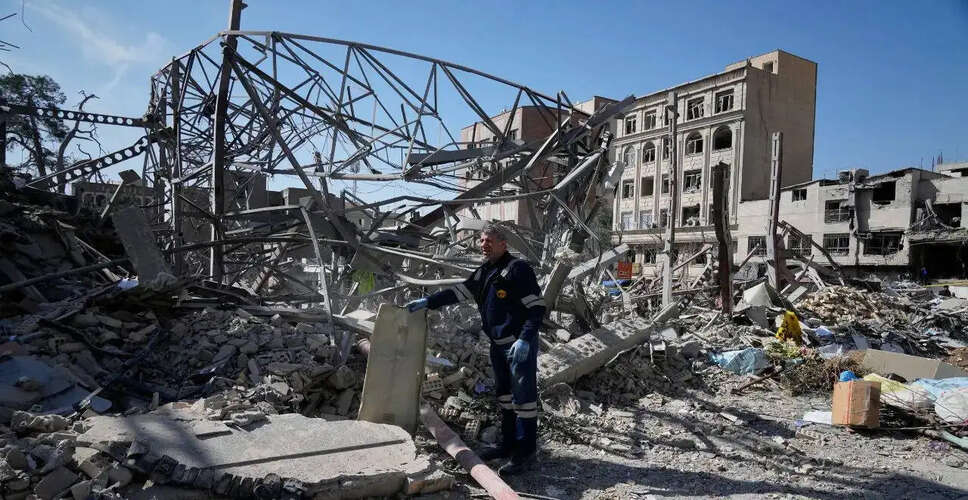
Potential Military Actions Against Iran's Nuclear Facilities
As the Trump administration deliberates on escalating military actions against Iran, officials and analysts suggest that one strategy could involve deploying American special operations forces to capture or neutralize critical components of Iran's nuclear program. A report from Semafor indicates that this plan, which has been in development for years by the United States Central Command and discussed with Israeli officials, would involve sending elite units into Iranian territory to secure or dismantle nuclear materials and facilities.
This option is part of various contingency plans that may be considered if the US and Israel shift their focus from targeting Iran's military capabilities to directly addressing its nuclear infrastructure, according to military experts and sources familiar with the planning. One potential unit involved could be the US Army's covert special missions unit, Delta Force. Jonathan Hackett, a former Marine Corps interrogator and expert in special operations, noted that Delta Force has long prepared for missions related to weapons of mass destruction.
"Delta Force has been trained for counter-WMD missions, which include operations to secure loose nuclear materials or centrifuges," he explained. "While they haven't frequently executed such missions, they are proficient and prepared for them. This option exists, though it may not be widely recognized in the media," he added. The renewed emphasis on Iran's nuclear capabilities follows earlier claims by Trump that Iran's nuclear facilities had been "obliterated." Despite these assertions, Iran's nuclear program continues to be a significant concern for Washington and its allies, with preventing Iran from acquiring nuclear weapons being a stated priority of the administration.
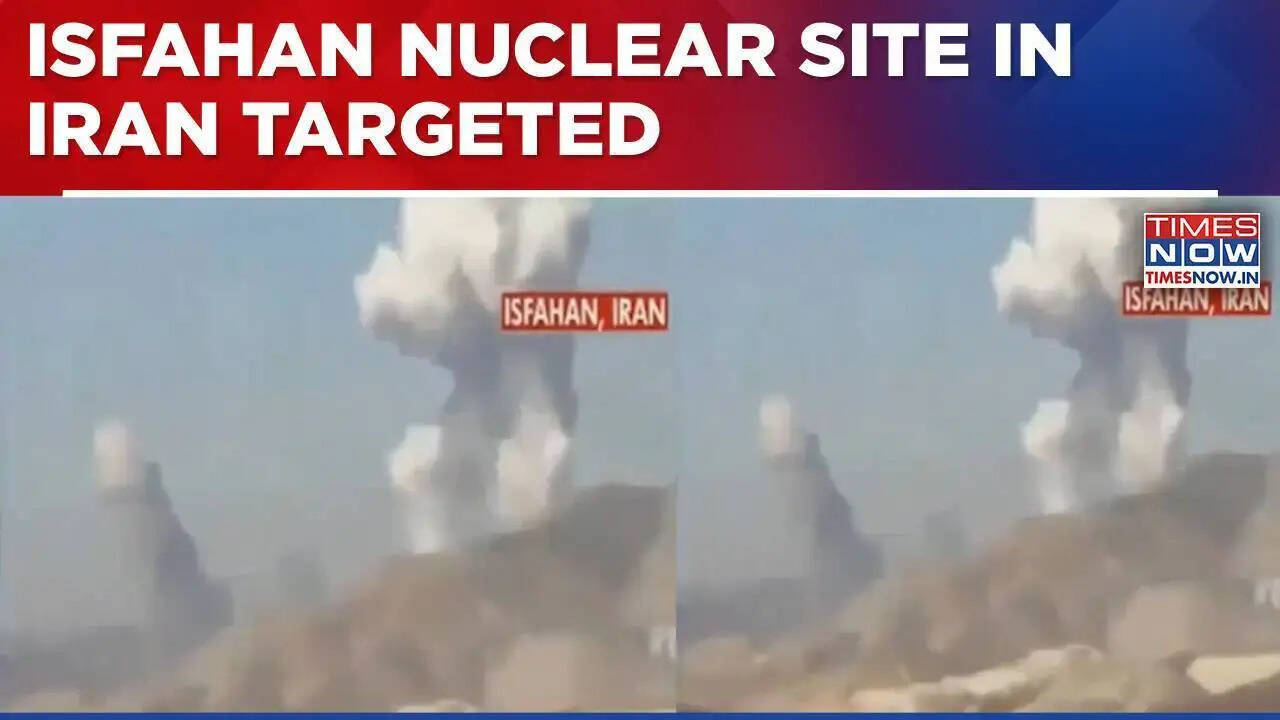
Currently, US and Israeli operations have primarily targeted Iran's naval forces and ballistic missile capabilities. However, some of Iran's most sensitive nuclear sites, such as a complex near Isfahan, have not been significantly attacked. This site is believed to house enough uranium for up to ten atomic bombs within its underground tunnels. Reports indicate that Iran is reinforcing parts of this complex, with a January report from the Institute for Science and International Security noting new efforts by Iran to conceal tunnel entrances in Isfahan.
The concept of deploying ground forces to strike nuclear facilities has been discussed in US and Israeli planning circles for years. A former official revealed that during Obama's presidency, Israel's then-defense minister, Ehud Barak, suggested a plan involving Israeli commandos conducting raids at sites like Isfahan, Fordow, and Qom. However, the Obama administration deemed this proposal unrealistic and dismissed it as "crazy." Nevertheless, US Central Command has continued to develop contingency plans for potential raids on Iranian nuclear sites.
Another source familiar with the planning mentioned that there are scenarios considering "contingency plans to temporarily occupy certain locations." However, significant operational challenges remain. Questions arise regarding the duration of such operations, the permissiveness of the environment, and the logistical requirements for effectively removing or destroying highly enriched uranium and plutonium.
Some experts argue that air power may still be the preferred method. Last June, the Trump administration conducted airstrikes on facilities at Isfahan, Fordow, and Natanz. Spencer Faragasso, a senior research fellow at the Institute for Science and International Security, stated that observers are closely monitoring whether US or Israeli forces will target the tunnel complex at Isfahan. "We are waiting to see if the United States and Israel target the tunnel complex at Isfahan, potentially destroying the tunnel entrances or using a GBU-57 deep earth penetrating bunker buster to penetrate the tunnel and destroy it from within," he said.
Hackett suggested another approach could involve devastating the surrounding terrain to hinder Iran's ability to retrieve nuclear materials. The US could "destroy the land around" the sites to such an extent that recovering key materials would be nearly impossible without advanced engineering equipment that would be conspicuous to outside observers.
Mick Mulroy, who served as deputy assistant secretary of defense for the Middle East during Trump's first term, indicated that initial actions would likely involve additional airstrikes. "I believe the first step would be more airstrikes using Massive Ordnance penetrators if we intend to strike," he stated. He acknowledged that while US forces are capable of entering such facilities to secure nuclear materials, the mission would be perilous. "We have units trained and capable of recovering highly enriched uranium or nuclear weapons, but such operations would be very risky," he added.
Officials at US Central Command have refrained from commenting on specific operational plans. However, the Defense Department has reiterated that preventing Iran from obtaining nuclear weapons remains a fundamental goal. "One of the President's consistent objectives is that Iran will not possess a nuclear bomb or nuclear capabilities," stated Defense Secretary Pete Hegseth. "We will not disclose what we will or will not do within an operational plan. Admiral Cooper has a plan, and we are working on it. Targets will be struck or not struck based on our objectives." The White House echoed this sentiment, with spokeswoman Anna Kelly reaffirming the administration's goals under what it has termed Operation Epic Fury. "The United States Military is meeting or exceeding all its objectives, and the President always has all options available," she stated.