
US Conducts New Strikes Against Iran Amid Ongoing Tensions
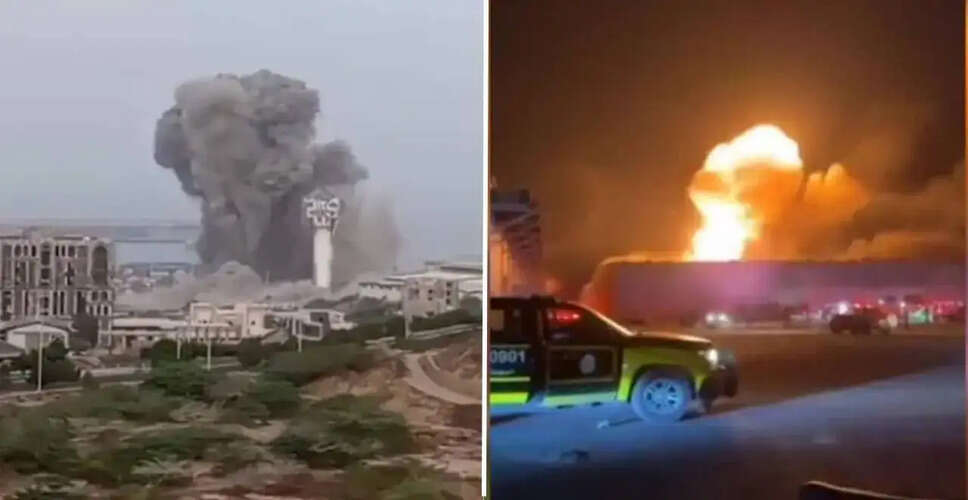

US Launches Second Wave of Strikes
On Wednesday, the United States initiated a second series of military strikes against Iran, focusing on assets that allegedly threaten commercial shipping in the Strait of Hormuz. According to a statement from US Central Command (CENTCOM) shared on X, the operation commenced at 3:00 p.m. ET. CENTCOM stated, "At 3 pm ET, U.S. forces launched operations for a second wave of strikes today against Iran." The strikes aim to target Iranian military capabilities that pose risks to vessels navigating the Strait of Hormuz, a crucial international waterway for global trade. The US military emphasized that these actions are taken under the direction of the Commander in Chief, marking the continuation of hostilities between Washington and Tehran into a fifth day.
Targeting Iranian Military Assets
Earlier on the same day, CENTCOM reported that it had conducted strikes on Iranian military installations, including coastal defense systems and cruise missile storage facilities located on Greater Tunb island within the Strait of Hormuz. The US military indicated that these strikes were designed to diminish Iran's capacity to launch attacks on commercial ships traversing this strategically significant route, vital for oil and gas transportation worldwide. These military actions followed Iran's attacks on American military sites in the region. On Tuesday, the US military announced the re-establishment of a naval blockade on Iranian shipping in the Strait of Hormuz and redirected two vessels as part of this renewed operation. President Trump had previously considered imposing tolls on commercial shipping in the strait but later abandoned the idea.
Iran's Perspective on the Conflict
In a message to the Iranian populace, Parliament Speaker Mohammad Bagher Ghalibaf characterized the situation as an 'existential war' against the United States, accusing Washington of attempting to destabilize the Islamic Republic. He asserted that while Iran does not seek conflict, it must be ready for both military engagement and diplomatic efforts. Ghalibaf emphasized that negotiations at this juncture do not equate to surrender, stating, "Alongside war, they form part of the strategy of resistance and the protection of the national interest." He mentioned that future actions would be determined by the supreme leader of Iran, highlighting the nation's commitment to respond to any attacks.
Iran Claims Attacks on US Bases
According to Iranian state media, the Islamic Revolutionary Guard Corps (IRGC) reported that it had targeted US military installations in Bahrain, Jordan, and Kuwait. There were no immediate reports regarding damage or casualties from these attacks. The military in Jordan confirmed that it intercepted and destroyed three Iranian missiles, while forces in Kuwait and Bahrain also reported successful interceptions of Iranian strikes.
Casualty Reports
Iranian state media indicated that seven members of the Iranian military lost their lives in a US strike on military facilities in southeastern Iran. Government spokesperson Fatemeh Mohajerani claimed on social media that US attacks had resulted in the deaths of over 30 civilians in recent days, although she did not provide specific details.