
US and Iran Reach Initial Peace Agreement Amid Ongoing Tensions

Overview of the Peace Agreement
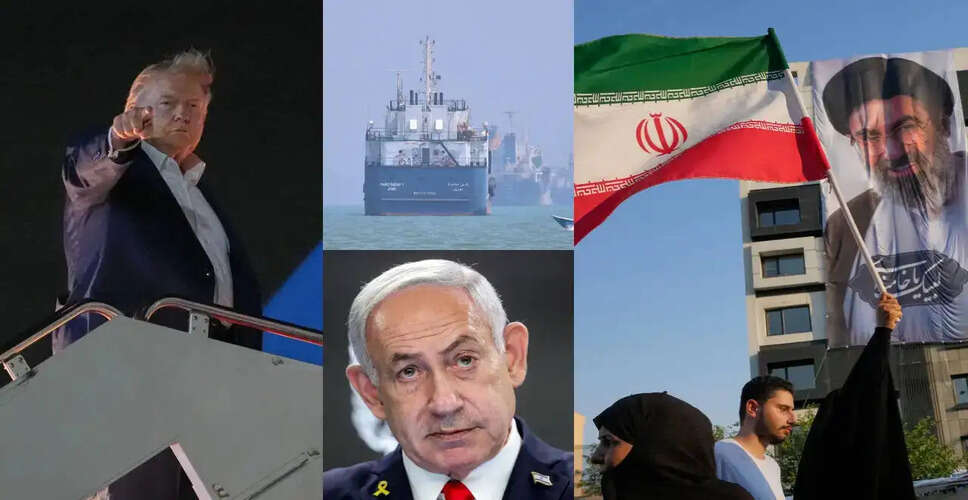
More than 100 days into the conflict that erupted in the Middle East on February 28, the United States and Iran have come to a preliminary agreement aimed at extending their fragile ceasefire and facilitating the reopening of the Strait of Hormuz. However, complications arose when Israel declared its intention to retain control over territories it has taken in Lebanon during its ongoing conflict with Hezbollah. According to statements made by Donald Trump, the formal signing of this initial agreement is set for Friday, June 19, in Geneva, Switzerland. Representatives from both nations will be present to finalize the deal. Following the agreement's implementation, discussions will commence regarding Iran's nuclear program, its enriched uranium stockpiles, and other unresolved matters.
Key Developments Surrounding the Agreement
- President Trump announced late Sunday that the US and Iran have reached a deal to conclude their 107-day conflict, which has caused a global energy crisis. He expressed his congratulations on Truth Social, stating, "The Deal with the Islamic Republic of Iran is now complete." The agreement is expected to reopen the Strait of Hormuz, a crucial passage for one-fifth of the world's oil supply, and lift the US naval blockade on Iranian ports.
- In a subsequent post, Trump confirmed that the Strait of Hormuz would be reopened following the official signing of the agreement.
- Prime Minister Shehbaz Sharif of Pakistan announced that the signing ceremony for the peace agreement would take place in Switzerland. He emphasized that this agreement signifies a diplomatic achievement, not merely a bilateral agreement, and highlighted Pakistan's role in facilitating peace efforts.
- Israeli Defence Minister Israel Katz responded to the deal by asserting that Israeli forces would maintain their presence in southern Lebanon, warning that any Iranian aggression would be met with significant retaliation.
- Iran's Foreign Minister Abbas Araghchi stated that the US must ensure the agreement's implementation and called for an end to Israeli attacks on Lebanon, as reported by the state-run IRNA news agency.
- Iran's Deputy Foreign Minister Kazem Gharibabadi confirmed the signing ceremony is scheduled for Friday, after which the mechanisms for implementation will begin. He noted that Iran's commitments under the memorandum of understanding are conditional and reciprocal, depending on the compliance of the other party.
- Gharibabadi also mentioned that a 60-day negotiation period will follow the signing, focusing on nuclear issues and the lifting of various sanctions.
- Shehbaz expressed gratitude to both the US and Iran for their dedication to a diplomatic resolution and acknowledged the support from Qatar, Turkiye, and Saudi Arabia. He stated that mediators would facilitate a series of meetings this week to prepare for the technical discussions and the official signing ceremony.
- UN Secretary-General Antonio Guterres welcomed the announcement, calling it a "critical step" towards resolving the conflict peacefully.
- US Vice President JD Vance, along with American lawmakers and several Pakistani leaders, praised the announcement of the agreement.