
US and Iran Engage in Peace Talks Amid Ongoing Conflict

Peace Negotiations in Islamabad
For the first time in over a month, the United States and Iran are participating in peace negotiations aimed at establishing lasting peace in the Middle East. These discussions are taking place in Islamabad, Pakistan, following a two-week truce agreed upon by all parties involved. The US delegation is headed by Vice President JD Vance, while Iran's team is led by Parliament Speaker MB Ghalibaf. Despite the ongoing talks, there is underlying concern regarding the potential for a constructive outcome, as Iran has already communicated its non-negotiable terms to Washington through Islamabad.
Impact of the Conflict on US Military Assets
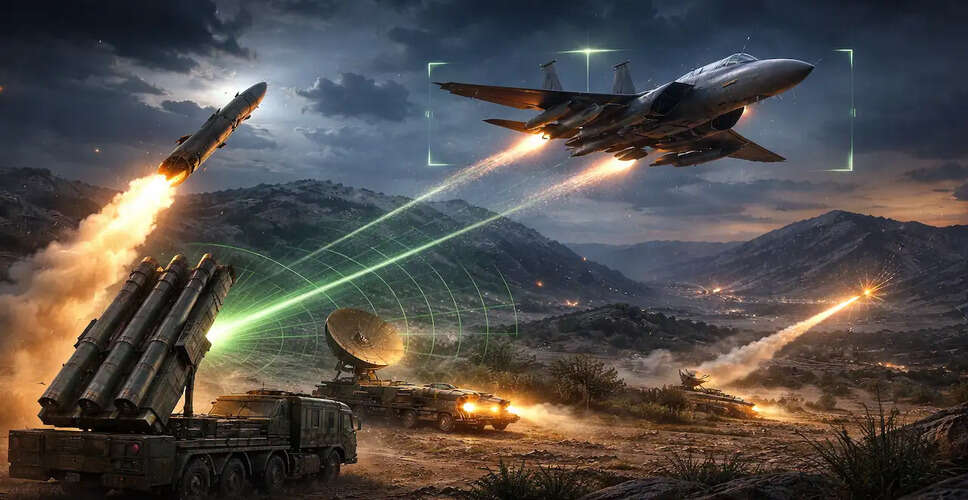
As the peace talks unfold, it's important to reflect on the intense combat that previously occurred between the US and Iran. A report from The War Zone, a US defense publication, indicates that the United States lost approximately 39 aircraft during the 40-day conflict, which included various models such as F-15E Strike Eagles and E-3G Sentry. Additionally, around 10 other aircraft sustained damage, bringing the total losses to over 39, according to internal tracking by TWZ.
Drones and Fighter Jets Lost
Not Just Warplanes But Drones Too
In addition to warplanes, the US also suffered losses of advanced drones. Reports suggest that 24 USAF MQ-9 Reaper Drones were destroyed, as per information from CBS and Jim LaPorta. Among the fighter jets, five F-15E Strike Eagles and one A-10 Warthog were downed, with three F-15Es lost due to friendly fire over Kuwait airspace. Notably, an F-35A, a fifth-generation fighter, was also hit over Iranian airspace, marking the first instance of such an aircraft being downed in combat, although the pilot managed to land safely.
Moreover, the US Air Force lost one E-3G Sentry, a costly asset. However, these claims have not been independently verified.
- MQ-9A Reaper - 24 destroyed
- F-15E Strike Eagle - 4 destroyed
- E-3G Sentry - 1 destroyed, 1 damaged
- MC-130J Commando II - 2 destroyed
- KC-135 Stratotanker - 2 destroyed, up to 6–8 damaged
- F-35A Lightning II - 1 damaged
- CH-47F Chinook - 1 destroyed
- HH-60W Jolly Green II - 2 damaged
- MH-6M Little Bird - 4 destroyed
- A-10C Warthog - 1 destroyed
Progress of US-Iran Direct Talks
How Far US-Iran Direct Talks Have Progressed
The historic face-to-face negotiations between the United States and Iran commenced on Saturday in Pakistan, shortly after a fragile two-week ceasefire was declared. This conflict has resulted in thousands of casualties and has significantly impacted global markets, now entering its seventh week. The White House confirmed the direct nature of these talks, which is a rare occurrence of high-level engagement. Iranian state media reported that discussions were ongoing as of early Sunday morning in Islamabad.
In a related development, the US military announced that two destroyers have passed through the Strait of Hormuz, which is under Iranian control, in preparation for mine-clearing operations, marking the first such action since the conflict began. However, Iranian state media reported that the joint military command denied this information.
The US delegation, led by Vice President JD Vance, and the Iranian delegation, led by Parliament Speaker Mohammad Bagher Qalibaf, are working with Pakistan to advance the ceasefire, which is already under threat due to significant disagreements and ongoing Israeli attacks against Hezbollah in Lebanon, where the health ministry has reported over 2,000 deaths.
Since the Islamic Revolution in Iran in 1979, the most direct contact between the US and Iran occurred in 2013 when President Barack Obama spoke with newly elected President Hassan Rouhani regarding Iran's nuclear program. The most recent high-level meetings were between Secretary of State John Kerry and Iranian counterpart Mohammad Javad Zarif during negotiations over the nuclear program. Currently, the talks involve Vance, who has limited diplomatic experience and has cautioned Iran against manipulation, and Qalibaf, a former commander of Iran's Revolutionary Guard known for his strong rhetoric since the conflict began.