
US and Iran Engage in Critical Peace Talks Amid Asset Dispute
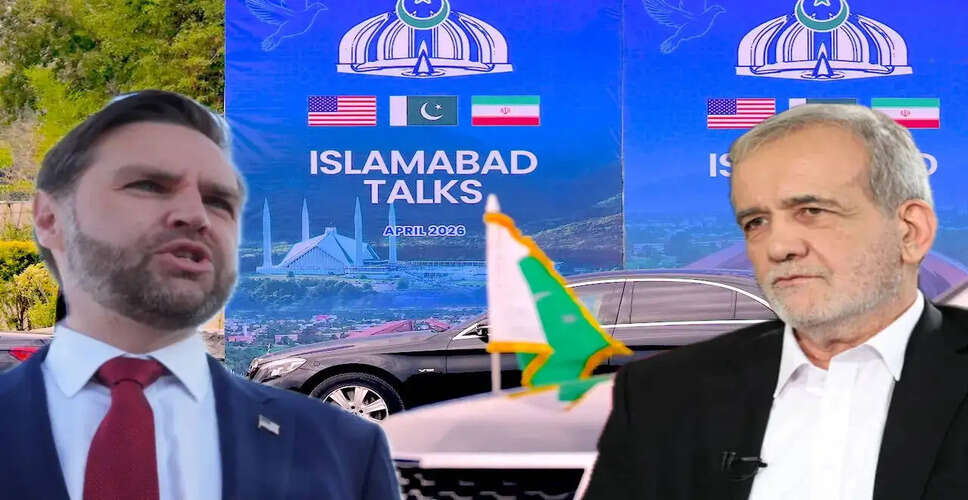

High-Stakes Negotiations in Islamabad
In Islamabad, the United States and Iran are currently engaged in significant peace discussions, focusing on proposals aimed at establishing lasting peace. Reports from Iranian media indicate that during the initial stages of these negotiations, the US has tentatively agreed to unfreeze Iranian assets, a move intended to facilitate the reopening of the Strait of Hormuz, a vital global energy trade route. According to a senior Iranian official cited by Iran International, this decision is seen as a gesture of goodwill and a serious commitment to achieving a sustainable peace agreement. The official noted that the unfreezing of assets is closely tied to ensuring safe passage through the Strait of Hormuz prior to any formal agreement.
TimesNow
2042918162954694881
Conflicting Reports on Asset Unfreezing
Following the reports of the US's agreement to unfreeze Iranian assets, a White House representative clarified to a news outlet that no such agreement has been made. These developments arise as US and Iranian officials convene in Islamabad, with the talks still in their infancy.
TimesNow
2042932784281391557
Reports suggest that these contradictory statements regarding Iranian assets have emerged even before direct discussions between the US delegation, led by Vice President JD Vance, and the Iranian team, headed by President Masoud Pezeshkian, have commenced. Analysts believe that the claims and denials from both sides may be part of a strategic buildup ahead of the direct negotiations.
Leverage and Demands Before Negotiations
As the talks draw near, both US and Iranian officials have asserted their leverage and introduced new demands. President Donald Trump has been vocal on social media, asserting that Iranian officials lack negotiating power and accusing them of using the Strait of Hormuz for extortion. He stated, “The only reason they are alive today is to negotiate!”
Meanwhile, Islamabad is under heightened security measures, with roads sealed off and residents advised to remain indoors, giving the usually vibrant city a curfew-like atmosphere.
On Friday, Vance expressed optimism regarding the negotiations but cautioned that any attempts to manipulate the situation would not be well-received by the negotiating team. Iranian Foreign Minister Abbas Araghchi conveyed that Tehran approaches these discussions with significant distrust due to past aggressions during previous negotiations. He warned that Iran is prepared to respond if attacked again.
With inputs from AP