
US Air Force Successfully Tests Minuteman III Nuclear Missile
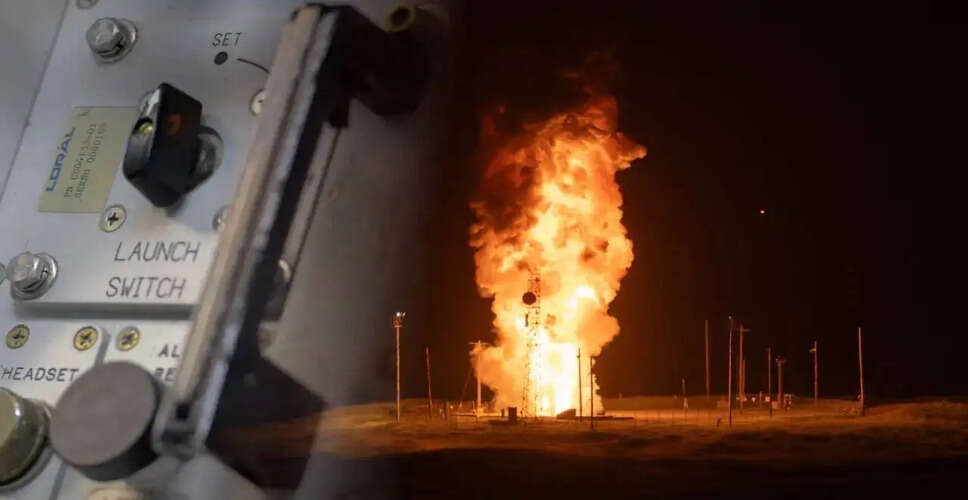
Overview of the Minuteman III Missile Test
The United States Air Force has conducted a successful test of the Minuteman III intercontinental ballistic missile (ICBM), a key component of its nuclear arsenal. The missile was launched from Vandenberg Space Force Base in California, traveling approximately 6,700 kilometers across the Pacific Ocean before hitting a designated target in the Marshall Islands. Officials stated that this launch was part of a standard verification program aimed at ensuring the reliability and readiness of the nation’s nuclear deterrent. The Minuteman III is one of the three main elements of the U.S. nuclear triad, which also includes submarine-launched ballistic missiles and strategic bombers.
Understanding the Minuteman III Missile
What Is The Minuteman III Missile?
The Minuteman III is an advanced intercontinental ballistic missile capable of delivering nuclear warheads over extensive distances. Its notable features include:
- Range: Exceeding 9,600 kilometers
- Speed: Reaching up to Mach 23 (approximately 28,400 km/h)
- Launch Mechanism: Deployed from underground hardened silos
- Warhead: Equipped with a nuclear re-entry vehicle
Currently, around 400 Minuteman III missiles are on active alert, stationed in underground silos across states like Montana, Wyoming, and North Dakota. Each missile can be launched by a two-person crew from a secure underground command center, requiring both operators to turn launch keys simultaneously to prevent unauthorized use.
The 'Doomsday' Nickname
Why It Is Called A ‘Doomsday’ Missile
The term “doomsday missile” refers to the comprehensive command system governing nuclear weapons. During the recent test, the launch command was relayed through the Boeing E-6B Mercury, an airborne command post often dubbed the “doomsday plane.” This aircraft serves as a mobile communication center capable of issuing nuclear launch orders even if ground command facilities are incapacitated during a major conflict, ensuring that U.S. leadership can maintain control of nuclear forces in extreme wartime scenarios.
Mechanics of a Ballistic Missile
How A Ballistic Missile Works
Upon launch, the Minuteman III quickly ascends into the upper atmosphere using solid-fuel rocket engines. The missile separates into multiple stages as it climbs, shedding parts of the rocket to decrease weight and enhance speed. At its highest point, the missile exits Earth’s atmosphere, following a ballistic trajectory akin to that of a projectile. As it nears its target, the warhead re-enters the atmosphere at extremely high velocities, generating significant heat before descending. The entire flight from launch to impact typically lasts around 30 minutes, allowing minimal time for an adversary to react.
Potential Global Implications
Could It Cause Global Catastrophe?
The immense destructive capability of nuclear weapons raises concerns about the potential for global catastrophe. Experts warn that a large-scale nuclear conflict could lead to a “nuclear winter,” where massive urban fires release soot and smoke into the atmosphere, blocking sunlight and threatening global agriculture. While the Minuteman III is just one part of the U.S. nuclear arsenal, the overall stockpile held by nuclear nations worldwide amplifies these fears. Importantly, the Minuteman III has never been deployed in combat; all launches have been part of controlled testing protocols.
Purpose of the Recent Test
Why The Test Was Conducted
The Minuteman III has been operational since the 1970s and is regularly tested to confirm its reliability. Although it was initially set to be replaced by the next-generation Sentinel ICBM in the coming years, delays in that program may extend the Minuteman III's service life until at least 2050. Officials clarified that this latest launch was a routine test and not a reaction to current geopolitical tensions. However, in a time of increased global instability, even standard missile tests draw considerable international scrutiny.