
Understanding the Impact of Nuclear Bomb Explosions: Air Burst vs. Ground Burst
Rising Military Tensions Between India and Pakistan
The recent military tensions between India and Pakistan have brought the topic of "Nuclear Bomb Explosions" back into the spotlight. Pakistan has accused India of targeting its nuclear storage site at Kiranah Hills during Operation Sindoor. However, the Indian government has clarified that the operation aimed solely at eliminating terrorist bases, not any nuclear facilities.
India's No First Use Policy: A Commitment to Restraint
Both India and Pakistan are nuclear-armed nations, yet their nuclear policies differ significantly. India has adopted a "No First Use Policy," meaning it will not initiate a nuclear attack unless provoked by another nuclear strike.
India views nuclear weapons as a last resort for defense, to be used only when its sovereignty and security are directly threatened. In contrast, Pakistan has not formally adopted such a policy and keeps the option of a nuclear strike open based on the situation.
Pakistan's Tactical Nuclear Weapons: Small Bombs, Big Concerns
In recent years, Pakistan has developed tactical nuclear weapons in addition to traditional nuclear bombs. These smaller devices are designed to have a high impact over a limited area.
Tactical weapons can be used in ground operations against enemy military convoys or installations. While their destructive power is less than that of larger attacks like Hiroshima or Nagasaki, the radiation and environmental effects in the impacted areas can be severe.
Air Burst Detonation: The Impact of Explosions in the Sky
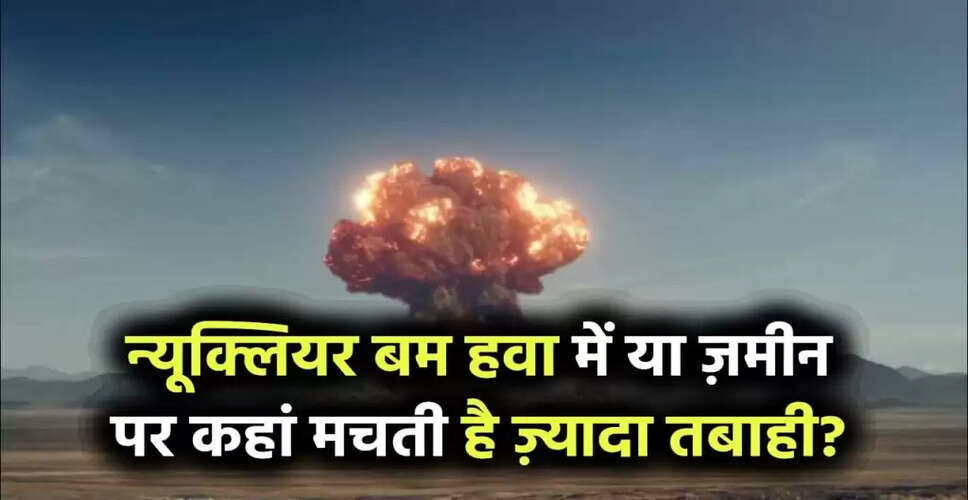
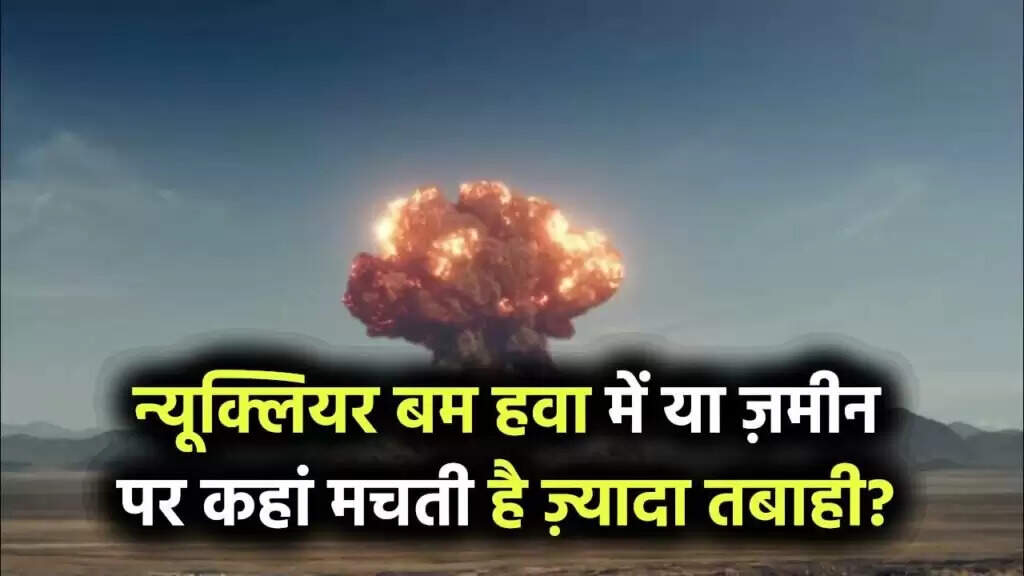
Nuclear bombs can be designed to detonate in the air, known as "Air Burst Detonation." In this scenario, the bomb explodes several hundred meters above the ground, allowing radiation and shockwaves to spread over a wide area.
The most significant impact of an air burst is that the heat and shockwaves affect densely populated regions. This strategy was employed by the United States during World War II in the bombings of Hiroshima and Nagasaki, resulting in nearly 200,000 fatalities and lasting effects in those cities.
Ground Burst: When Destruction Reaches Below the Surface
Conversely, a nuclear bomb that detonates on or near the ground has a more intense but localized effect, referred to as a ground burst. The primary goal of such attacks is to destroy enemy bunkers, missile bases, or command centers.
Ground bursts can penetrate the earth, causing radiation to linger for years, rendering the area uninhabitable. Although the impact is confined to a smaller area, the intensity of radiation spread can severely affect the local environment and population.
Which Blast is More Dangerous?
The debate continues over whether an air burst or a ground burst is more dangerous. The answer depends on the target. An air burst is more effective against large cities or civilian areas, while a ground burst is more suitable for military installations.
Both types of blasts are devastating in their own right; the difference lies in their impact on human populations versus the depth of destruction.
Nuclear Weapons: Nine Nations Hold the Power
Since World War II, nuclear weapons have not been used in conflict. Currently, nine countries possess nuclear weapons: the United States, Russia, China, India, Pakistan, the United Kingdom, France, Israel, and North Korea.
Each nation has its own nuclear policy, but collectively they hold enough stock to pose a significant threat to global existence in the event of a large-scale war.