
Understanding NATO's Article 5: Its Significance and Challenges
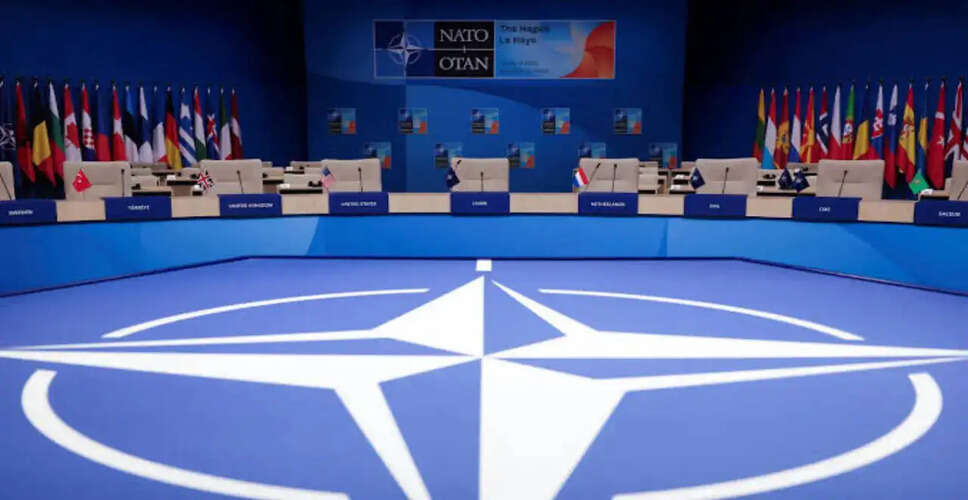

The Foundation of NATO's Collective Defense
Seventy-seven years ago, representatives from 12 nations convened in Washington to draft a brief yet impactful treaty consisting of 14 articles and just over a thousand words, aimed at preventing wars before they could ignite. The NATO founding treaty, though concise, clearly articulates its primary goal: a mutual commitment among member states to support one another in the event of an attack. This commitment is encapsulated in Article 5, which serves as the cornerstone of the alliance.
Article 5 is often described as the heart of NATO, as it represents the unconditional promise made by each founding member in 1949, uniting 12 distinct militaries into a cohesive deterrent force. However, invoking this article is not automatic; it requires careful consideration and strategic assessment before any military action is taken. The clause states that an armed attack on one NATO member is regarded as an attack on all, obligating each member to assist the affected nation. This assistance can take various forms, including military action, but also encompasses non-military responses such as sanctions or intelligence sharing.
The Rarity of Invocation and Its Implications
Why It's Rarely Used – And That's The Point
In its 77-year history, Article 5 has been formally invoked only once, following the September 11, 2001, terrorist attacks in the United States. Even then, the invocation was not immediate; the North Atlantic Council required evidence linking the attacks to foreign entities, which was only provided later. Consequently, member nations responded in varied ways, demonstrating that the clause allows for flexibility rather than a uniform military response.
This measured approach is a testament to the article's effectiveness. Its true strength lies in the deterrent message it conveys: any aggression could potentially involve the entire alliance. Thus, the design of Article 5 is rooted in deterrence rather than frequent invocation.
Current Challenges and Future Considerations
The Stress Tests Of 2026
Currently, the credibility of Article 5 is under scrutiny from within NATO. In January 2026, Canadian Prime Minister Mark Carney reiterated Canada's steadfast commitment to Article 5 amid reports of U.S. ambitions regarding Greenland, a NATO ally's territory. This situation presents a unique challenge for the clause. Additionally, a significant cyberattack on Albania in October 2022 raised questions about the applicability of Article 5 in the context of hybrid warfare, a scenario the treaty's original architects could not have foreseen.
Importantly, Article 5 has specific limitations; it only applies to NATO members within the geographic boundaries outlined in Article 6, which includes territories in Europe and North America. This is why it was not invoked during Russia's invasion of Ukraine, as Ukraine is not a NATO member. The lesson here is clear: the promises of Article 5 are absolute for member states, while its limitations are strict for non-members. In a world of hybrid threats and territorial disputes, the dynamics surrounding Article 5 will be crucial in shaping NATO's future responses.