
UN Human Rights Chief Applauds India's Civil Society While Criticizing Pakistan and China
UN Human Rights Chief's Observations
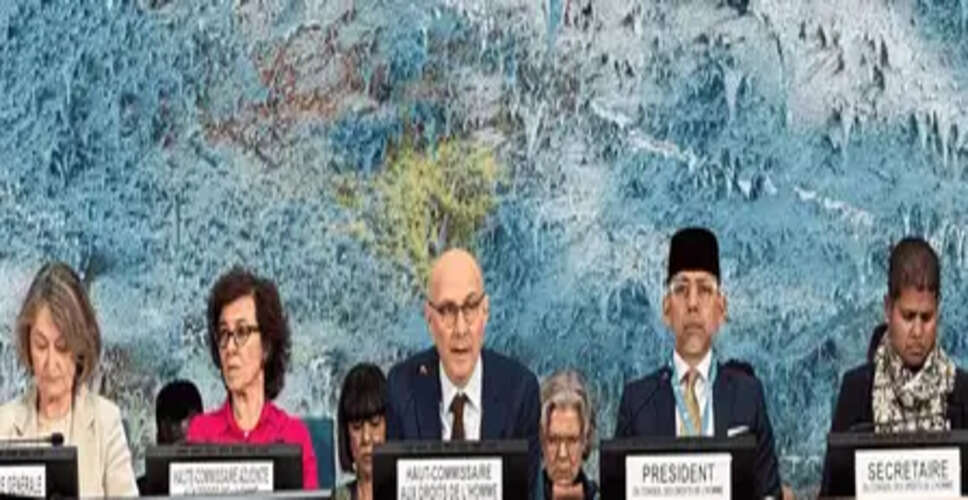
Geneva: Volker Turk, the UN High Commissioner for Human Rights, has commended the active civil society in India, emphasizing its crucial role in maintaining the nation's democratic values and protecting minority rights.
During his recent address at the 61st session of the UN Human Rights Council, Turk expressed concern over the troubling human rights conditions in Pakistan and China.
Last month, Turk visited New Delhi for the AI Impact Summit, marking his inaugural trip to India.
He stated, “I was truly impressed by the dynamic civil society during my visit to India. They are vital in safeguarding the democratic traditions and minority rights in the country. It is essential that civic space is robustly defended, allowing civil society to operate freely.”
Turk also criticized Pakistan, noting that two human rights lawyers have recently received a total of 17 years in prison.
He remarked, “In Pakistan, individuals advocating for human rights have faced imprisonment for their critical remarks on social media.”
Turk further lamented the restrictions on civic space in Georgia and acknowledged the release of some arbitrarily detained individuals in Venezuela, urging for the release of others and a review of the state of emergency to ensure it respects civic rights.
He called on Chinese authorities to cease the use of ambiguous legal provisions to stifle peaceful expressions of fundamental rights.
Turk urged the release of all arbitrarily detained individuals and expressed disappointment over the lack of action from authorities regarding previous recommendations aimed at protecting the rights of Uyghurs and other Muslim minorities in Xinjiang, as well as Tibetans. He also raised concerns about the increasing repression of Protestant communities.
During his visit to India, Turk engaged with External Affairs Minister S. Jaishankar at the AI Impact Summit on February 20. Jaishankar emphasized the importance of consistency in human rights discussions and highlighted terrorism as a significant human rights violation.
Jaishankar shared India's views on the global human rights landscape and the best approaches to tackle these challenges.
After his meeting with Jaishankar, Turk expressed gratitude for the discussions on global, regional, and domestic human rights, acknowledging the role of India's National Human Rights Commission and its vibrant civil society in promoting human rights for all.