
Ukraine's Military Shake-Up: What Does It Mean for the Ongoing Conflict with Russia?

Kyiv's New Military Leadership Amidst Ongoing Conflict
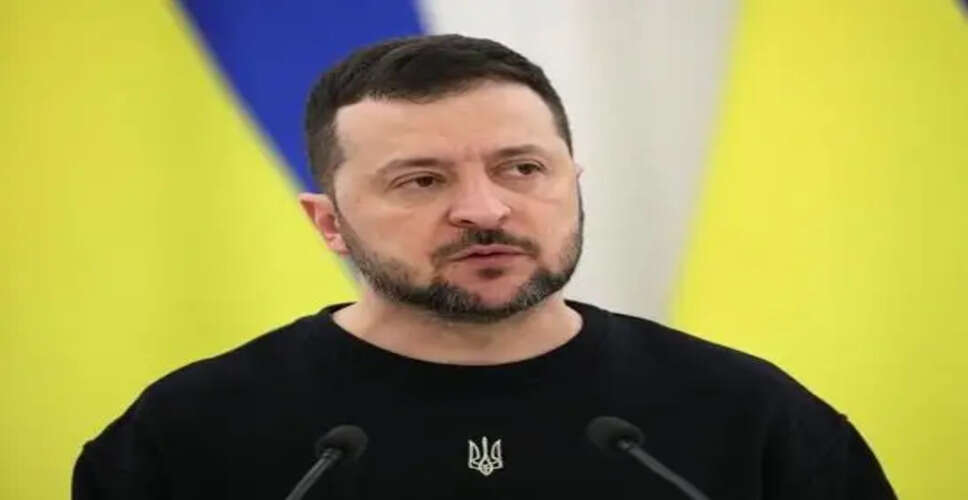
In a decisive move, Ukraine is intensifying its resistance against Russia's invasion, following President Volodymyr Zelenskyy's decision to replace the commander-in-chief amid public demand for change. This shift in military leadership comes as Ukraine has made notable advancements in the conflict this year, although tensions between the former army chief and the defense minister posed challenges to their efforts.
Zelenskyy's recent government reshuffle, which saw both military leaders dismissed, aimed to stabilize a period of political unrest that had lasted nearly a week and was celebrated in Russia. However, the effectiveness of these changes in achieving peace remains uncertain.
The newly appointed army chief, 43-year-old Maj Gen Mykhailo Drapatyi, represents a fresh wave of Ukrainian military leaders who have risen through the ranks during the ongoing conflict. He gained recognition for his bravery during the 2014 crisis when Russia annexed Crimea, setting the stage for the current war.
Zelenskyy has tasked Drapatyi and his fellow commanders with developing a revised defense strategy that includes reforms to the corps system, expedited delivery of weapons and drones, enhanced air defense against Russian attacks, and a more defined mobilization plan.
Russia's Response to Ukraine's Leadership Changes
Despite ongoing diplomatic efforts led by the United States, there is no indication that Russia and Ukraine are nearing a peace agreement. Kremlin spokesperson Dmitry Peskov stated that Moscow remains firm on its demands, which include the withdrawal of Ukrainian forces from four eastern regions currently under partial Russian control, a renunciation of NATO aspirations, and a significant reduction in Ukraine's military size.
Peskov remarked that the political and military changes in Kyiv reflect internal pressures, asserting that the Ukrainian regime is visibly unstable. He further claimed that these leadership shifts would not alter the front lines, insisting that Russian forces continue to maintain an offensive posture.
With the war's extensive front line largely inaccessible to independent observers, both nations are engaged in a battle of narratives.
Uncertainty Surrounds Outgoing Defense Minister Fedorov
Zelenskyy held a separate meeting with the outgoing defense minister, Mykhailo Fedorov, a 35-year-old entrepreneur known for rapidly advancing Ukraine's drone capabilities. Fedorov had been at odds with the former commander-in-chief, Gen Oleksandr Syrskyi, who is viewed as part of the traditional military establishment.
Public protests in Kyiv and other cities have called for Fedorov's reinstatement, viewing him as a crucial figure in military modernization, while demanding the dismissal of Syrskyi. These demonstrations are expected to persist despite Syrskyi's departure.
Zelenskyy has offered Fedorov a respected role within the government aimed at unifying the technology sector, though it remains unclear whether he will accept this position or if the recent changes will quell public unrest.
Fedorov has indicated that he has received job offers from international defense technology firms and expressed support for Drapatyi's appointment, viewing it as a beacon of hope in the struggle for freedom and justice.
Syrskyi's Defense of His Tenure
In a statement, Syrskyi defended his record during the conflict, claiming that Ukrainian forces have regained 743 square kilometers of territory this year and asserting that he is leaving behind an army capable of both defense and offensive operations. However, these claims have not been independently verified.
Fedorov acknowledged Syrskyi's contributions, particularly during the early stages of the war, but emphasized the need for Ukraine to accelerate its efforts and rectify past mistakes.
The political crisis began last Thursday when Zelenskyy overhauled his wartime cabinet, leading to widespread protests that framed Fedorov's removal as a retreat to the old military guard.
Continued Strikes Amid Political Maneuvers
These political developments occur against a backdrop of ongoing hostilities, with both Russia and Ukraine conducting strikes on each other's territories. Ukrainian drones targeted two warehouses belonging to Russia's major online retailer, Wildberries, in the southern regions of Krasnodar and Stavropol, as reported by Russian officials.
These strikes followed a previous attack that resulted in casualties, highlighting the ongoing conflict's toll. Zelenskyy noted that these facilities were utilized by Russia for supplying components for drone and navigation equipment.
Conversely, Russian forces have also targeted key Ukrainian logistics and retail centers in recent days, with reports of missile and drone strikes causing further destruction and loss of life.