
Ukraine's Innovative Drone Defense Solutions: A Game Changer for Gulf Nations
The Rising Threat of Iranian Drones
In recent weeks, a new sound has become synonymous with anxiety across the Gulf region: the ominous buzz of Iran's Shahed drones. These low-cost, persistent, and hard-to-detect drones have emerged as a formidable weapon for Tehran against US forces and their allies. For the United States, the challenge is significant; intercepting these drones often necessitates the use of expensive missiles, leading to a costly defense strategy.
A Patriot missile costs four million dollars. A Ukrainian Sting interceptor drone costs two thousand. Both destroy the same Shahed kamikaze drone. One of them can be manufactured at a rate of 10,000 units per month. The other cannot. And the country that invented the cheap one is… pic.twitter.com/LLt1QrjpHK
— Shanaka Anslem Perera ⚡ (@shanaka86) March 30, 2026
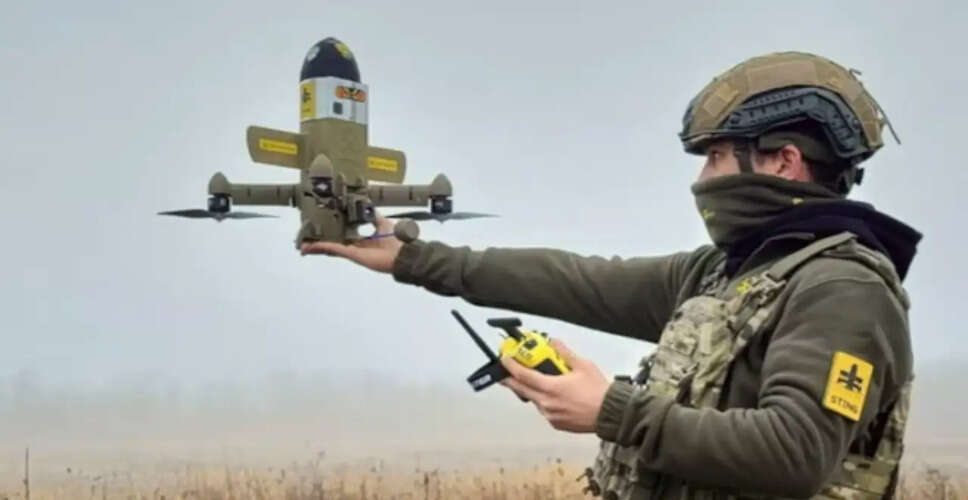
In a surprising turn of events, Ukraine has stepped in to provide support. Having battled similar Shahed drones in its ongoing conflict with Russia, Kyiv has developed cost-effective countermeasures, including the “Sting” and “Bullet” interceptors. These systems are now being deployed to help Gulf nations combat the drone threat.
The shift in strategy has been rapid. Just weeks ago, US President Donald Trump had dismissed the notion of seeking assistance from Ukrainian President Volodymyr Zelenskyy. However, as Iranian assaults escalated, damaging US bases and energy infrastructure, Gulf nations began to seek solutions from Ukraine.
Recently, Zelenskyy was warmly received in Qatar, the UAE, and Saudi Arabia, where agreements were made for Ukraine to supply its interceptors and share military expertise. In exchange, Kyiv is anticipated to receive advanced air-defense systems to enhance its fight against Russia.
Ukraine has already dispatched over 200 anti-drone specialists to countries like Jordan and Kuwait, tasked with countering the Shahed drones, often referred to as “flying mopeds” due to their unique engine sound.
The Economic Reality Behind the Shift
Why Ukraine and Why Now?
The driving force behind this collaboration is economic. Iran’s Shahed-136 drones are relatively inexpensive, costing between $20,000 and $30,000 each, and can be produced rapidly. In contrast, intercepting these drones often requires expensive systems like Patriot missiles, which cost around $4 million per shot, or THAAD batteries. Additionally, operating fighter jets such as F-16s incurs significant costs, exceeding $25,000 per hour.
This economic imbalance has proven to be a heavy burden. Reports indicate that Iranian strikes have rendered 13 US military bases uninhabitable within just three weeks, with damages estimated at nearly $3 billion.
Ukraine faced a similar challenge at the onset of its conflict. Initially, Kyiv struggled against the Shahed drones due to limited access to advanced Western defense systems. However, it eventually turned to innovation, creating more affordable and scalable solutions.
Innovative Countermeasures from Ukraine
Ukraine’s Answer: Fighting Cheap with Cheaper
The result of Ukraine's innovation is a new class of interceptors designed to neutralize drones without depleting resources. The “Sting” and “Bullet” systems, constructed from readily available components, have shown remarkable effectiveness. Since mid-2025, they have reportedly downed thousands of drones, achieving success rates between 70% and 90%. In one notable instance, Ukraine intercepted 87% of a significant wave of attacks in a single month.
These interceptors are operated using first-person-view (FPV) systems, ensuring precision and minimizing vulnerability to electronic jamming. The Sting is faster and more advanced, capable of exceeding speeds of 300 km/h and operating at high altitudes with thermal imaging. The Bullet, on the other hand, is more modular, often 3D-printed and powered by AI for target identification.
Key Differences Between Shaheds and Ukrainian Interceptors
What Sets Them Apart from Shaheds?
The fundamental difference lies in their design philosophy. Shahed drones are one-way, GPS-guided weapons intended to crash into targets and detonate. They are inexpensive, disposable, and deployed in large quantities to overwhelm defenses.
Conversely, Ukraine’s interceptors are reusable, operator-controlled, and designed for efficiency. They can return to base if they fail to engage a target, making them significantly more cost-effective over time.
Ukraine's Evolving Role in Global Defense
A New Role for Ukraine
Years of necessity on the battlefield have given Ukraine a distinct advantage. What began as a defensive struggle has transformed into a strategic opportunity. Today, Kyiv is not only a recipient of military aid but also a provider of essential defense solutions. Its expertise in countering drone warfare is reshaping alliances, forging new partnerships, and enhancing its global standing.
In a conflict where the cost of attack has significantly decreased, Ukraine's experience underscores a vital lesson: the future of defense lies in balancing affordability with innovation.