
UK Government Responds to Rising Anti-Semitism After Knife Attack in London

Recent Developments in Britain
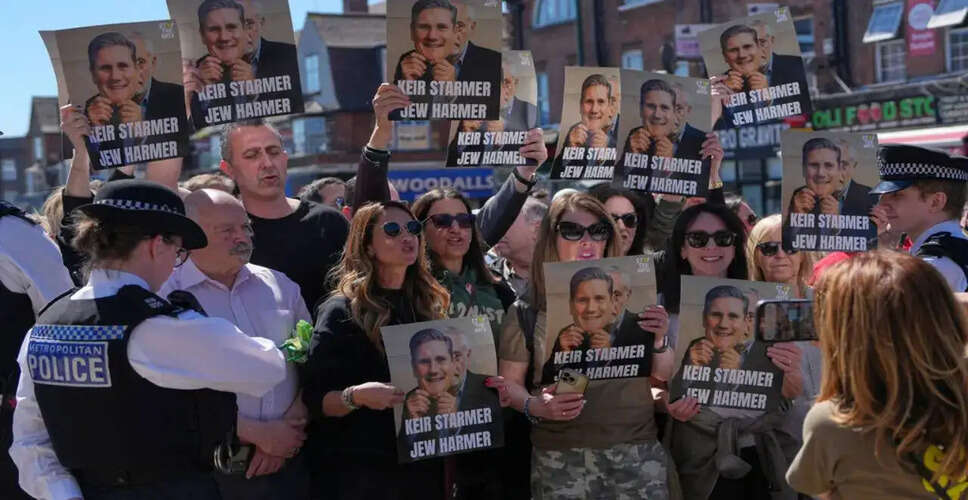
This week marked a significant shift in the UK as the government reacted to escalating tensions following a knife attack on two Jewish men in Golders Green, a prominent Jewish area in London. The incident has prompted officials to adopt a firmer stance regarding pro-Palestinian protests.
Details of the Golders Green Incident
The attack occurred on Wednesday along a busy street, resulting in serious injuries to both victims, with one still hospitalized as of Friday. Essa Suleiman, a 45-year-old British citizen originally from Somalia, has been charged with attempted murder.
This attack is part of a troubling trend, following a terrorist incident at a Manchester synagogue last October that resulted in two fatalities, along with a series of arson attacks targeting Jewish institutions and businesses. In response, the UK government elevated its national terror threat level to 'severe,' indicating a high likelihood of further attacks within the next six months.
Linking Pro-Palestinian Protests to Rising Anti-Semitism
The ongoing discussions about the impact of pro-Palestinian demonstrations on anti-Jewish sentiment have intensified. Jonathan Hall, the counterterrorism chief, suggested a temporary suspension of these protests, claiming they have become breeding grounds for antisemitism. Government minister Alex Davies-Jones supported this view, asserting that the protests have been infiltrated by individuals promoting division and hatred, despite many participants having no such intentions.
Prime Minister Keir Starmer specifically condemned the chant 'globalise the intifada,' urging law enforcement to take action against those who use it, as it is perceived by many as inciting violence reminiscent of the Second Intifada.
Protesters' Perspectives
In response, the Stop the War Coalition, a key organizer of many protests, has denied the allegations of fostering antisemitism, emphasizing that their demonstrations target the actions of the Israeli government and British involvement in the Gaza conflict, rather than the Jewish community as a whole. They also highlighted that Jewish individuals often participate in their marches.
Free Speech and Legal Implications
The legal landscape in Britain regarding free speech differs significantly from that in the United States. There is no equivalent to the First Amendment, and hate speech or incitement to violence can lead to legal repercussions. This legal framework is currently being tested as the government seeks to delineate the boundaries between legitimate protest and criminal behavior.
Government's Existing Powers
Recent legislation has granted authorities enhanced capabilities to manage protests, including the ability to impose restrictions near places of worship and prevent demonstrators from climbing on war memorials. While outright bans are not currently on the table, police now have greater authority to confine marches to specific locations rather than allowing them to traverse city streets. This power was recently exercised to limit a Quds Day march, an annual event supporting Palestine.
The Broader Context
Since the Hamas attacks on Israel on October 7, 2023, and the subsequent conflict in Gaza, incidents of antisemitism in Britain have surged. The government is now faced with the challenge of balancing the safety of a community that feels increasingly threatened, the right to peaceful protest, and the legal limits of free expression. The ongoing debate over these issues remains unresolved.