
UK Defence Secretary Resigns Amid Military Spending Dispute
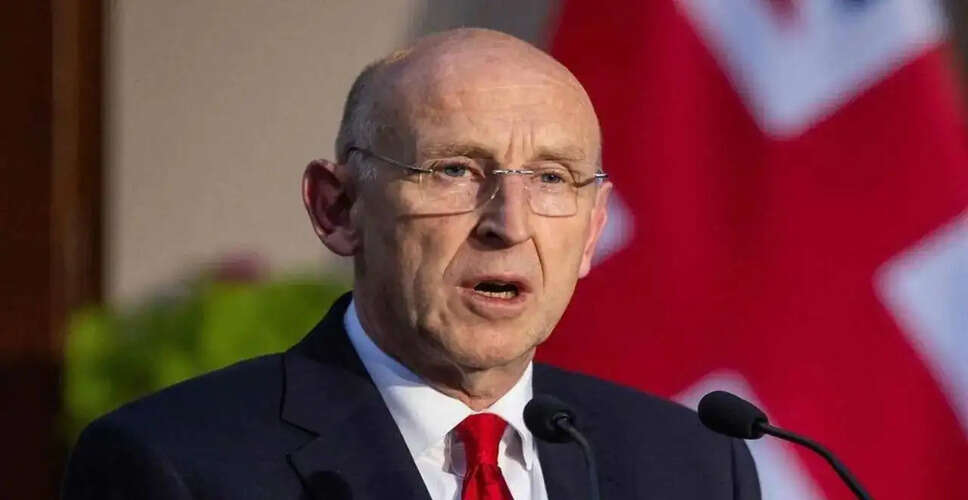

Resignation of Defence Secretary John Healey
In a significant setback for Prime Minister Keir Starmer, UK Defence Secretary John Healey announced his resignation on Thursday following a contentious disagreement over military funding. Healey expressed concerns that the UK is not investing adequately in its armed forces, especially in light of a rapidly worsening global security situation. His resignation, conveyed through a candid letter to Starmer, highlights the profound divisions within the Labour government regarding defence expenditure, national security priorities, and military readiness amidst escalating tensions with Russia, the Middle East, and NATO obligations. "This is a letter I never expected to write," Healey stated, resigning with "great regret and reluctance."
Reasons Behind Healey's Departure
The core issue leading to Healey's resignation is the long-awaited Defence Investment Plan (DIP), which aims to convert Britain's Strategic Defence Review into actionable financial commitments for the military. Healey claimed that extensive cross-government discussions had determined the necessary investment to counter increasing security threats. However, he criticized both Starmer and the Treasury for not allocating the required resources to tackle these challenges. In his resignation letter, he asserted that the financial package proposed by the government "falls well short of what is required for defence and the country at this dangerous time."
Healey specifically condemned the government's "backloaded" funding strategy, which would see most additional financial support arriving years later, rather than in the immediate future when military readiness is most critical. He pointed out that under the proposed plan, defence spending would only reach approximately 2.68% of GDP by 2030, significantly below what he deemed necessary.
Healey's Caution to Starmer
One of the most notable parts of Healey's letter was his reference to Starmer's own warnings regarding security threats in Europe. Citing the Prime Minister's recent comments about the potential for Russia to threaten NATO territory by 2030, Healey contended that the current trajectory of Britain's spending does not adequately reflect the seriousness of these risks. "You know what defence needs," Healey wrote. "Without a Defence Investment Plan that meets the moment, I am being forced to make decisions that would reduce the readiness of our Forces and increase the risk to personnel on operations." He cautioned that insufficient investment could ultimately compromise Britain's safety.
Healey's resignation follows months of escalating tensions between the Ministry of Defence, the Treasury, and Downing Street regarding funding levels. Recent reports indicated that defence officials had uncovered a multibillion-pound funding shortfall between the ambitions set out in Britain's Strategic Defence Review and the available resources to achieve them. This conflict has delayed the release of the Defence Investment Plan, which has already faced multiple postponements. The situation escalated to the point where Britain's military chief reportedly communicated directly with the Prime Minister, expressing concerns that the proposed funding levels were inadequate for restoring military capabilities amid rising global threats.
Healey's departure occurs at a particularly critical juncture for Britain and its allies. The UK has intensified its participation in European security initiatives, continues to support Ukraine against Russian aggression, and has assumed additional military responsibilities in strategically important regions. Concurrently, NATO members are under increasing pressure to enhance defence spending in light of warnings about potential Russian aggression and broader geopolitical instability. This resignation also raises new political challenges for Starmer, whose government has consistently promised to bolster Britain's armed forces while navigating tight fiscal constraints. Critics have pointed out that the government's strong rhetoric on defence has yet to be matched by substantial long-term funding commitments. Healey's exit has escalated what was primarily a policy disagreement into a significant political crisis, placing Britain's defence strategy, funding priorities, and national security discussions squarely in the public eye.