
UAE's Stance on Iran: Security Guarantees Required Amid Ongoing Conflict
UAE's Conditions for Future Agreements with Iran
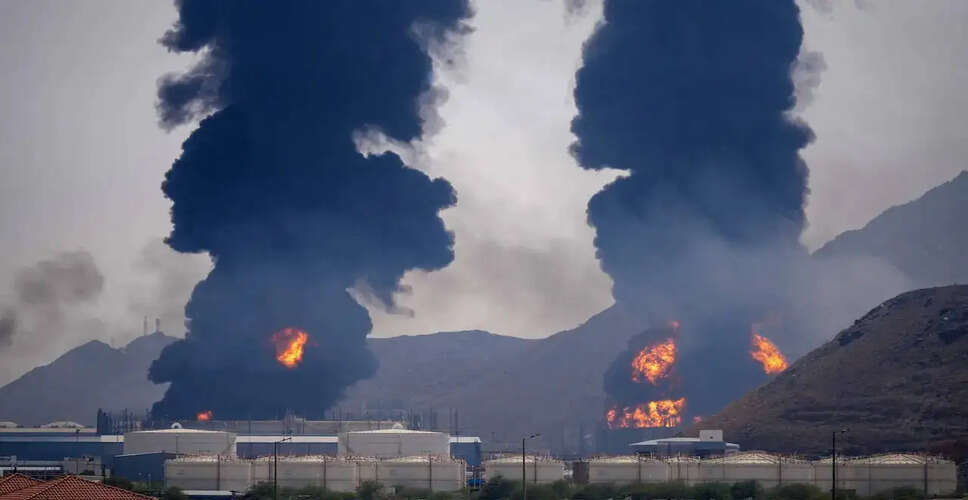
As the conflict in the Middle East continues into its second month without signs of resolution, the United Arab Emirates (UAE) has communicated to Iran that any future agreements will depend on Tehran providing solid security assurances and compensating for damages caused by its missile and drone strikes. Anwar Gargash, the diplomatic adviser to UAE President Sheikh Mohammad Bin Zayed, emphasized that any political resolution addressing Iranian aggression towards Gulf nations must include clear commitments to prevent future assaults. Gargash insisted that Iran must guarantee non-aggression and offer reparations for damage to civil infrastructure in the region.
Iran has been targeting Gulf countries, including the UAE, Saudi Arabia, Kuwait, Qatar, and Bahrain, as well as Israel, to exert pressure on the United States to halt the ongoing conflict, given that these nations host American military bases utilized by U.S. forces against Iran.
Despite ongoing informal discussions regarding a 15-point peace proposal from the U.S., Iran has not provided any assurances against further targeting of the Gulf states. Tehran has outright rejected the possibility of negotiations and cautioned the U.S. against any ground operations, warning that it would lead to dire consequences for American troops.
Warnings from U.S. Economist Regarding UAE's Involvement
In a related development, prominent U.S. economist Jeffrey Sachs has advised the UAE against entering the conflict, citing significant risks to Dubai and Abu Dhabi, which are primarily tourist destinations rather than military strongholds. Sachs remarked that the UAE has found itself in a precarious situation and continues to exacerbate its errors through its alignment with the U.S. and Israel.
He stated, "Dubai and Abu Dhabi could face severe destruction if the UAE engages in the war. These areas are meant for leisure and tourism, not for military defense. Entering a conflict zone undermines the very essence of places like Dubai. The Emirates has willingly stepped into a troubling situation and continues to make the same mistakes." Sachs criticized the Gulf nations' decision to align with the U.S. through the Abraham Accords, labeling it as an "invitation for disaster" that increases their reliance on American protection, which former U.S. Secretary of State Henry Kissinger referred to as a "fatal friendship." Gulf states have condemned Iran's assaults on their energy infrastructure, indicating stronger support for the U.S. in this ongoing conflict.
With inputs from various sources