
UAE Accelerates Major Oil Pipeline Project to Enhance Export Capacity

UAE's Strategic Oil Pipeline Initiative
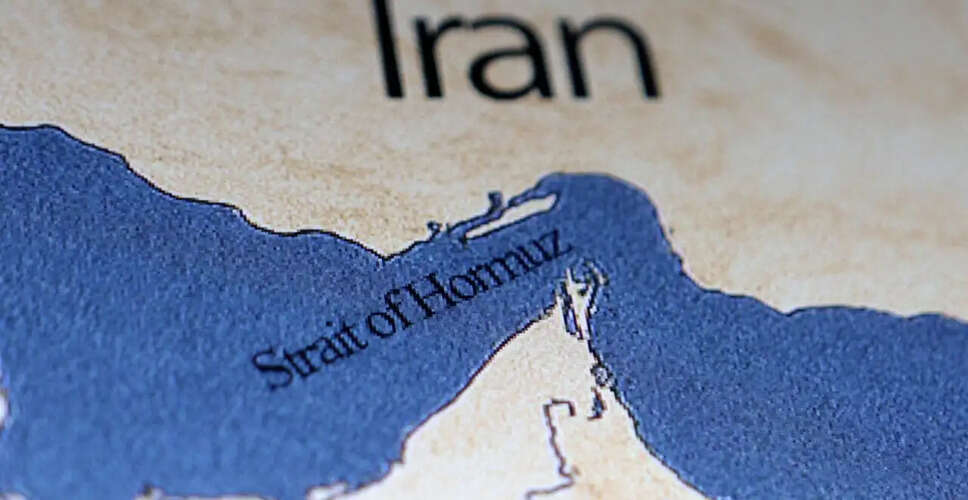
On Friday, the United Arab Emirates (UAE) unveiled its intention to expedite the development of a significant oil pipeline project aimed at boosting its crude export capabilities via Fujairah. This initiative is particularly crucial as it allows the UAE to circumvent the strategically vital Strait of Hormuz amidst rising tensions stemming from the Iran-US-Israel conflict. A report from a news agency indicated that Abu Dhabi's Crown Prince Khaled bin Mohamed bin Zayed Al Nahyan has directed the Abu Dhabi National Oil Company (ADNOC) to hasten the progress of the West-East Pipeline project during a recent executive committee meeting.
The pipeline, which is currently under construction, is anticipated to be operational by 2027, according to ADNOC. Presently, the UAE utilizes the Abu Dhabi Crude Oil Pipeline (ADCOP), also referred to as the Habshan-Fujairah pipeline, which can transport up to 1.8 million barrels of crude oil daily directly to the Gulf of Oman, thus enabling exports to bypass the Strait of Hormuz.
Currently, the UAE and Saudi Arabia are the only Gulf nations equipped with the necessary infrastructure to export crude oil outside the Strait of Hormuz, while Oman benefits from its extensive coastline along the Gulf of Oman. In contrast, countries such as Kuwait, Iraq, Qatar, and Bahrain remain heavily dependent on this narrow waterway for their energy exports.
This development comes at a time when regional instability, linked to the ongoing conflict, has been disrupting global energy markets. The Strait of Hormuz, situated between Iran and Oman, has effectively been rendered closed following Iran's reaction to the US-Israeli military actions initiated earlier this year. Approximately one-fifth of the world's oil supply typically transits through the Strait of Hormuz, underscoring its significance as a critical energy transit route worldwide.