
Trump's Vision for Peace: Will Respect from Iran Open the Strait of Hormuz?

Trump's Optimism on Iran Relations
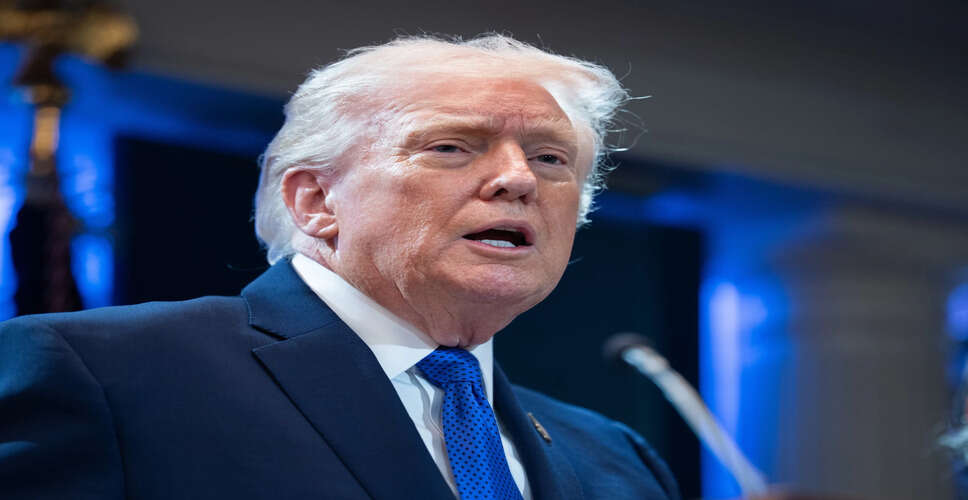
In a recent statement, President Donald Trump emphasized that gaining 'respect' from Iran is crucial for maintaining peace following the Iran-Israel conflict. He expressed hope for the complete reopening of the Strait of Hormuz, envisioning it as a source of abundant oil flow.
During a press briefing in the Oval Office, Trump remarked, "As long as they respect us, I prefer not to use the term fear, as it may not be appropriate, but with mutual respect, we should not face any issues."
The Strait of Hormuz was effectively shut down by Iran after a US-Israel military strike on February 28, which led to a significant spike in fuel prices across the region. An interim agreement aimed at concluding the conflict was expected to restore access to this vital shipping route. Over the weekend, several vessels managed to navigate through, although the primary passage remains mined and inaccessible.
Iran's parliamentary speaker and chief negotiator, Mohammad Bagher Ghalibaf, stated that Iran would oversee the Strait of Hormuz while adhering to international regulations. He expressed optimism about reactivating the strait to facilitate trade and boost both regional and global economies during a flight back from Switzerland.
Ghalibaf, along with Foreign Minister Abbas Araghchi, arrived in Oman on Monday evening to engage with Oman's Foreign Minister Badr al Busaidi regarding peace initiatives and ensuring safe passage through the Strait.
In a significant move, the US Treasury issued a 60-day waiver on sanctions concerning Iranian oil as part of the interim agreement, allowing for the importation of Iranian oil into the US, a practice that has been virtually nonexistent since the 1990s.
Traffic through the Strait of Hormuz has been increasing, with data from Kpler indicating 71 confirmed transits over the weekend, peaking at 35 on Saturday. Prior to the conflict, daily crossings ranged from 100 to 130 vessels.
To avoid mines, ships have been opting for alternative routes, including the smaller northern passage through Iranian waters and the southern route through Omani waters.
In market reactions, Brent crude oil prices dipped by 3.2% to USD 77.52 per barrel, nearing the USD 70 mark seen before the outbreak of hostilities.