
Trump's Upcoming Visit to China: Key Details and Implications

Overview of Trump's Visit
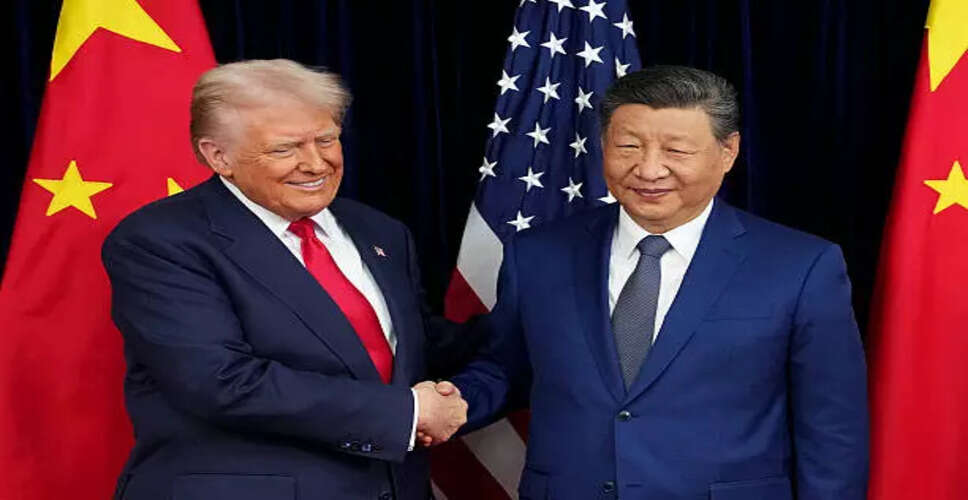
File image of US president Donald Trump and Chinese President Xi Jinping. (Photo:@crypto_exp22740/X)
Beijing, May 11: US President Donald Trump is set to visit China from May 13 to 15, following an invitation from Chinese President Xi Jinping, as announced by a spokesperson from the Chinese foreign ministry.
According to Anna Kelly, the principal deputy press secretary for the US, Trump will arrive in Beijing on the evening of May 13 for what she termed a visit of significant symbolism.
On May 14, Trump is scheduled to participate in a welcome ceremony and hold a bilateral meeting with Xi Jinping. This will be followed by a visit to the Temple of Heaven and a state banquet, as reported by the South China Morning Post.
The two leaders are expected to reconvene on May 15 for a bilateral tea and working lunch. Kelly also mentioned that the US intends to host Xi for a reciprocal visit later in the year.
This visit occurs amid rising expectations for a trade agreement between the two largest economies, especially after the US imposed significant tariffs.
Prior to Trump's arrival, China has emphasized Taiwan as a critical issue. Recently, China's Foreign Minister Wang Yi communicated with US Secretary of State Marco Rubio, urging the US to make prudent decisions regarding Taiwan, which China considers part of its territory.
China has intensified military activities around Taiwan, conducting drills in the region. Lin Jian, a spokesperson for the Foreign Ministry, stated that the Taiwan issue is central to China's interests and the foundation of China-US relations.
While the US recognizes Beijing as the legitimate government of China, it opposes any unilateral changes to Taiwan's status and continues to maintain informal relations and defense support for the island.
This marks the first visit by a US president to China in nearly nine years, with Trump being the last to do so in 2017 during his first term.
The visit comes at a time of ongoing conflict in West Asia involving the US, Israel, and Iran, alongside a crisis in the Strait of Hormuz affecting global energy supplies, and escalating tensions between the US and China over various issues, including Taiwan.
Bert Hoffman, a former World Bank country director for China, noted that Trump's discomfort stems not only from the Iran conflict but also from legal challenges to his tariff policies. He added that China is keen to see an end to the Iran conflict, as stability is crucial for its regional partners like Saudi Arabia, UAE, and Kuwait.