
Trump's Oval Office Letter to Vice President Sparks Security Debate
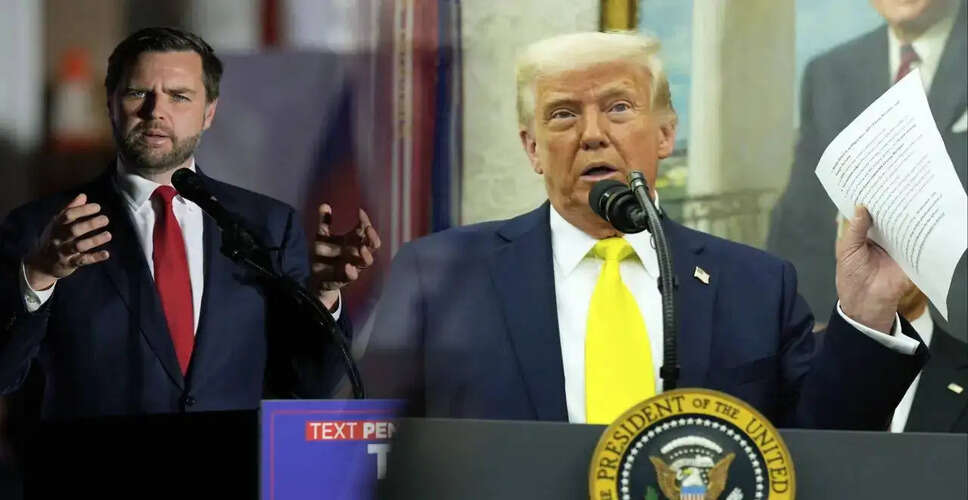

Confidential Letter in the Oval Office
According to a report by a news outlet, President Donald Trump is said to keep a secret letter for Vice President JD Vance in the Resolute Desk of the Oval Office. This information was shared by Sebastian Gorka, a deputy assistant to the president, during a podcast. The revelation comes as Trump participates in a significant summit in Beijing with Chinese President Xi Jinping, reigniting discussions about White House continuity, security measures for the president, and the constitutional succession process during times of global instability.
During the podcast 'Pod Force One,' Gorka mentioned that the Oval Office holds written instructions for Vance in case of an emergency involving the president. He stated, “There is a letter in the drawer in the Resolute Desk that is addressed to the vice president should something happen to him.” However, he did not provide further details about the letter's contents or the specific protocols associated with it, only saying, “We have protocols, trust me. Not ones I can discuss, but we have protocols.” The White House did not confirm the letter's existence when asked, instead referring to Trump's previous comments about threats against him this year.
Security Concerns Surrounding Trump's Presidency
Security Concerns Shadow Trump Presidency
This disclosure comes amid heightened security worries regarding Trump's presidency, as he has faced numerous threats throughout his campaign and current term. Recent media reports have also indicated increasing anxiety within federal security agencies about political violence and threats aimed at high-ranking officials.
Despite these concerns, Gorka downplayed the idea that foreign governments might target Trump during his international trips, stating, “Everybody wants recognition from this man.” He emphasized that Trump is a powerful figure, suggesting that global leaders gain more from engaging diplomatically with him rather than through confrontation. This discussion coincides with Trump's sensitive negotiations with Xi Jinping, which are expected to address trade issues, Taiwan, Iran, artificial intelligence, and broader US-China strategic competition.
Importance of Presidential Succession Protocols
Why Presidential Succession Protocols Matter
According to the US Constitution, the vice president is the first in line to take over the presidency in cases of death, resignation, or incapacitation of the president. The Presidential Succession Act of 1947 further clarifies the order of succession beyond the vice president, starting with the Speaker of the House and the president pro tempore of the Senate, followed by eligible Cabinet members.
American administrations have consistently maintained comprehensive continuity-of-government frameworks to ensure that federal authority remains uninterrupted during crises, including terrorist attacks and nuclear threats.
Gorka's comments have drawn increased attention to this issue, especially as Trump's visit to Beijing is one of the most strategically significant diplomatic engagements of his presidency, occurring amidst rising tensions over Taiwan and ongoing instability in West Asia, along with the broader geopolitical rivalry between Washington and Beijing.