
Trump's Historic Visit to China: A Grand Welcome and Key Discussions
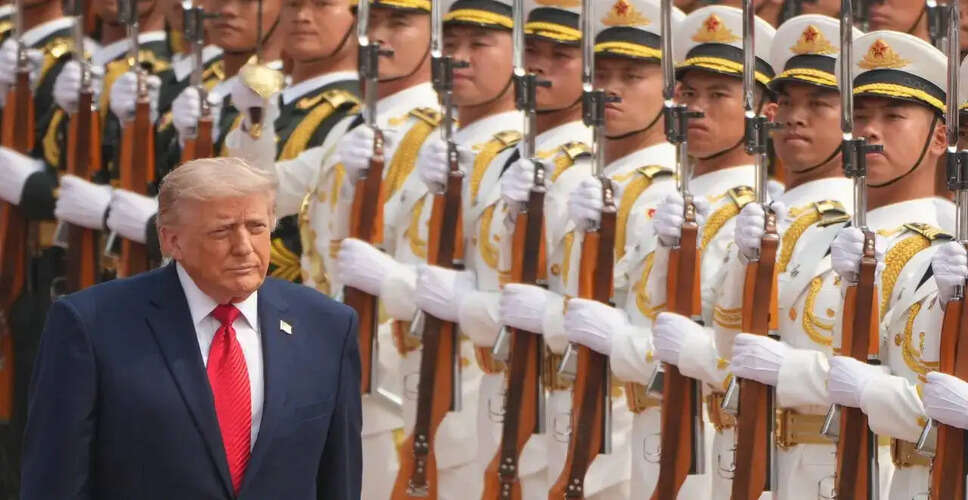

A Lavish Welcome in Beijing
On Thursday, US President Donald Trump commenced his highly anticipated visit to China, marked by an extravagant state reception. He was honored with a 21-gun salute and full military honors from Chinese President Xi Jinping at the Great Hall of the People in Beijing. Upon his arrival, Trump was warmly greeted by Xi at the entrance of this significant political venue, which serves as the home of China's legislature and hosts major Communist Party events. The two leaders exchanged pleasantries and posed for photographs before proceeding to the formal welcome ceremony.
President Trump Participates in a Greeting with the President of the People's Republic of China https://t.co/Y0uqAhepzT
— The White House (@WhiteHouse) May 14, 2026
As part of the ceremony, cannons fired a salute while military bands played the US national anthem. Trump and Xi later reviewed an honor guard of Chinese soldiers, who were impeccably dressed and carried ceremonial swords across the marble plaza. This event, held at Tiananmen Square under tight security, is anticipated to influence discussions on critical issues such as Iran, Taiwan, trade tensions, and the evolving power dynamics between the two leading global economies.
Access to Tiananmen Square was heavily restricted, allowing only officials, state media, invited press, and military personnel. The area was adorned with large Chinese and American flags along the red-carpeted staircase leading into the Great Hall, with rows of soldiers standing at attention throughout the expansive ceremonial grounds.
Children, Military Honors, and Diplomatic Significance
Children, Military Honours And Symbolic Optics
Hundreds of schoolchildren, dressed in vibrant uniforms, participated in the state welcome, waving flags of both nations and presenting flowers as Trump and Xi walked by. This meticulously planned ceremony aimed to convey Beijing's desire to showcase stability, prestige, and diplomatic equality with Washington, even amidst escalating geopolitical tensions.
The U.S. national anthem plays for @POTUS upon his arrival at the Great Hall of the People in Beijing, China 🇺🇸 pic.twitter.com/CTdaasVYxP
— Rapid Response 47 (@RapidResponse47) May 14, 2026
Inside the Great Hall, Xi Jinping opened the meeting with remarks, to which Trump responded with unusually warm compliments for the Chinese leader, stating, “You’re a great leader,” and expressing his honor in being Xi's friend. Trump expressed optimism that US-China relations would improve significantly despite ongoing disputes over trade and security issues.
As part of his three-day visit, Trump is also set to explore Beijing’s historic Temple of Heaven and attend a formal state banquet hosted by Xi Jinping.
Key Issues on the Agenda
Iran, Taiwan And Trade Dominate The Agenda
Despite the ceremonial grandeur, the summit carries substantial geopolitical implications. The White House has indicated that Trump's delegation aims to make headway on trade and economic matters, including potential Chinese commitments regarding US agricultural products and aircraft purchases.
.@POTUS and President Xi conclude the arrival ceremony on the steps of the Great Hall of the People in Beijing pic.twitter.com/MfoEjBNpVB
— Rapid Response 47 (@RapidResponse47) May 14, 2026
US officials are also advocating for discussions on a proposed Board of Trade mechanism to manage future disputes. However, the most challenging discussions are expected to focus on Iran and Taiwan. Trump has increasingly sought China's help in applying pressure on Tehran amid ongoing instability in West Asia, particularly following the US-Israel conflict with Iran. China is one of Iran's largest energy partners and the leading buyer of its oil exports.
Secretary of State Marco Rubio, who is accompanying Trump, stated that Washington desires China to take a more proactive role in encouraging Iran to de-escalate tensions in the Persian Gulf. This issue has gained urgency following disruptions in the Strait of Hormuz, which have led to spikes in global oil prices and heightened concerns about economic stability.