
Trump's Diplomatic Blunder: Revealing Private Talks with King Charles
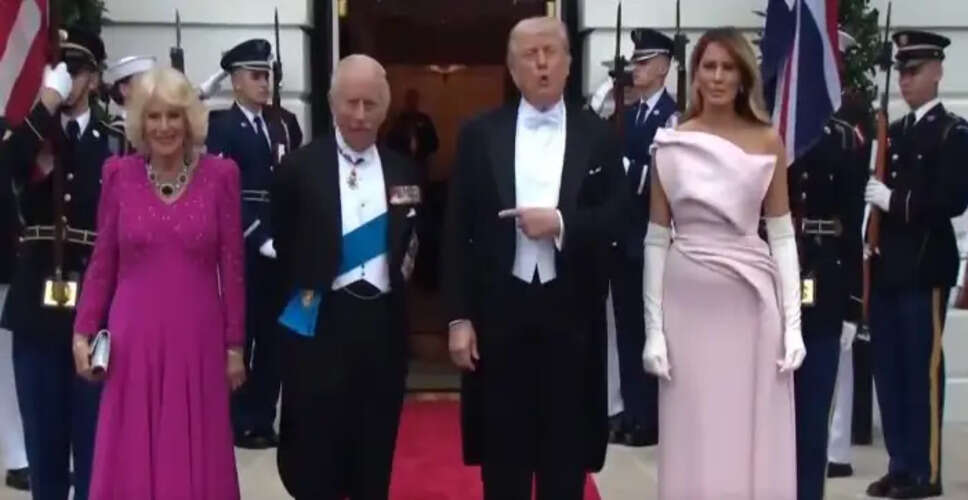

A Diplomatic Faux Pas Unfolds
London: In the realm of diplomatic missteps, this incident could have been more severe.
During a state dinner on Tuesday honoring King Charles III and Queen Camilla, U.S. President Donald Trump disclosed that the British monarch had concurred with him on the issue of Iran's nuclear ambitions during a private meeting earlier that day.
"We are currently engaged in some Middle Eastern efforts... and things are progressing well," Trump stated to the attendees. "We have successfully dealt with that particular adversary, and we will ensure that they never acquire nuclear capabilities – Charles agrees with me, perhaps even more strongly than I do."
While many in Britain might resonate with Trump's viewpoint, his remarks sparked mild concern among commentators in the UK.
In the UK, such disclosures are generally frowned upon.
Traditionally, it is considered inappropriate to share private discussions with the monarch. This is partly to maintain the king's neutrality in political matters and also because the sovereign cannot publicly clarify any misstatements.
"Typically, I would expect discussions between heads of state to remain confidential, conducted in private meetings," remarked Craig Prescott, a constitutional law expert at Royal Holloway, University of London. "This is something the UK government aimed to prevent."
Prior to the king's visit to the U.S., there were considerable anxieties, especially given Trump's public dissatisfaction with UK Prime Minister Keir Starmer for not backing U.S. actions in the Iran conflict.
As with all royal visits, this event was meticulously planned at the request of the UK government, which hopes that a positive rapport between the king and Trump, who has a fondness for royal traditions, can mend the existing rift.
However, Trump is known for his unconventional approach and tendency to breach established protocols, raising concerns about his potential comments or actions.
In this instance, the king's remarks appeared to align with the current UK government stance.
"The King is acutely aware of his government's longstanding position on preventing nuclear proliferation," Buckingham Palace stated, providing context to Trump's comments.
Prescott noted that the real concern was always about Trump's potential to embarrass the king.
"There was always the worry about what he might post on social media," he added. "This situation could have escalated significantly worse."
Before the state dinner, King Charles addressed a joint session of the U.S. Congress, receiving multiple standing ovations as he highlighted the enduring ties between the U.S. and the UK while acknowledging differences regarding NATO, support for Ukraine, and climate change initiatives.
From the perspective of the UK government, the visit is now transitioning to a more secure environment as the king and queen depart Washington for New York, where the emphasis will shift to the city's cultural sectors rather than political discussions.
Prescott suggested that the most challenging aspects of the trip might be behind them.
"If this is the only controversy to arise from this segment of the state visit, it can be deemed a significant success for both the king and the British government, as the king managed to deliver pointed remarks in Congress without provoking any negative response from the president," he concluded.
"In a way, it seems the king has charmed Washington with his congressional address and his engaging speech at the state banquet."