
Trump's Controversial Views on Iranian Oil Resurface Amid Tensions
Trump's Historical Remarks on Iranian Oil
In light of escalating tensions with Iran, former US President Donald Trump has revived interest in a decades-old television interview where he proposed taking control of Iranian oil resources as a response to hostilities. This interview, which aired in December 1987, features a young Trump discussing American strategies during the Iran-Iraq War with journalist Barbara Walters. He questioned, "Why couldn't we go in and take over some of their oil, which is along the sea?" criticizing what he perceived as American weakness. When asked about the potential for escalation, he bluntly stated, "You go in... you take the oil... Let Iran fight their own war. You take their oil." Trump further suggested that if Iran were to attack the US, Washington should seize a significant oil facility. He emphasized, "The next time Iran attacks this country, go in and grab one of their big oil installations… and get back your losses," asserting that weakness leads to trouble.
Current Context of Trump's Remarks
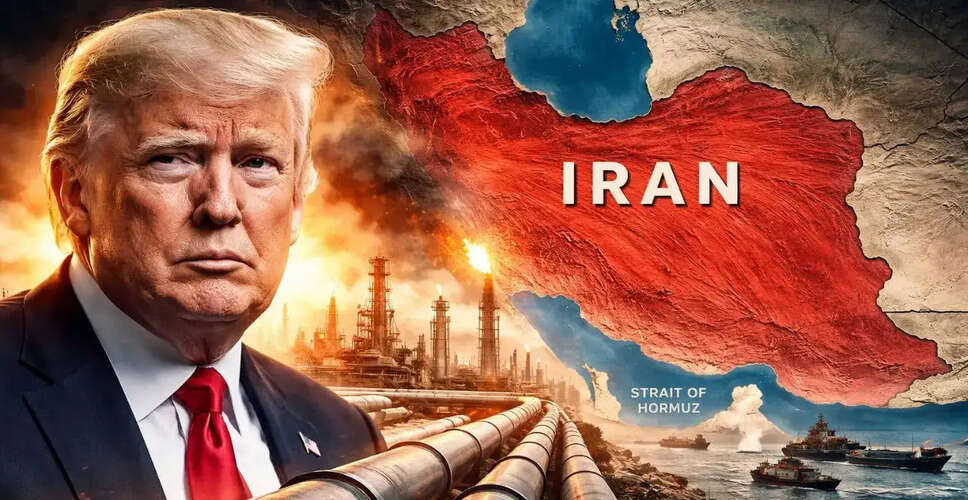
These resurfaced comments come as Trump has issued new warnings to Tehran, connecting ongoing military tensions to the strategic significance of the Strait of Hormuz, a vital passage for global oil transport. In a recent post on Truth Social, he mentioned that the US was engaging with what he termed a "more reasonable" Iranian leadership, while cautioning of repercussions if an agreement is not reached. He stated, "If for any reason a deal is not shortly reached and if the Hormuz Strait is not immediately ‘open for business,'" implying that the US would intensify its response. In an interview with a financial publication, Trump reiterated his stance, expressing a preference to take control of Iranian oil and suggesting that US forces could target Iran's primary export hub at Kharg Island.
Iran's Oil Reserves and Production
Iran's Oil Wealth
Iran is recognized as one of the leading energy producers globally. The United States Energy Information Administration reports that it possesses the third-largest proven crude oil reserves and the second-largest natural gas reserves worldwide. The nation contributes approximately 12% of the global proven oil reserves, estimated at 157 billion barrels. Currently, Iran produces around 3.3 million barrels of crude oil daily, placing it among the top producers in OPEC. Prior to the reimposition of sanctions during Trump's first term, Iran was exporting about two million barrels of oil and refined fuel each day. However, these exports saw a drastic decline following the US sanctions imposed in 2018, after the withdrawal from the Joint Comprehensive Plan of Action established under former President Barack Obama.
Challenges of Seizing Iranian Oil
Could the United States Seize Iranian Oil?
Despite Trump's persistent claims, military and energy analysts argue that physically seizing Iranian oil would be significantly more complicated than his remarks imply. US officials, as reported by a major news outlet, have contemplated limited ground operations, including potential raids on Kharg Island and coastal facilities near the Strait of Hormuz. However, these plans do not equate to a full-scale invasion and would likely involve special operations forces rather than conventional military occupation. Even if US forces managed to capture critical infrastructure, experts highlight that controlling oil production and export systems—especially those protected by Iran's Islamic Revolutionary Guard Corps—would be a formidable challenge. Kharg Island is heavily fortified, with restricted access. Moreover, seizing oil facilities would not guarantee the ability to extract, transport, or sell the oil, particularly in a conflict scenario.