
Trump's Bold Remarks Amid Escalating Conflict: Allies Urged to Secure Their Own Oil
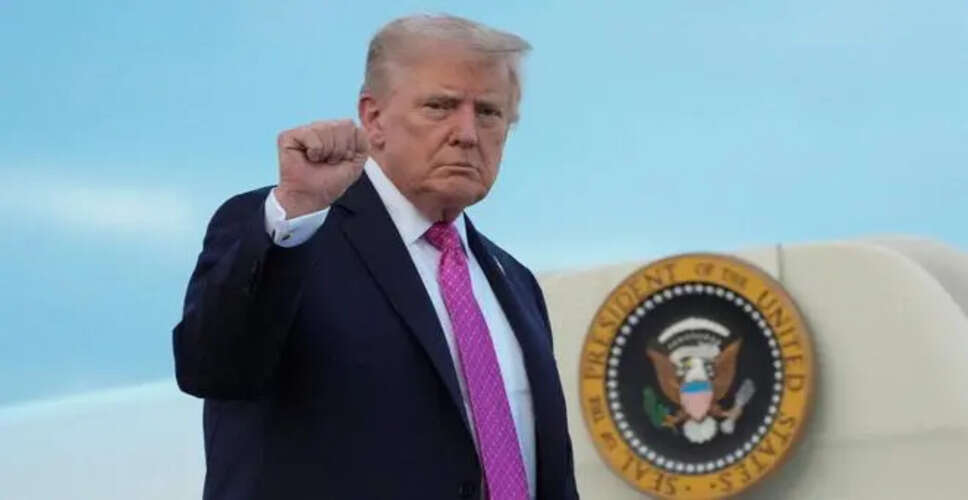
Trump's Frustration with Allies
President Donald Trump voiced his dissatisfaction on Tuesday regarding the lack of support from allies in the ongoing conflict, urging them to "go get your own oil" as tensions with Iran escalate and gas prices in the US surpass $4 per gallon.
This statement followed US airstrikes on a city housing a significant Iranian nuclear facility, which resulted in a massive explosion, while Iran retaliated by targeting a fully loaded Kuwaiti oil tanker in the Persian Gulf.
The recent attacks highlight the escalating nature of the conflict, which has claimed over 3,000 lives and severely disrupted global oil and gas supplies, causing turmoil in international markets.
Trump, who has fluctuated between claiming diplomatic progress with Iran and threatening to expand military actions, previously shared footage of the assault on Isfahan, a central city known for housing one of Iran's nuclear enrichment sites.
Analysts suggest that a substantial portion of Iran's highly enriched uranium is likely stored in this location.
Impact on Global Oil Markets
The war is roiling the oil market
Iran's control over the Strait of Hormuz, a crucial passage for a significant portion of the world's oil supply, has led to soaring global oil prices, exacerbated by Tehran's attacks on regional energy infrastructure. This situation has rattled stock markets globally and increased the prices of essential goods.
As of Tuesday, Brent crude prices were around $107 per barrel, marking a rise of over 45% since the conflict began on February 28.
Trump criticized allies such as the UK and France for their reluctance to engage in a war without a clear objective, emphasizing that the US would no longer provide support as they had not supported the US in its efforts.
"You’ll have to start learning how to fight for yourself. The USA won’t be there to help you anymore, just like you weren’t there for us. Iran has been, essentially, decimated. The hard part is done. Go get your own oil!" Trump stated.
He specifically called out France for restricting military flights over its territory while supplying Israel, labeling Paris as "VERY UNHELPFUL" and asserting that "The USA will REMEMBER!!!"
Allies' Reluctance to Engage
Allies have refused to get involved
France has permitted the US Air Force to utilize the Istres base in southern France, contingent on assurances that aircraft landing there would not participate in strikes.
Spain, a vocal critic of the war, announced on Monday that it had closed its airspace to US aircraft involved in the conflict.
Italy has also denied US military assets access to the Sigonella air base in Sicily for operations related to the offensive, as confirmed by a knowledgeable official.
Despite this, Italy's Defence Minister Guido Crosetto stated on social media that the US is still allowed to use its bases, asserting that relations between the two nations remain strong.
Escalating Strikes on Iran and Lebanon
Waves of strikes on Iran and Lebanon
In a series of coordinated strikes, Israel and the US targeted Iran, striking Tehran early in the morning.
The Israeli military reported that it had targeted Hezbollah infrastructure in Beirut, with Defence Minister Israel Katz indicating plans to control areas south of the Litani River, approximately 20 miles north of the border.
Following Hezbollah's missile attacks into northern Israel, fears of a prolonged military occupation in Lebanon have surged.
Trump shared a video depicting a significant attack on Isfahan, while NASA fire-tracking satellites indicated explosions in the mountainous region near the city. Iran has yet to confirm these attacks.
Concerns Over Enriched Uranium Storage
Iran might be storing enriched uranium in Isfahan
A satellite image taken prior to the June conflict suggested that Iran transferred a truckload of highly enriched uranium to a nuclear facility located about 12 miles from the recent strikes.
Analysts believe this truck, which was seen entering a tunnel with 18 blue containers, likely contained most or all of Iran's stockpile of uranium enriched to 60% purity, a step away from weapons-grade levels.
Trump warned that if a ceasefire is not achieved soon and the Strait remains closed, the US would expand its military actions, potentially targeting the Kharg Island oil export hub and desalination plants.
At the Pentagon, Defence Secretary Pete Hegseth refrained from confirming whether US ground forces would be deployed, stating, "We don’t want to have to do more militarily than we have to, but I didn’t mean it flippantly when I said, in the meantime, we’ll negotiate with bombs."
Iran's Attack on Oil Tanker
Iran hits oil tanker in waters off Dubai
An Iranian drone struck a Kuwaiti oil tanker near Dubai, igniting a fire that was subsequently extinguished, according to the Dubai Media Office. Authorities confirmed that no oil spill occurred.
Four individuals sustained injuries from debris from an intercepted drone that fell into a residential area, and loud explosions were reported from another attack in Dubai.
Air raid sirens were activated in Bahrain, while Saudi Arabia intercepted three ballistic missiles aimed at its capital. Explosions were also heard in Israel shortly after warnings of an incoming missile barrage from Iran.
In Iran, officials report over 1,900 fatalities, while Israel has recorded 19 deaths. The Gulf states and the occupied West Bank have seen two dozen casualties, and Lebanon has reported over 1,200 deaths, with more than 1 million people displaced.
Ten Israeli soldiers have died in Lebanon, including four announced on Tuesday, alongside 13 US service members.