
Trump's Bold Move: Tariffs on Imported Generic Drugs to Reshape US Pharmaceutical Landscape
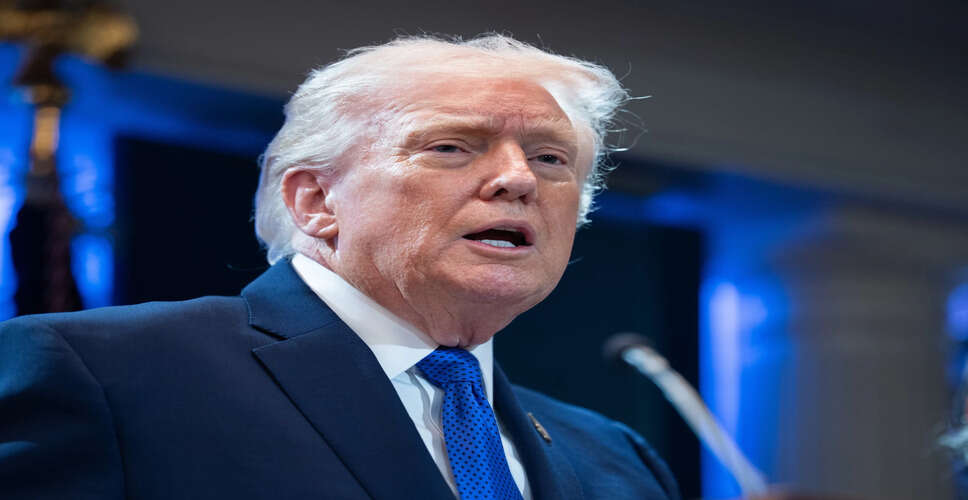

Trump's Announcement on Drug Tariffs
Washington: On Wednesday, President Donald Trump unveiled a strategy aimed at boosting domestic drug production by implementing a phased tariff system on imported generic medications. Initially, these tariffs will remain at zero percent for two years, before escalating to 100 percent in August 2028, and eventually reaching 200 percent.
As the leading supplier of generic drugs to the United States, India stands to be significantly affected by this policy.
In a post shared on Truth Social, Trump stated that starting August 1, the U.S. will maintain a zero percent tariff on all generic drugs for a two-year period. Following this, the tariff will increase to 100 percent for one year, and then to 200 percent thereafter.
Trump emphasized that this initiative aims to encourage the reshoring of generic pharmaceutical manufacturing to the U.S., penalizing companies that fail to establish production facilities within the designated timeframe.
The president asserted that the primary goal of this policy is to safeguard American citizens.
He also confirmed that the existing policy regarding patented, branded, or innovative drugs will remain unchanged.
India is often referred to as the 'pharmacy of the world' due to its extensive supply of generic medications globally.
In 2025, India exported pharmaceuticals worth USD 9.7 billion to the U.S., which constituted 38 percent of its total global pharmaceutical exports of USD 25.8 billion, according to a report by the Global Trade Research Initiative.
Indian generic drugs are commonly prescribed for various health conditions, including hypertension, diabetes, cancer, infectious diseases, and mental health issues.
According to a report from the New York Times, generic medications, such as statins and antibiotics, represent approximately 90 percent of prescriptions in the U.S., with a significant portion produced in India and a reliance on China for raw materials. This dependency has been flagged as a national security concern by both Republicans and Democrats.
Healthcare professionals and supply chain analysts have voiced strong opposition to the proposed tariffs on imported generics, warning that it could lead to increased costs, drug rationing, and shortages of essential medications. Previously, the administration had indicated that generic drugs would be exempt from tariffs.
John Murphy III, the CEO of the Association for Accessible Medicines, a trade organization representing generic drug manufacturers, expressed that his industry intends to collaborate with the administration and lawmakers to find solutions that will revitalize the generics sector and emphasize its importance as a national security asset in the U.S.