
Trump Urges Ceasefire Amid Escalating Israel-Iran Conflict

Diplomatic Efforts Intensify
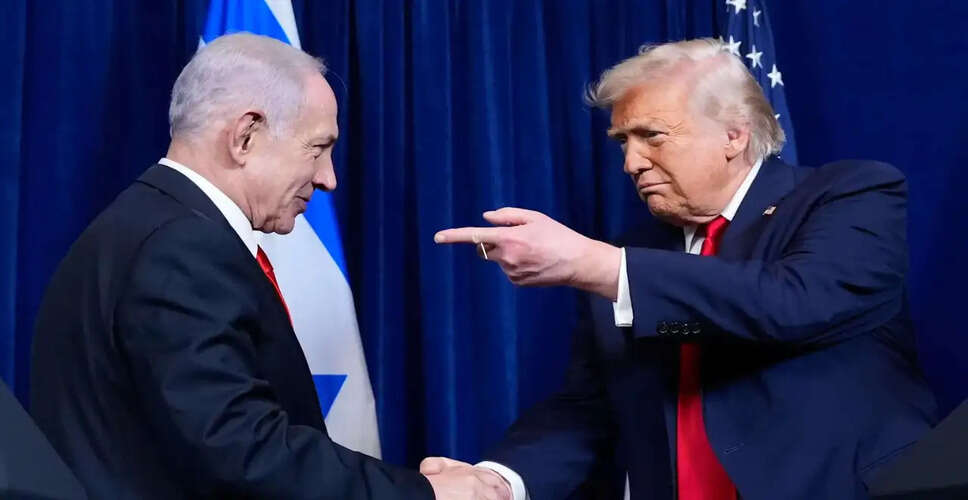
President of the United States, Donald Trump, recently engaged in a phone call with Israeli Prime Minister Benjamin Netanyahu just before he publicly stated that both Israel and Iran were aiming for an immediate ceasefire. This conversation occurred amidst ongoing hostilities between the two nations, marking the first exchange of fire since a ceasefire was established on April 8. While neither the White House nor Netanyahu's office has confirmed the details of the call, its timing has raised eyebrows as diplomatic initiatives are ramping up to avert further conflict and finalize a peace agreement.
According to an Israeli official, the call took place prior to Trump's social media announcement regarding the ceasefire. Reports indicate that Israel has yet to make a definitive decision on how to respond to the renewed conflict with Iran, with an official stating, "We are waiting for a clear directive from the political leadership regarding the direction we are taking," as reported by Channel 12.
In the wake of retaliatory strikes that risked escalating tensions across the Middle East, Trump urged both parties to cease their attacks. He posted on his social media platform, Truth Social, stating, "Israel and Iran must immediately stop shooting." In a subsequent post, he added, "Both sides, Israel and Iran, are looking to do an immediate CEASEFIRE! Final negotiations on 'Peace' are proceeding, subject to ignorance or stupidity getting in its way. The Blockade will remain in place, and in full force and effect, until a 'Final Deal' is reached. Things should move quickly."
Iran has launched multiple attacks on Israel, prompting Israeli strikes on various locations in Iran, including Isfahan, Karaj, Tabriz, and Tehran. Following the Israeli assault, Iran closed its airspace around Tehran’s Imam Khomeini International Airport. Reports from semi-official news agencies Fars and Mehr indicated that Israeli strikes targeted a petrochemical facility in Mahshahr, which the Israeli military confirmed, stating it aimed at sites involved in ballistic missile production and truck-based missile launchers.
Israel's military actions were described as retaliation for an Iranian missile attack. Tehran had previously warned of retaliation after Israel conducted an unannounced strike on southern Beirut. Following Israel's counterattack, Iran's Revolutionary Guard claimed responsibility for targeting two military bases in Israel. Explosions were reported in central Israel as air defense systems attempted to intercept incoming Iranian missiles, with sirens sounding across neighboring Jordan.
After a series of strikes, Iran's armed forces declared the conclusion of their military operations against Israel, as reported by Fars news agency. Nevertheless, Israel cautioned that it would respond more forcefully if attacks on Lebanon resumed. Iranian President Masoud Pezeshkian emphasized that Tehran's focus remains on "national security and the peace of our people," asserting, "We will defend the rights of the nation with authority and will not retreat in the face of any threat. Diplomacy and defense are the two wings of national power; we have neither abandoned the field nor the negotiating table. God willing, with unity and rationality, Iran will emerge triumphant from this trial as well."