
Trump Reveals Secret Naval Operations in the Strait of Hormuz

US Naval Operations Detailed by Trump
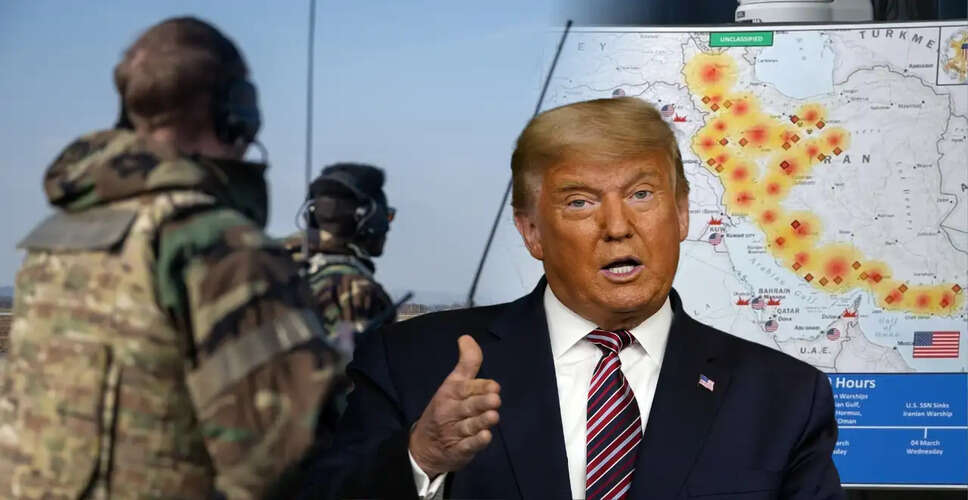
In a surprising revelation, President Donald Trump has shared intricate details regarding covert American military activities in the Strait of Hormuz. He stated that US forces had been stealthily maneuvering ships at night for several weeks while targeting Iranian radar systems. According to Trump, these operations were conducted discreetly, with vessels traveling without lights to ensure the safety of commercial shipping from Iranian threats.
During an interview with CNBC's Business Day, Trump disclosed that this operation had been ongoing for approximately six weeks. He emphasized, "We executed a plan that was kept under wraps. Every night, we were guiding ships through the southern route, far from Iranian weaponry, and they navigated the coast in complete darkness for a month and a half." He credited this initiative to US military efforts as part of a broader strategy against Iran.
Massive Naval Escort Operations
Trump Claims 22 Ships Were Secretly Escorted In One Night
According to Trump's account, on one particular night, the US Navy successfully escorted 22 ships out of the region. While he did not specify the date or the identities of the vessels, he described the operation as a silent escort mission that went unnoticed by the public. "That’s a significant amount of oil. Our Navy facilitated their exit, and it was all done in silence, with lights off," Trump remarked.
He further elaborated on the destruction of Iranian radar capabilities, asserting that American forces had not only dismantled their radar infrastructure but had also targeted the replacements. "We obliterated Iran's radar systems. They had no radar, and we struck again just the other night," Trump stated.
Consecutive Strikes Against Iran
'I Hit Them Three Nights In A Row'
Trump also connected a series of US military strikes to incidents involving commercial vessels in the Strait of Hormuz. He claimed that American forces retaliated against Iran on three consecutive nights last week after Tehran allegedly launched a drone towards a ship. "They still have some missiles left; we could eliminate them too. I struck them three times last week very forcefully because they sent a drone towards a ship," Trump said. "Then they engaged in further actions, and I responded. I hit them three nights in a row, and the week before, I hit them two nights consecutively, very hard."
These statements provide insight into the operational pace of US forces in the region amid tensions with Iran. The nighttime maritime movements, radar suppression, and repeated retaliatory strikes are central to the narrative presented by the President. However, he did not disclose the specific platforms used against the radar installations or their exact locations.
Diplomatic Talks and Military Operations
The timing of Trump's revelations coincides with the conclusion of another round of indirect negotiations between the United States and Iran in Doha, which reportedly did not yield significant progress towards a lasting peace agreement. Negotiators spent two days discussing aspects of the interim agreement announced two weeks prior, with maritime traffic through the Strait of Hormuz and the unfreezing of Iranian funds being key topics. Qatar noted that the discussions had made "positive progress" building on outcomes from a previous summit in Switzerland.
However, there appears to be a discrepancy between Trump's public statements regarding Iran's nuclear program and the discussions that took place behind closed doors in Doha. Trump claimed, "The denuclearization of Iran is progressing well," while sources indicated that the nuclear issue was not on the agenda during this round of talks, which were more technical in nature. US Vice President JD Vance mentioned that discussions regarding the nuclear question would occur later.
The next round of negotiations is anticipated to take place following the funeral of Iran's late Supreme Leader Ayatollah Ali Khamenei, scheduled for July 9. Until then, Trump's disclosures have drawn renewed attention to the military operations that have occurred alongside diplomatic efforts, particularly the covert movement of ships in waters where commercial traffic has become a critical concern in the ongoing conflict with Iran.