
Trump Pushes for SAVE America Act Amid Senate Challenges
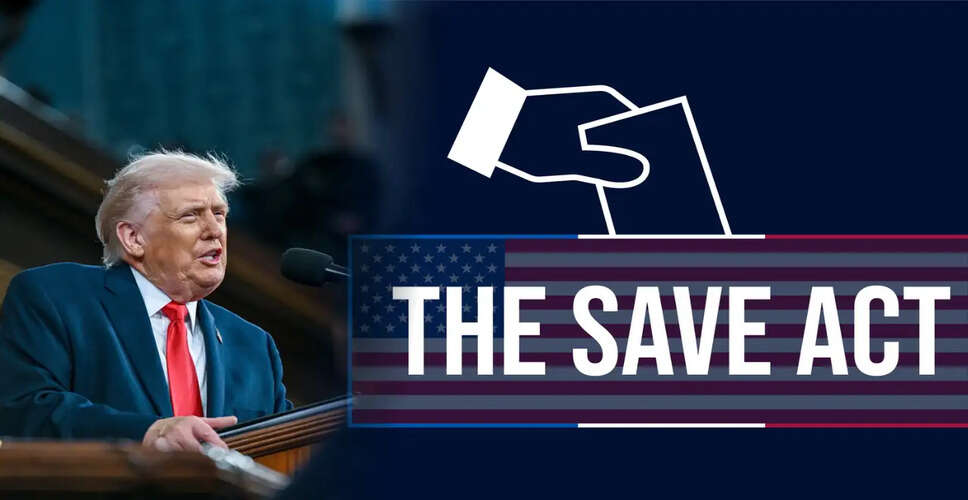

Trump's Campaign for Election Integrity
President Donald Trump is ramping up efforts to convince Congress to endorse the SAVE America Act, emphasizing its importance for enhancing election integrity as the midterm elections approach. This initiative has emerged as a key legislative focus for the White House, despite facing significant political and procedural hurdles in the Senate. Trump has consistently urged Republican lawmakers to support the bill and has suggested eliminating the Senate filibuster if necessary. Nevertheless, Senate Majority Leader John Thune has acknowledged that Republicans lack the votes needed to alter Senate rules or pass the bill through standard procedures.
Overview of the SAVE America Act
The SAVE America Act expands upon last year's Safeguard American Voter Eligibility (SAVE) Act, which successfully passed the House but stalled in the Senate. This new legislation introduces three significant reforms for federal elections: it mandates that individuals registering to vote provide documentary proof of U.S. citizenship, requires states to create programs to identify and remove non-citizens from voter rolls using the federal SAVE database, and insists that voters present government-issued photo identification before casting their ballots. Proponents argue that these measures will bolster election security and enhance public trust in the electoral process.
Challenges in Congress
Despite strong support from Trump and House Republican leaders, the bill faces considerable challenges in the Senate. Current Senate rules necessitate 60 votes to overcome a filibuster, and Republicans do not have enough votes to meet this requirement, with Democratic lawmakers largely opposing the proposal. To navigate this hurdle, House Republicans are exploring the possibility of incorporating parts of the legislation into a $95 billion budget reconciliation package, which would allow it to pass with a simple majority, thus avoiding the filibuster. However, reconciliation rules limit the provisions that can be included, and the Senate parliamentarian will decide which elements of the SAVE America Act qualify.
Key Points of Contention
Supporters of the bill argue that requiring documentary proof of citizenship and photo identification will help prevent illegal voting and enhance election safeguards. Conversely, critics contend that the legislation could impose obstacles for millions of eligible voters who may lack easily accessible documents like passports or birth certificates. There are also concerns about whether state and local election authorities can realistically implement the proposed changes before the upcoming elections in November. Trump has claimed that the bill would significantly limit mail-in voting and address issues related to transgender participation in sports and gender-transition procedures for minors. However, the current version of the legislation does not include any provisions regarding women's sports or gender-transition surgeries, nor does it ban mail-in voting. Instead, it stipulates that applicants registering by mail must present documentary proof of citizenship in person before they can receive mail ballots.
Timeline and Future Prospects
Republican Senator Mike Lee has stated that the legislation needs to be enacted by early August for any provisions to take effect before the midterm elections. However, Senator Thom Tillis has dismissed this timeline, arguing that numerous government agencies would struggle to implement such extensive changes before November. Consequently, the SAVE America Act remains one of the most debated election reform proposals currently in Congress, with its fate likely hinging on both Senate procedural dynamics and political backing.