
Trump Issues Stark Warning to Iran Amid Ongoing Conflict
Trump's Threat to Iran's Infrastructure
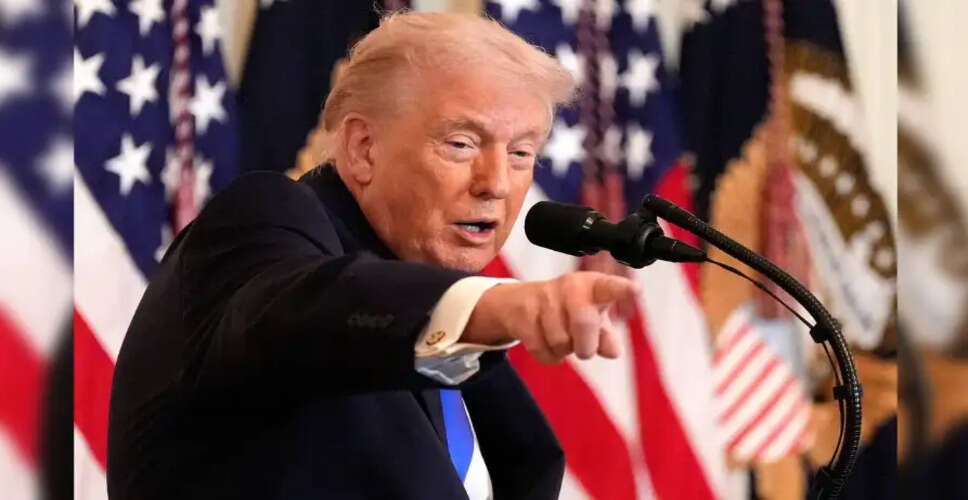
President Donald Trump has delivered a strong ultimatum to Iran, threatening to "completely obliterate" vital infrastructure, including oil facilities and power plants, if a timely agreement is not reached and the Strait of Hormuz remains closed. In a pointed message shared on his Truth Social platform, Trump indicated that the U.S. is negotiating with a "new, more reasonable regime" in Iran, hinting at a possible deal while simultaneously ramping up military threats.
Trump stated, "The United States of America is in serious discussions with A NEW, AND MORE REASONABLE, REGIME to end our Military Operations in Iran. Great progress has been made but, if for any reason a deal is not shortly reached, which it probably will be, and if the Hormuz Strait is not immediately 'Open for Business,' we will conclude our lovely 'stay' in Iran by blowing up and completely obliterating all of their Electric Generating Plants, Oil Wells and Kharg Island (and possibly all desalinization plants!), which we have purposefully not yet 'touched.' This will be in retribution for our many soldiers, and others, that Iran has butchered and killed over the old Regime’s 47 year 'Reign of Terror.'"
The ongoing conflict in the Middle East has now reached its 30th day, with over 3,000 casualties reported since the war erupted on February 28, following U.S. and Israeli strikes on Iran. This has led to Iranian retaliatory actions against U.S. military assets and Israeli targets, as well as attacks on neighboring Gulf Arab nations.
Furthermore, Iran's control over the crucial Strait of Hormuz has caused significant fluctuations in global oil markets, given that 20% of the world's oil trade transits through this vital passage. According to reports, the involvement of Iranian-backed Houthi rebels in the conflict may also jeopardize shipping routes in the Bab el-Mandeb strait leading to the Red Sea.
(This is a developing story)