
Trump Honors Fallen Soldiers Amid Ongoing Iran Conflict
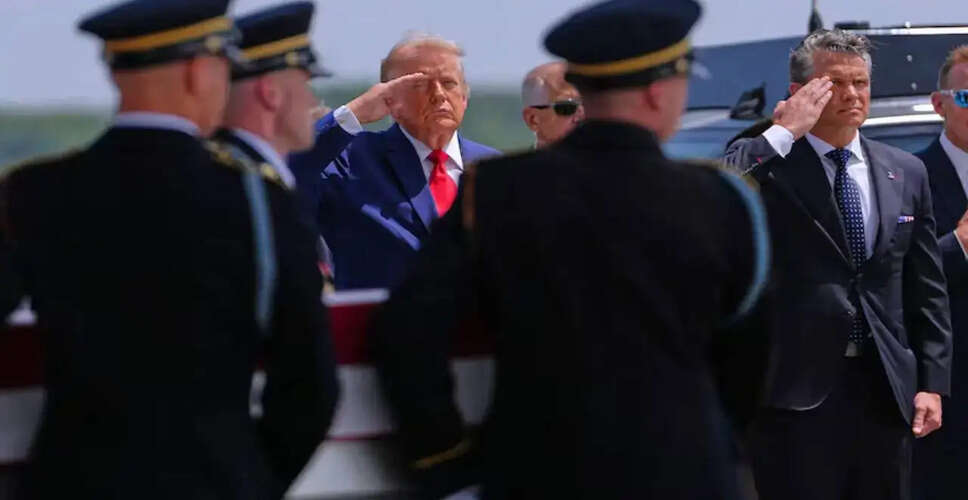

A Solemn Ceremony at Dover Air Force Base
Today, President Trump saluted as four caskets, draped in flags, were unloaded from a military cargo plane at Dover Air Force Base in Delaware. This ceremony paid tribute to four American service members who lost their lives last week in the ongoing conflict with Iran. An honor guard carefully transferred the remains to transport vehicles while family members observed the somber event. At one moment, a relative was heard crying out as the body of her loved one was carried by.
Trump Reflects on the Difficulties of Leadership
Prior to the ceremony, Trump spoke to the press at Joint Base Andrews, describing the experience as one of the most challenging aspects of his presidency. He emphasized the importance of honoring those who have fallen, acknowledging that it is never an easy task. He mentioned that when meeting grieving families, it is crucial to express love and allow his own emotions to surface.
Identifying the Fallen Heroes
Among the four service members, three were killed when an Iranian missile struck a military base in Jordan, while the fourth lost his life in northern Iraq during a controlled detonation of a downed Iranian drone. The New York Post reported the identities of those who perished in the Jordan attack: Tyler James Feehan, 25, from Ewa Beach, Hawaii; Isabella Gonzales, 19, from Carrollton, Texas; and Angel S. Rampersad, 28, from Ozone Park, New York. The service member who died in Iraq was identified as Michael Emmanuel Swinton, 30, from Spring Lake, North Carolina.
Trump Challenges Public Sentiment
Just before the dignified transfer, Trump addressed recent polls indicating that a majority of Americans are against the continuation of the war. He dismissed the notion that public sentiment is against the conflict, arguing that dissatisfaction stems more from rising gas prices than the war itself. He cited concerns over Iran potentially acquiring nuclear capabilities as a reason to maintain military engagement, asserting that Iran would face severe consequences for its actions and claiming that the country is already experiencing military strain.
The Ongoing Conflict
Trump, alongside Israeli Prime Minister Benjamin Netanyahu, initiated the war on February 28. Since then, he has been working to negotiate a resolution with Tehran. A ceasefire had been in effect since April 8, followed by a preliminary peace agreement signed by Trump on June 17. However, this agreement collapsed after Iran launched new attacks in the Strait of Hormuz, leading to renewed hostilities this month.
On Tuesday, Trump suggested that Iran might be intentionally extending the conflict to undermine Republican prospects in the upcoming November midterms. Concurrently, House Speaker Mike Johnson expressed to reporters that it is time to conclude the war, reflecting increasing pressure from within Trump's party to expedite a resolution.