
Trump Highlights Need for Domestic Manufacturing Post-COVID

Trump Addresses Manufacturing Dependence on China
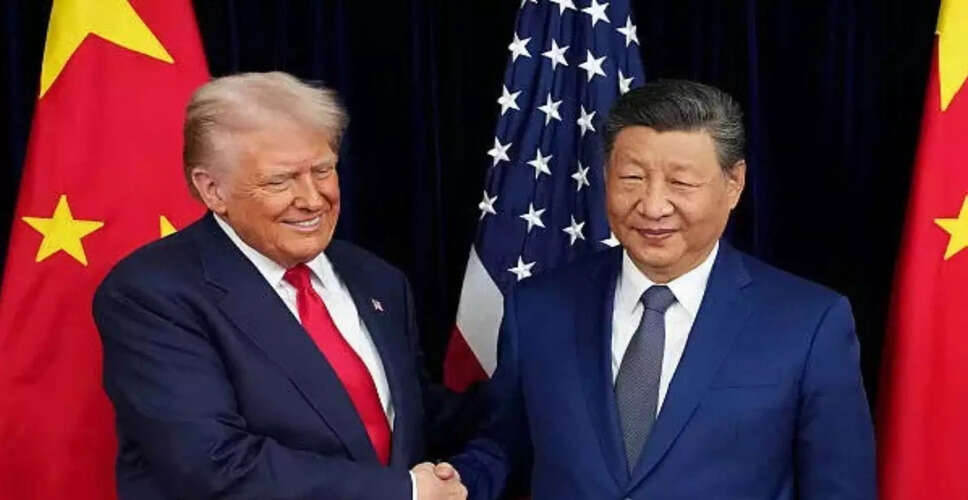
File image of US president Donald Trump and Chinese President Xi Jinping. (Photo:@crypto_exp22740/X)
Washington, Oct 7: US President Donald Trump emphasized that the COVID-19 pandemic has revealed America's reliance on China and other nations for essential goods. He argued that it is crucial for the United States to enhance its domestic manufacturing capabilities to safeguard both economic and national security.
During a speech at Sparrows Point in Maryland, Trump connected his administration's initiative to boost American shipbuilding with a broader strategy to bring critical manufacturing back to the U.S.
“We learned that from COVID,” he stated, highlighting the nation's dependency on international suppliers.
“We didn't produce our agricultural products or pharmaceuticals; they were manufactured in China and various locations in Europe, including Ireland,” he noted, as per the transcript of his address.
Trump's remarks coincided with the announcement of a significant expansion of shipbuilding capacity at a former industrial site near Baltimore.
Reshoring manufacturing and decreasing reliance on foreign supply chains have become pivotal aspects of his economic and national security strategy.
He has specifically focused on the economic ties with China, implementing tariffs and trade restrictions while encouraging companies to increase domestic production.
However, Trump acknowledged that the U.S. still maintains a vital economic relationship with Beijing.
“We have a very good -- we've always had a good relationship, and we are generating substantial revenue with China,” he remarked.
He linked this strategy to defense production, mentioning that his administration has secured over a billion dollars in funding for shipbuilding to create more than 80 new vessels for the U.S. Navy.
The administration contends that industrial capacity should be regarded as a national security asset, especially as the U.S. competes with China in military technology, advanced manufacturing, and maritime strength.
At Sparrows Point, Trump and Defense Secretary Pete Hegseth introduced a new shipyard aimed at producing submarine components and autonomous underwater vehicles.
This initiative combines federal funding with private investment as Washington seeks to broaden an industrial base that officials claim has become overly concentrated and unable to meet the military's ship and submarine production demands.
Hegseth stated that the administration is pursuing “speed, scale, and urgency” from the Pentagon and defense contractors.
This approach signifies a wider transformation in U.S. economic policy, where supply chains for semiconductors, pharmaceuticals, critical minerals, energy, and defense equipment are increasingly assessed through a national security perspective.