
Trump Family's Cryptocurrency Venture Surges Amid Controversy
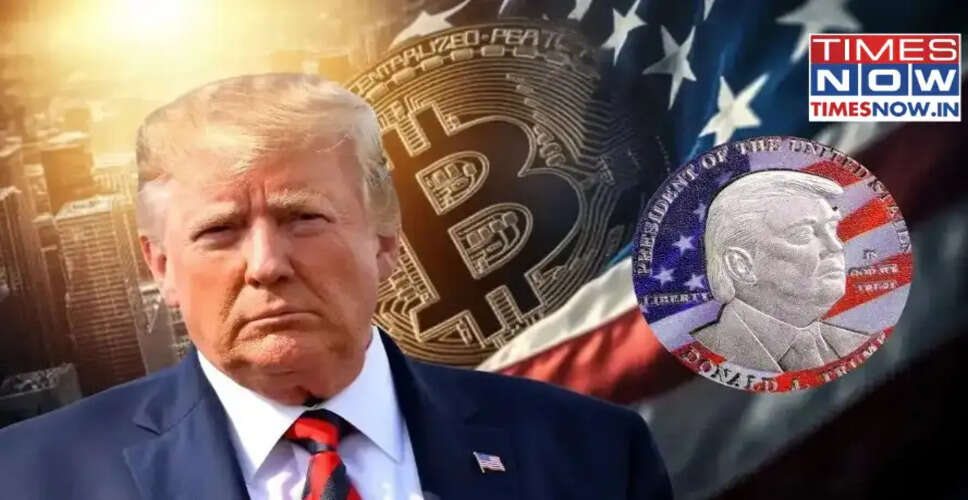
Trump Family's Ambitious Crypto Endeavor
In August 2025, Eric Trump and Donald Trump Jr. celebrated the Nasdaq opening bell to commemorate the listing of World Liberty Financial, marking a significant milestone for the family. Their cryptocurrency initiative, which began during the 2024 presidential campaign, has rapidly evolved into the Trump Organization's primary revenue stream, surpassing traditional income sources like real estate and golf.
A recent investigation revealed that Trump-related businesses generated around $802 million in the first half of 2025, with $463 million stemming from World Liberty Financial's token sales and $336 million from the $TRUMP memecoin. In contrast, the real estate sector produced only $51 million during the same timeframe last year, indicating a remarkable 17-fold increase in overall earnings.
The financial structure of this venture is clear. According to World Liberty's disclosure, 75% of the net proceeds from token sales are allocated to the Trump family. The entity receiving these funds, DT Marks DEFI LLC, is officially linked to Donald Trump and his family. By September 2025, Trump-affiliated entities owned 22.5 billion WLFI tokens, translating to a paper valuation of approximately $5 billion at its peak.
However, the venture has attracted investors whose backgrounds raise concerns. The SEC halted an investigation into Justin Sun after he claimed to have invested around $200 million in Trump’s crypto offerings. Additionally, in May 2025, a state-backed fund from Abu Dhabi invested $2 billion in Binance, using World Liberty's stablecoin for the transaction. Later, it was disclosed that a UAE firm connected to Sheikh Tahnoon bin Zayed Al Nahyan acquired a 49% stake in World Liberty Financial for $500 million, a deal made before Trump took office.
World Liberty Financial has defended its operations, asserting that there is no conflict of interest with the U.S. government. A spokesperson emphasized that the company adheres to strict anti-money laundering and know-your-customer protocols. Donald Trump Jr. and World Liberty CEO Zach Witkoff reiterated that their focus is on their business, not on stablecoins.
Despite these assurances, ethics experts have expressed concerns about the potential conflict of interest arising from the family's business ties to U.S. cryptocurrency policy. The White House and company representatives have denied any wrongdoing. Since January 2025, the Justice Department has scaled back its cryptocurrency enforcement efforts, leading critics to suggest that the timing is suspicious. Senator Elizabeth Warren has raised alarms about the family's financial interests in World Liberty, labeling it an unprecedented conflict of interest that could affect the Trump Administration's regulatory stance on the cryptocurrency sector.
As World Liberty Financial continues to grow, it has launched a lending platform, is pursuing a national bank charter, and recently introduced a 'Super Node' tier for investors willing to lock up $5 million in WLFI tokens for six months. The relationship between the presidency and the cryptocurrency business has never been more complex.