
Trump Declares U.S. as 'Guardian of the Hormuz Strait' Amid Tensions with Iran
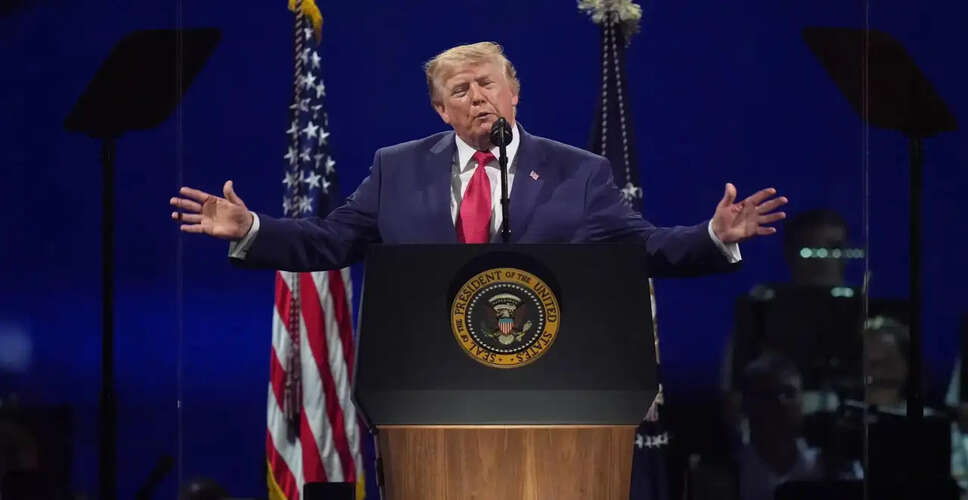

Trump's Announcement on the Strait of Hormuz
On July 13, U.S. President Donald Trump declared the reimplementation of what he termed the "Iranian blockade," asserting that the Strait of Hormuz will remain accessible regardless of Iran's actions. In a statement shared on Truth Social, Trump explained that this measure would specifically target Iranian vessels and their customers while ensuring that other nations can continue to navigate the crucial waterway freely.
Trump emphasized, "The Hormuz Strait is OPEN, and will remain OPEN, with or without Iran. We are reinstating THE IRANIAN BLOCKADE, which only restricts Iran's ships or customers from entering or leaving. All other countries will have fair and open access to the Strait." He proclaimed that the U.S. would assume the role of the "Guardian of the Hormuz Strait" and suggested that the U.S. should be compensated for its security efforts in the area, proposing a 20% fee on cargo passing through to cover these costs.
He stated, "From this point forward, the U.S.A. will be known as 'THE GUARDIAN OF THE HORMUZ STRAIT,' and as a matter of fairness, will be reimbursed at a rate of 20% on all cargo shipped to cover the expenses necessary for ensuring safety and security in this volatile region. The process will begin immediately. Thank you for your attention to this matter!"
Earlier, during an interview with a news channel, Trump claimed that the U.S. would take control of the Strait of Hormuz. He has consistently maintained that U.S. forces have control over the strait since the onset of the U.S.-Israeli conflict with Iran.
Despite Trump's assertions, Iran has continued to exert influence over its rivals by threatening and occasionally attacking vessels in the waterway, which has significant implications for the global economy. These comments followed a weekend marked by attacks across the broader Middle East, complicating any diplomatic efforts to resolve the conflict that began on February 28.
On Sunday, Trump reiterated that the Strait of Hormuz remains open for commercial shipping, even as tensions between the U.S. and Iran have led to mutual attacks, raising safety concerns on one of the world's key oil shipping routes. The recent cycle of retaliatory strikes was initiated after a container ship was attacked in the strait near Oman. The narrow entrance to the Persian Gulf has experienced shipping disruptions since the beginning of the U.S.-Israel-Iran conflict.
The U.S. military's Central Command (CENTCOM) reported that its forces targeted numerous sites in strikes on Monday, including air defense systems, radar installations, missile and drone equipment, and small boats. Additionally, missile alert sirens were activated three times in Bahrain, where the U.S. Navy’s 5th Fleet is stationed, while Kuwait reported intercepting hostile fire.