
Trump Critiques Supreme Court Ruling on Birthright Citizenship and Mental Health Issues in Congress
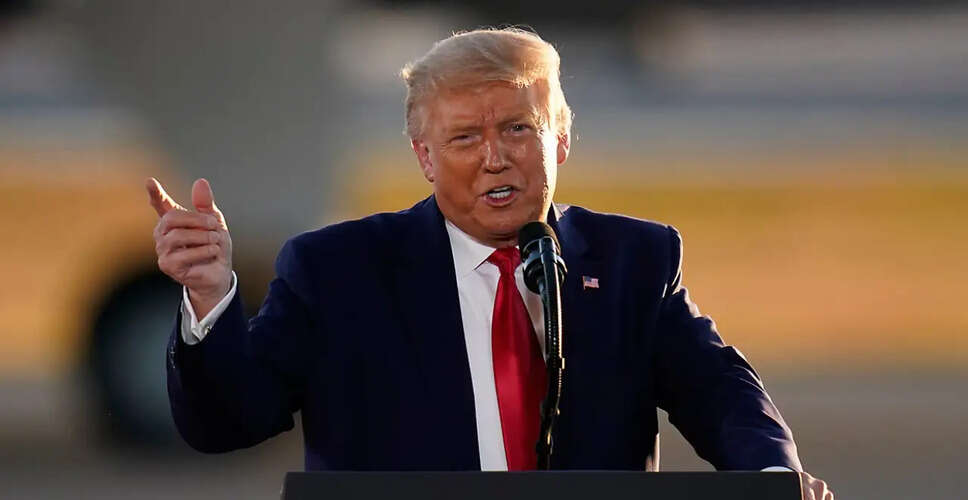

Trump's Response to Supreme Court Decision
Former President Donald Trump expressed strong disapproval of the Supreme Court's recent ruling that invalidated his executive order regarding birthright citizenship. He described the decision as detrimental to the nation and called on Congress to act swiftly to limit automatic citizenship for children born in the U.S. to non-citizen parents. In a post on Truth Social, Trump emphasized that the ruling highlighted the necessity for legislative action rather than a constitutional amendment, suggesting that Congress could address the matter with presidential support.
Trump stated, “The Supreme Court upheld Birthright Citizenship, which is too bad for our Country, but we can easily make it up in Congress through Legislation, with the support of the President… No long and unwieldy Constitutional Amendment is necessary! Congress should start TODAY… They will have my Complete and Total Support!”
This ruling represents a significant setback for Trump's immigration policies, which aimed to restrict the interpretation of the Citizenship Clause. Chief Justice John Roberts, in the majority opinion, reaffirmed that under the 14th Amendment, individuals born on U.S. soil are citizens at birth, referencing the established precedent from United States v. Wong Kim Ark. Legal experts warn that any legislative attempts to counter this ruling would likely face immediate constitutional challenges, although the White House has indicated support for renewed congressional initiatives.
Trump and his supporters argue that Congress still has the authority to redefine the phrase “subject to the jurisdiction thereof,” which is central to the debate. However, many constitutional scholars contend that such efforts would not survive judicial review, asserting that only a constitutional amendment—requiring two-thirds approval from Congress and ratification by three-fourths of the states—could change birthright citizenship.
Despite this legal hurdle, the topic is anticipated to remain a contentious issue in immigration discussions as the next election approaches, with Republican and Democratic lawmakers framing the ruling in starkly different ways.
Mental Health Discussion in Congress
As the political discourse escalated in Washington, attention also shifted to developments involving Republican Representative Thomas Kean Jr. from New Jersey, who recently returned to the public eye after a significant absence due to hospitalization for depression. Speaking on the House floor, Kean explained that his over four-month absence, during which he missed more than 140 votes, was due to his treatment for a serious mental health issue. He emphasized the importance of following medical advice for recovery, stating that seeking help is a sign of strength rather than weakness.
Kean, the son of former Governor Thomas Kean, highlighted the seriousness of depression and the need to recognize it as a legitimate medical condition rather than a personal failing. He pointed out that despite its prevalence, the illness is often misunderstood.
His absence had raised political concerns, especially as his district is a competitive battleground ahead of the upcoming elections. The Cook Political Report has categorized his seat as a toss-up, with Democrats actively targeting his voting record and absence. His Democratic opponent, Rebecca Bennett, has criticized his voting history during his time away, suggesting it indicates vulnerability in a closely contested race.
House Speaker Mike Johnson expressed his support for Kean's decision to prioritize his health, although he noted a preference for earlier communication regarding the reasons for Kean's absence. Johnson remarked that Kean's explanation would likely resonate with both colleagues and constituents.
Kean's candid disclosure has sparked a broader conversation about mental health challenges faced by public officials and the pressures associated with holding office, particularly in a highly polarized political climate where extended absences can quickly become contentious issues.
In summary, the Supreme Court's ruling on birthright citizenship and Kean's personal revelations highlight two significant yet distinct themes in American politics: the ongoing legal and ideological struggle over immigration policy and the increasing public dialogue surrounding mental health and leadership within Congress.