
Trump Considers NATO Withdrawal Amid Rising Tensions with Allies
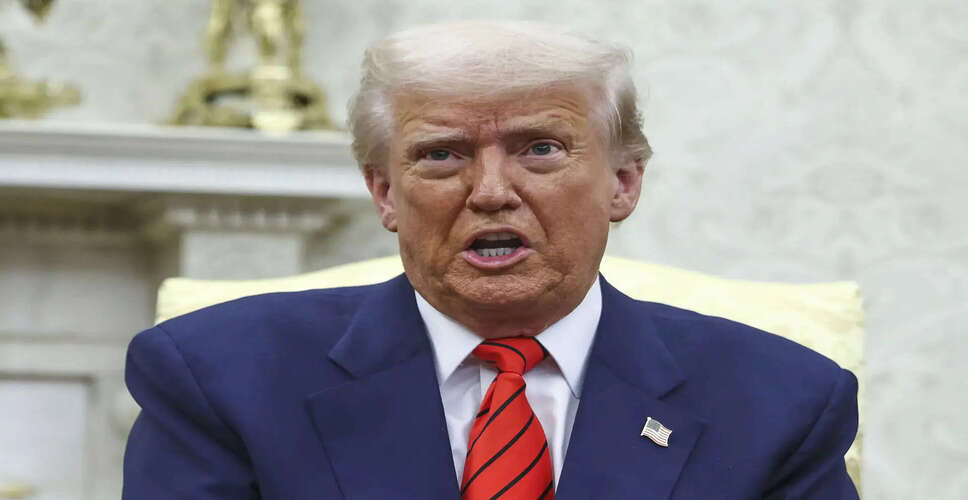
Trump's NATO Withdrawal Consideration
President Donald Trump has indicated that he is contemplating a withdrawal of the United States from the North Atlantic Treaty Organization (NATO). This statement follows the alliance's refusal to back his military initiatives against Iran. In a conversation with The Telegraph, Trump labeled NATO a 'paper tiger' and mentioned that the option of leaving the alliance is now 'beyond reconsideration.' This statement highlights the increasing discord between Washington and its European partners, as reported by the Telegraph.
The friction arises from NATO members rejecting Trump's appeal to send warships to reopen the crucial Strait of Hormuz, a passage that facilitates approximately 20% of the global oil supply. The recent effective closure of this strait by Iran has led to a surge in global energy prices and heightened concerns about a potential economic downturn.
Trump expressed his disappointment over what he perceives as a lack of mutual support from allies, stating, 'We’ve always been there for them,' referencing past US commitments, including those in Ukraine. He criticized UK Prime Minister Keir Starmer for Britain's refusal to participate in the US-Israel initiative against Iran and questioned the capabilities of the Royal Navy. Additionally, Trump linked the UK's energy policies to rising costs.
In response, Starmer reiterated Britain's dedication to NATO, describing it as 'the single most effective military alliance the world has ever seen,' while clarifying that the UK would not engage in the conflict, stating, 'This is not our war.'
The White House has shown increasing dissatisfaction with its allies during this crisis. US Secretary of State Marco Rubio characterized NATO as a 'one-way street,' criticizing member nations for limiting access to military bases. He suggested that Washington might reevaluate its relationship with NATO following the conflict. Trump supported Rubio's comments, expressing his approval.
The president is anticipated to provide an update to the nation regarding the war, which he recently indicated could conclude in a matter of weeks. He has consistently maintained that the primary goal is to prevent Iran from obtaining nuclear weapons.
Behind the scenes, the administration is also considering significant changes to NATO, including a potential 'pay-to-play' model that could restrict decision-making authority for members who fail to meet defense spending benchmarks. Discussions about reducing the US military presence in Germany are also being revisited.
Trump's Mixed Messages Amid Ongoing Conflict
Despite thousands of additional American troops being deployed to the Middle East, President Trump asserts that the United States is prevailing in the war against Iran. He has criticized other nations, particularly NATO, for not providing adequate support, only to later claim that he does not require their assistance. Trump has postponed deadlines for Iran to reopen the Strait of Hormuz on two occasions. He has alternately threatened to 'obliterate' Iran's energy facilities if the vital waterway remains closed while asserting that the US is 'not affected' by the closure.
At one point this month, Trump suggested that a former president—implying a Democrat—privately expressed regret for not taking similar actions against Iran. However, representatives for all living former presidents quickly refuted that such a conversation took place.
As the conflict enters its second month, Trump's tendency for embellishment and exaggeration is being scrutinized in a context where the stakes are significantly higher than mere political disputes. A president known for his bravado and salesmanship is now facing the unpredictable nature of war.