
Trump Claims Strait of Hormuz as 'New U.S. Territory' Amid Rising Tensions with Iran

Trump's Controversial Claim
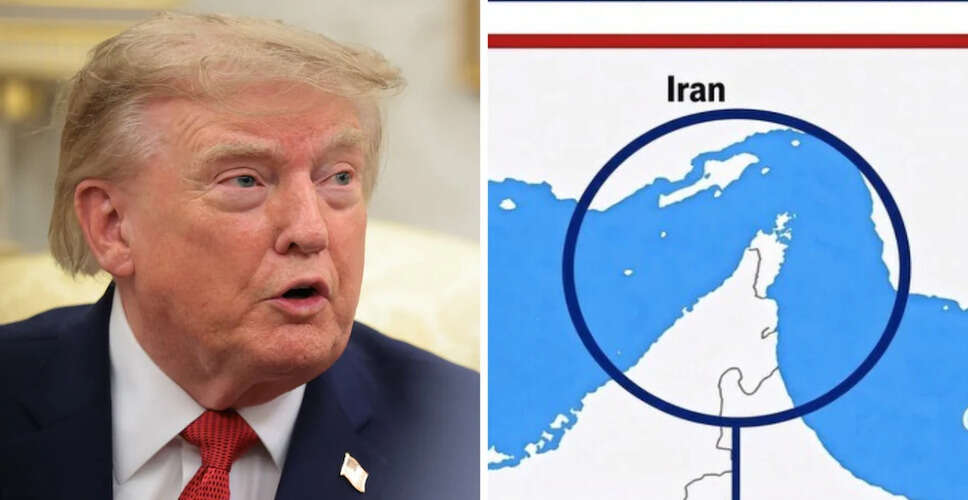
In light of escalating tensions between the United States and Iran, President Donald Trump has made a provocative assertion regarding the Strait of Hormuz, stirring international reactions. He shared a map on the social media platform Truth Social, labeling the strategically vital strait as 'NEW U.S. Territory'. This announcement comes amidst ongoing disputes between the U.S. and Iran over the region.
Map Designation of Hormuz
The graphic posted by Trump highlights the Strait of Hormuz, situated between Iran and Oman, prominently marked with 'NEW U.S. Territory'. This statement follows his previous claims asserting U.S. control over the strait.
Legal Implications of Trump's Claim
However, simply declaring a region as U.S. territory through a social media post does not confer legal sovereignty over that area. The territorial status and maritime rights of Hormuz are subjects governed by international law and the sovereignty of the involved nations.
Iran's Stance on Hormuz
In response to Trump's assertion, Iran has made it clear that it is not prepared to open the Strait of Hormuz at this time. Iranian negotiator Mohammad Bagher Ghalibaf stated that the U.S. must fulfill the conditions of a June interim agreement, which includes lifting blockades on Iranian ports and addressing issues related to frozen Iranian assets.
Iran's Rejection of U.S. Claims
Iran's Deputy Foreign Minister Kazem Gharibabadi dismissed Trump's territorial claim, asserting that Hormuz cannot be seized through a tweet or declaration.
Importance of the Strait of Hormuz
The Strait of Hormuz is one of the world's most crucial maritime routes, connecting the Persian Gulf to the Gulf of Oman and the Arabian Sea. A significant volume of crude oil and other energy products are transported through this passage to global markets.
Impact on Global Oil Prices
Consequently, disruptions in shipping through Hormuz can have far-reaching effects beyond just the U.S. and Iran, influencing oil prices, energy supplies, and the economies of numerous countries. On Tuesday, crude oil prices surged amid rising tensions and uncertainty surrounding Hormuz.
Trump's Previous Claims of Control
Previously, on August 12, Trump asserted that the U.S. had 'total control' over the Strait of Hormuz, adopting a firm stance on U.S. naval blockades. He reiterated the possibility of declaring Hormuz as U.S. territory on August 17.
Ongoing U.S.-Iran Negotiations
The dispute over Hormuz has become central to ongoing negotiations between the U.S. and Iran. An interim agreement was reached in June aimed at progressing towards a comprehensive peace deal. However, after 60 days of discussions, no final agreement has been established.
Current Situation
As it stands, Trump's map designating Hormuz as 'New U.S. Territory' has sparked significant debate in international politics. Meanwhile, Iran remains firm on its conditions regarding Hormuz and demands that the U.S. fulfill the terms of the agreement. The world is closely watching the developments in U.S.-Iran negotiations and shipping activities in Hormuz.
Key Takeaway
It is important to note that Trump's designation of Hormuz as 'U.S. Territory' should not be interpreted as a change in the current international legal status. This remains a political claim by the U.S. President rather than a transfer of territory through any recognized international process.