
Trump Claims Role in Preventing India-Pakistan Nuclear Conflict
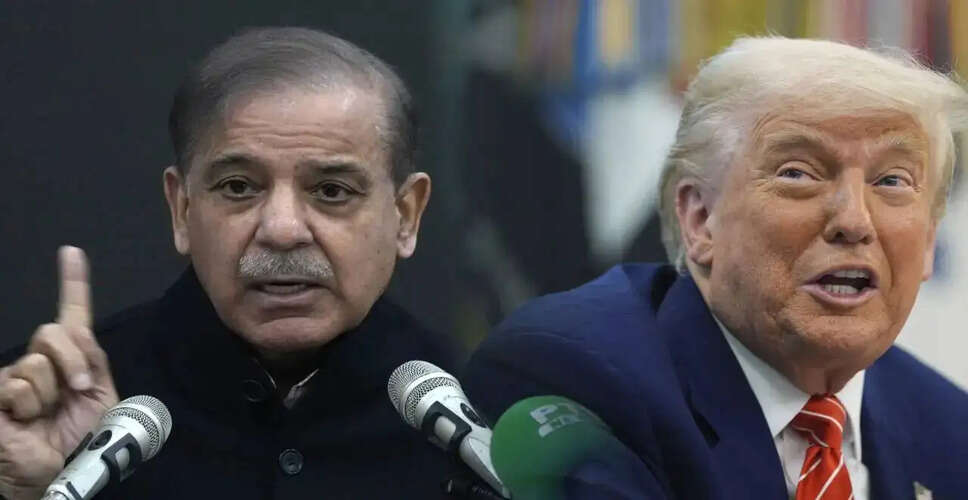
Trump's Assertion During State of the Union Address
During his State of the Union address on Wednesday, President Donald Trump reiterated his assertion that he played a crucial role in averting a full-scale war between India and Pakistan. He claimed that his intervention prevented what he described as a potential nuclear conflict, particularly referencing the escalation that occurred in May 2025 following the Pahalgam terror attack. Trump stated, “Pakistan and India would have been in a nuclear war,” and emphasized that “Thirty-five million people — the Prime Minister of Pakistan would have died if it were not for my involvement.” This statement referred to Pakistan's Prime Minister Shehbaz Sharif, although Trump did not provide any evidence to support the casualty figure he mentioned.
#WATCH | Addressing the 2026 State of the Union, United States President Donald Trump says, "... In my first 10 months, I ended eight wars... Pakistan and India would have had a nuclear war. 35 million people said the Prime Minister of Pakistan would have died if it were not for… pic.twitter.com/GnrgJKtjID
— News Media (@NewsMedia) February 25, 2026
Background on Operation Sindoor and the 2025 Crisis
Operation Sindoor And The 2025 Escalation
Trump's remarks are linked to the crisis that unfolded in May 2025, following a terror attack in Jammu and Kashmir that resulted in civilian casualties attributed to Pakistan-backed militants. In retaliation, India executed targeted strikes against terrorist infrastructure in Pakistan-occupied Kashmir and within Pakistan itself, an operation later termed Operation Sindoor. This military action heightened alert levels on both sides, raising international concerns about a potential escalation between the two nuclear-armed nations. Throughout the standoff, diplomatic efforts remained active, with various countries, including the United States, urging both sides to exercise restraint. While Trump has frequently claimed credit for facilitating a ceasefire, the Indian government has not acknowledged any US mediation as the reason for de-escalation, asserting that military decisions were strictly bilateral matters between India and Pakistan.
Trump's Economic Pressure Strategy
Trump’s Trade Leverage Claim
In his SOTU address, Trump also emphasized that economic pressure was instrumental in reducing tensions. He claimed to have warned both nations that ongoing trade negotiations would be suspended if hostilities persisted. “I called them and I said, listen, I'm not doing trade deals with you two guys if you don't settle this up,” he told Congress. He further mentioned that he threatened to impose “200 percent tariffs” on both countries should fighting resume. Trump has made similar claims in previous speeches, including at a recent Board of Peace event, where he stated that economic leverage was key in defusing the situation. However, there has been no official confirmation from either New Delhi or Islamabad regarding the presentation of tariff threats as part of diplomatic discussions during the crisis. Pakistan has yet to publicly address Trump's recent comments concerning Shehbaz Sharif's alleged peril during the standoff. Trump also included the India-Pakistan situation among the “eight wars” he claimed to have resolved, alongside other global conflicts such as those in Cambodia-Thailand, Kosovo-Serbia, and Israel-Iran.