
Trump Accuses Iran of Using AI for Disinformation Amid Ongoing Conflict
Trump's Accusations Against Iran
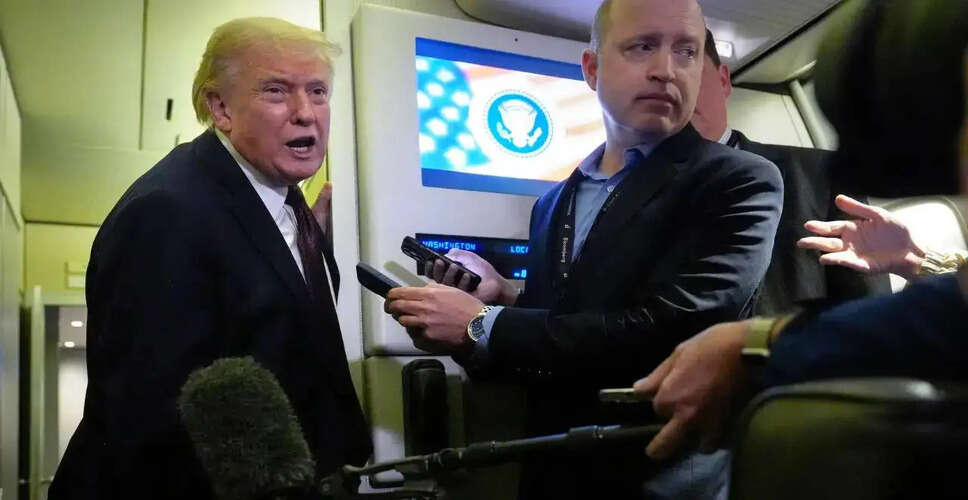
In a recent statement, former US President Donald Trump has charged Iran with disseminating disinformation generated by artificial intelligence during the current conflict. He claims that Tehran is leveraging digital propaganda to manipulate the narrative surrounding the war. In a detailed post on Truth Social, Trump labeled Iran as a "master of media manipulation and public relations," asserting that the nation is exaggerating its military achievements through fabricated content.
These comments arise as tensions between the United States and Iran escalate throughout the Middle East, impacting shipping routes near the Strait of Hormuz. Trump accused Iran of spreading misleading images and videos online to create a false impression of military strength.
🚨 BREAKING: President Trump blasted the fake news media for amplifying propaganda from Iran that relies on AI-generated videos falsely claiming to show Iranian forces “decimating” U.S. troops. pic.twitter.com/p8pRzcyqj1
— Breaking911 (@Breaking911) March 15, 2026
Trump emphasized that Iran has a long-standing reputation for media manipulation, claiming that while the Iranian military is "ineffective and weak," it has successfully propagated false narratives through media channels. He noted that artificial intelligence tools are now being employed to create deceptive visual content related to the conflict, stating, "Now, A.I. has become another disinformation weapon that Iran uses," and highlighted the generation of misleading images depicting attacks on various targets.
Allegations of AI-Driven Propaganda
Claims Of AI-Generated War Propaganda
Trump specifically pointed to online visuals that allegedly show Iranian assaults on vessels in regional waters. He mentioned that some images circulating on social media depict fictitious "kamikaze boats" attacking ships at sea. "They showed phony ‘Kamikaze Boats,’ shooting at various ships at sea, which looks wonderful, powerful and vicious, but these boats don’t exist," he stated, asserting that these visuals were crafted to mislead viewers into believing that Iran's military was effectively targeting maritime assets.
Furthermore, Trump contested reports claiming that several US military refueling aircraft had sustained damage during the conflict. He clarified that the five American refueling planes purportedly struck were operational, except for one. He also dismissed claims that the USS Abraham Lincoln, a US aircraft carrier in the region, had been attacked, asserting that the ship remained fully operational despite circulating images suggesting otherwise.
Critique of Media and Regulatory Comments
Media Criticism And Regulatory Remarks
Trump criticized media outlets that reported what he deemed false claims. In his Truth Social post, he accused some organizations of propagating unverified information linked to Iranian propaganda. He warned that inaccurate reporting could erode public trust in media institutions and suggested that broadcasters disseminating what he called fabricated stories should face repercussions for spreading misinformation.
He commended Brendan Carr, the chairman of the US Federal Communications Commission (FCC), for reviewing the broadcast licenses of certain media organizations. Trump argued that companies utilizing public airwaves must ensure the accuracy of the information they provide. These remarks come amid escalating information warfare related to the Iran conflict, where both official statements and online content significantly influence public perception. As military actions persist across the Middle East and maritime tensions remain elevated near the Strait of Hormuz, the conflict is increasingly being waged not only on the ground but also across digital and media platforms, where competing narratives are rapidly disseminated worldwide.