
Transforming the Indian Army: Insights from General Upendra Dwivedi

Modernization of the Indian Army
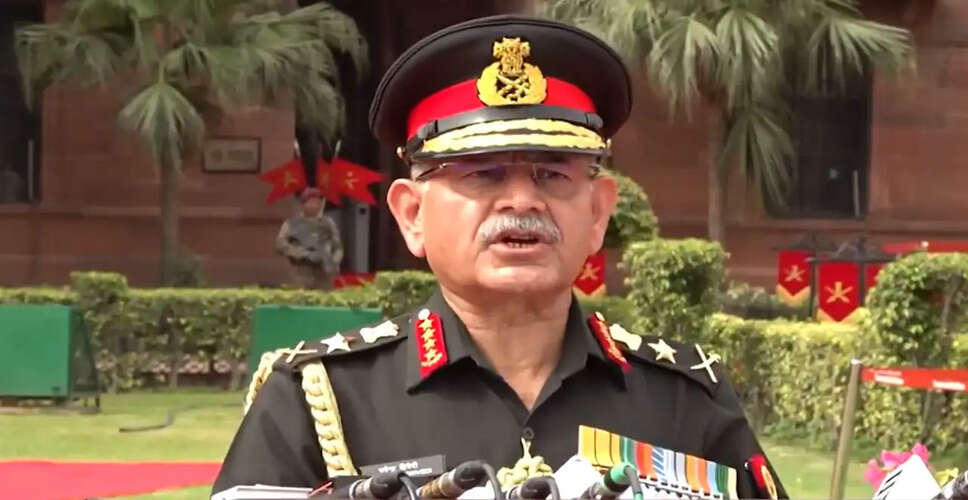
In a recent exclusive interview, General Upendra Dwivedi, the outgoing Chief of Army Staff (COAS), discussed the Indian Army's ongoing transformation to address the challenges of contemporary warfare. He emphasized that modernization extends beyond merely acquiring new weaponry; it involves restructuring forces, integrating cutting-edge technologies, and enhancing operational readiness for future conflicts.
General Dwivedi noted, "The nature of warfare is evolving swiftly, and the Indian Army is adjusting accordingly. Modernization encompasses a broader spectrum, including organizational structures, training, technology, doctrines, systems, and human resource management." He highlighted that future military operations will necessitate quicker decision-making and tighter integration of intelligence, surveillance, weaponry, communication networks, and command structures. Consequently, the Army is transitioning towards more agile, interconnected, and technology-driven formations. New initiatives such as Rudra Brigades, Bhairav Battalions, Ashni Drone Platoons, Shaktibaan Regiments, and Divyastra Batteries are integral to this transformation, aimed at enhancing speed, precision, battlefield awareness, and responsiveness.
Operation Sindoor: A Test of Capabilities
How Operation Sindoor demonstrated India's capabilities
General Dwivedi also reflected on Operation Sindoor, which showcased the Indian Army's capacity to tackle emerging security threats. He characterized the operation as a testament to India's military strength, underscoring the critical roles of technology, intelligence, and coordinated planning in future engagements. He stated, "Operation Sindoor illustrated India’s determination, capability, and restraint. It was a measured military response to terrorism, executed with precision, clear intent, and disciplined planning. For the Indian Army, this operation highlighted the significance of credible intelligence, collaborative planning, secure communications, precision capabilities, and effective information management. It demonstrated that military action today is not solely about force but also about speed, coordination, clarity, and control."
General Dwivedi further noted that the operation provided vital lessons for the future, indicating that conflicts may be brief, intense, technology-driven, and subject to constant information scrutiny. In such scenarios, success will hinge on reliable information, robust networks, integrated command systems, and the ability to act with precision. On Tuesday, General Dhiraj Seth officially assumed the role of the Army's 31st Chief of the Army Staff (COAS), succeeding General Upendra Dwivedi.