
Tragic Collision at LaGuardia Airport Raises Safety Concerns
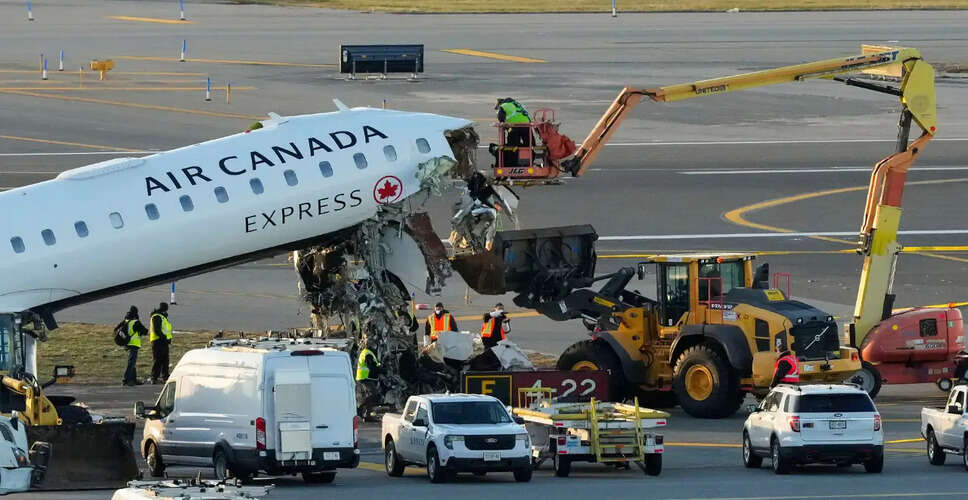
Fatal Incident Involving Air Canada Express and Fire Truck
A catastrophic accident at LaGuardia Airport in New York, involving an Air Canada Express jet and a fire truck, has sparked significant safety alarms. Investigators have disclosed that the emergency vehicle was missing a crucial tracking device, and there were no cockpit recordings capturing the moments leading up to the collision. Tragically, the pilots of the Air Canada aircraft, Antoine Forest and Mackenzie Gunter, lost their lives, while numerous passengers and two firefighters sustained injuries.
The incident took place shortly after 11:30 PM on March 22, when the CRJ-900 aircraft, which was carrying 72 passengers and four crew members, collided with a Port Authority fire truck on Runway 4.
Absence of Transponder and Confusion Before Impact
The National Transportation Safety Board (NTSB) reported that the fire truck lacked a transponder, a device essential for air traffic controllers to monitor ground movements. NTSB Chair Jennifer Homendy stated that the absence of this system meant that no alerts were generated, complicating the tracking of vehicles in close proximity. “Should they have transponders? Yeah, they should,” Homendy emphasized.
The fire truck was responding to an aircraft that had reported an issue and aborted its takeoff. Moments before the landing aircraft approached, air traffic control had cleared the truck to cross the runway. Audio recordings captured the urgent attempts to halt the vehicle, with controllers repeatedly instructing, “Stop, stop, stop, truck one.”
Data from the Cockpit Voice Recorder illustrates how rapidly the situation deteriorated. Just seconds prior to the collision, the aircraft was descending normally, with automated altitude callouts — “100,” “50,” “30” — indicating a stable landing approach. Approximately 10 seconds before the crash, the tower again commanded the truck to stop, but the warning was issued too late.
Investigators also identified a blocked radio transmission and uncertainty regarding which controller was managing ground operations at that moment. “It is not clear who was conducting the duties of the ground controller,” Homendy remarked, highlighting the conflicting information available.
Flight data revealed that the aircraft was traveling at approximately 105 mph when it collided with the truck. Following the incident, the airport was temporarily closed but later resumed limited operations. The NTSB continues to investigate the precise cause of the crash.