
The Shadowy Influence of Asif Ali Zardari in Pakistani Politics
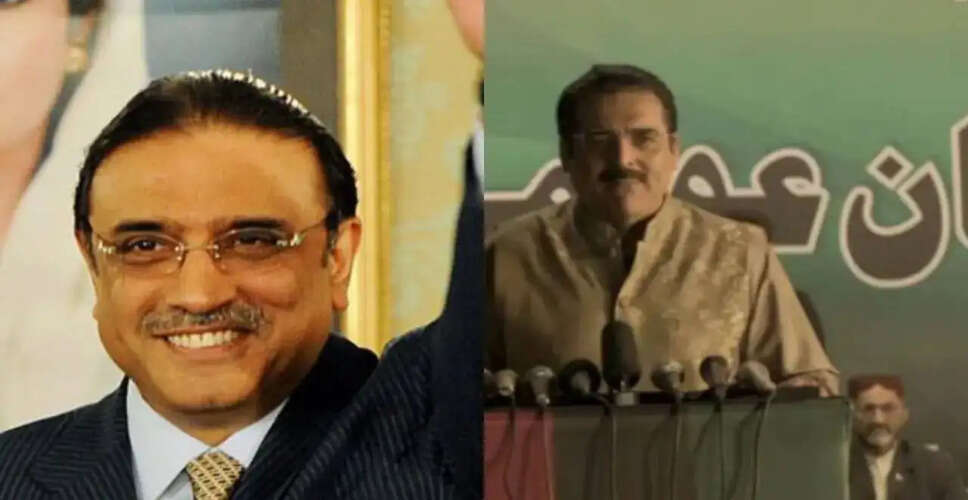
The Enigmatic Asif Ali Zarwari
In the political drama 'Dhurandhar', Asif Ali Zarwari emerges as a pivotal figure, often referred to as the shadow king of Pakistan’s political landscape. Portrayed by Sanjay Mehandiratta, Zarwari's understated demeanor belies his significant influence, which resonates throughout the narrative. His introduction of Rehman Daikat to Lyari with the memorable phrase, “As-salaam alaikum, Lyari,” exemplifies his commanding presence. Despite his quiet nature, he is a master of manipulation, embodying a blend of authority and subtlety. The nickname “10 Per cent Zarwari” encapsulates his reputation, suggesting a politician deeply entrenched in influence and clandestine dealings. This character draws inspiration from the real-life Asif Ali Zardari, the husband of Benazir Bhutto, whose life story resembles a political thriller.
Asif Ali Zardari: A Journey from Lyari to the Presidency
Zardari's ascent to power was anything but conventional. His marriage to Benazir Bhutto placed him at the center of Pakistan's most prominent political family, transforming him into a controversial figure. Throughout the 1980s and 1990s, he became known for his polarizing presence, often accused of manipulating contracts and engaging in political maneuvering. Following Bhutto’s assassination in 2007, Zardari stepped into the limelight as co-chairman of the Pakistan Peoples Party (PPP), guiding the party through turbulent times. By 2008, he had taken on the presidency, leading a civilian government amid military influence and economic challenges.
The Origins of the '10 Per Cent' Moniker
The notorious nickname “10 per cent” did not originate with the film but traces back to the late 1980s and 1990s, during Bhutto's leadership. Political adversaries accused Zardari of demanding a share of government contracts and loans. Allegations spanned various sectors, including pre-shipment inspection contracts and gold imports. The SGS-Cotecna scandal, where foreign firms were implicated in paying bribes for contracts, further solidified this reputation. By the time Zardari became president in 2008, the media had widely adopted the moniker, with outlets like France 24 dubbing him ‘Mr. 10%’ as he assumed office.
Legal Challenges and Political Resilience
However, the narrative surrounding “10 per cent” is more complex than it appears. Numerous legal challenges against Zardari were dismissed or resulted in acquittals, with the Supreme Court of Pakistan overturning significant convictions due to perceived political bias. Even international legal proceedings faltered due to various complications. Zardari and the PPP have consistently argued that the charges were politically motivated attempts to undermine him and the Bhutto legacy. This leaves the “10 per cent” label in a peculiar position: widely recognized yet never definitively proven, it remains a potent mix of fact, perception, and political strategy.
Dhurandhar's Cinematic Interpretation
Political thrillers often amplify reality, and 'Dhurandhar' excels in this regard. By branding Zarwari as “10 per cent,” the film effectively conveys themes of power and the intricate art of political maneuvering. Viewers quickly grasp that Zarwari is not an inexperienced politician; he is strategic, feared, and notorious, with the nickname serving as a powerful narrative device.