
The Failed Rescue Mission: Operation Eagle Claw and Its Lasting Impact
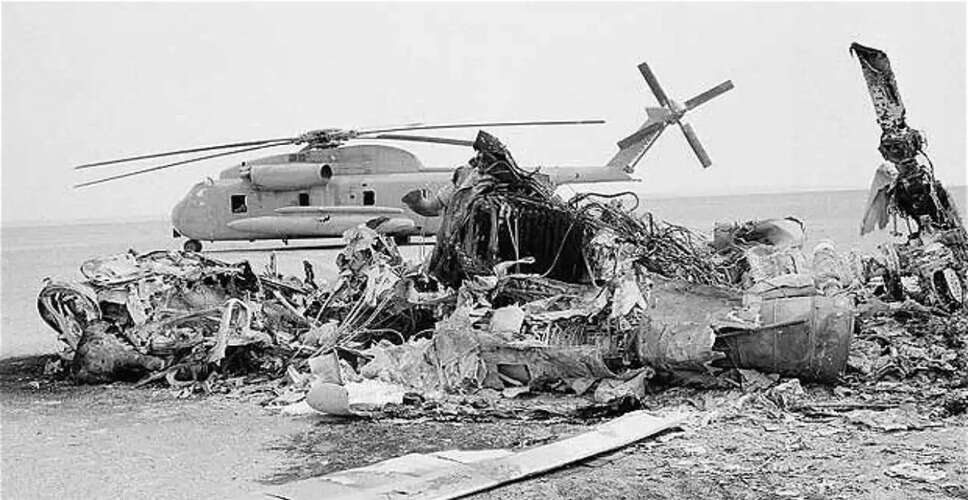

Overview of Operation Eagle Claw
On April 24, 1980, the United States initiated Operation Eagle Claw, a daring military operation aimed at rescuing 53 American diplomats and embassy personnel who were taken hostage in Tehran. This mission ended in failure, marking one of the most significant embarrassments in modern US military history and a reminder of American vulnerability that Iran continues to reference.
Context: The Iran Hostage Crisis
The operation unfolded during the Iran Hostage Crisis, which commenced on November 4, 1979, when Iranian militants seized the US Embassy in Tehran, initially taking 66 Americans hostage (later reduced to 53). This crisis was triggered by the US allowing the ousted Shah of Iran to enter the country for medical treatment, inciting anger from the revolutionary government led by Ayatollah Ruhollah Khomeini.
After months of failed diplomatic efforts and growing public frustration in the US, President Jimmy Carter greenlit a military rescue plan that involved various branches of the armed forces, including Delta Force commandos, Navy helicopters, and Air Force transport planes.
Mission Details
The intricate two-night operation was structured as follows:
- Eight Navy RH-53D Sea Stallion helicopters were to launch from the USS Nimitz in the Arabian Sea.
- They would travel approximately 600 miles to a remote desert location in eastern Iran, designated as Desert One, situated about 200 miles southeast of Tehran.
- At this site, the helicopters would meet six Air Force C-130 transport planes carrying Delta Force troops and fuel.
- After refueling, the helicopters would transport the commandos closer to Tehran, where they would remain hidden during the day before executing a nighttime assault on the US Embassy to liberate the hostages.
- The hostages and rescuers would then be evacuated by air.
This plan demanded flawless coordination among the military branches and ideal weather conditions, which ultimately proved unattainable on the night of the operation.
Challenges Faced
The mission quickly fell apart due to mechanical failures and adverse weather conditions:
- The helicopters encountered a haboob, a severe dust storm typical of the Iranian desert, which drastically impaired visibility and caused mechanical issues.
- Out of the eight helicopters that departed, only five reached Desert One in working order. One had to turn back due to hydraulic failure, another due to a cracked rotor blade, while others faced delays or damage from the sandstorm.
- Military planners had stipulated a minimum of six operational helicopters for the mission to proceed. With only five available, the on-site commander recommended aborting the mission, a decision that President Carter approved.
Tragedy struck during the withdrawal phase when one RH-53D helicopter collided with a fuel-laden EC-130 transport aircraft on the ground, resulting in a catastrophic explosion that killed eight US servicemen — five from the Air Force and three Marines. The remaining troops were swiftly evacuated by the other C-130s, leaving behind several helicopters, equipment, weapons, and maps. No hostages were rescued.
Consequences and Legacy
The failure of the operation was broadcast globally after Iranian forces showcased the wreckage at Desert One, significantly damaging US prestige and contributing to Jimmy Carter's loss in the 1980 presidential election. An investigation known as the Holloway Report revealed serious issues in inter-service coordination, planning, and equipment readiness.
This disaster prompted substantial reforms within the US military, including:
- The establishment of the United States Special Operations Command (USSOCOM).
- A heightened focus on joint operations among the Army, Navy, Air Force, and Marines.
- Enhancements in special forces training and capabilities, which influenced later successful missions, such as the operation that eliminated Osama bin Laden.
Iran's Reminder in 2026
On the 46th anniversary of the failed mission (April 25, 2026), Iran's judiciary chief, Gholam-Hossein Mohseni-Eje'i, issued a warning on social media to the United States against attempting a naval blockade in the Persian Gulf amid rising tensions over the Strait of Hormuz. He cautioned that any such attempt would lead to repeats of “Isfahan and Tabas,” referencing the 1980 failure at Tabas and a recent claimed Iranian victory over US-linked forces in Isfahan during the 2026 conflict.
He characterized the Tabas incident as a “humiliating defeat” for the US military, suggesting that similar events could occur in the Persian Gulf if tensions escalate. These remarks come as both nations accuse each other of aggressive maritime actions, including vessel interceptions and seizures in this crucial waterway that facilitates a significant portion of global oil shipments. Operation Eagle Claw remains a painful chapter in US military history and a source of national pride for Iran, often cited as evidence of American overreach and Iranian resilience. The lessons learned from the 1980 mission continue to influence special operations doctrine today, even as historical memories exacerbate ongoing geopolitical tensions in the region.