
The Enduring Legacy of Wilkie Collins' The Woman in White in Indian Cinema
The Impact of The Woman in White
Wilkie Collins's 1860 novel, The Woman in White, has left a lasting mark on popular culture, particularly through its iconic imagery of a distressed woman in white by the roadside.
Indian Adaptations of a Classic Tale
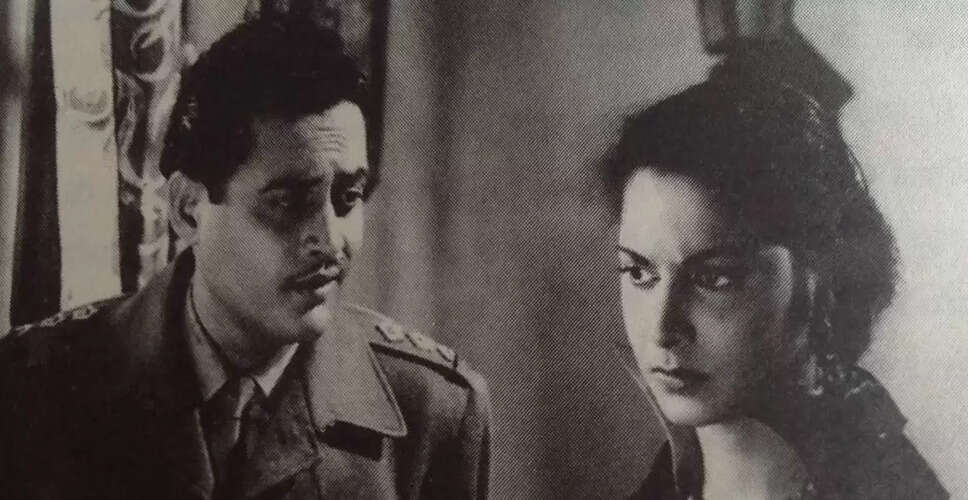
The novel has inspired numerous adaptations, including in India, where the story of two look-alike stepsisters, a lucrative marriage arrangement, and deceitful relatives has captivated audiences. Between 1958 and 1959, while Guru Dutt was working on Kaagaz Ke Phool, the first Indian film shot in CinemaScope, he also initiated a project for his assistant, Niranjan, to direct a thriller titled Raaz. This film was intended to showcase RD Burman as an independent music director and feature Waheeda Rehman in a dual role as the sisters, alongside Sunil Dutt as an Army doctor and Kum Kum as the third sister, with S Nazir cast as the villainous uncle.
Challenges in Production
The production of Raaz faced numerous challenges. Guru Dutt eventually took over the lead role himself, and some scenes were filmed in Shimla with the new cast. Burman recorded songs featuring Geeta Dutt, Shamshad Begum, and Asha Bhosle, which were to be performed by three nautch girls. However, Guru Dutt was dissatisfied with the film's direction and ultimately decided to cancel the project.
The Legacy of Raaz
As noted in Nasreen Munni Kabir’s influential book, Guru Dutt: A Life In Cinema, Raaz drew inspiration from The Woman in White. The narrative centers on the identity switch between stepsisters Anne Catherick, the enigmatic woman confined to a mental asylum, and heiress Laura Fairlie, who is targeted for her inheritance. The story has been adapted into various formats, including radio, film, and television, and even transformed into a stage musical by Andrew Lloyd Webber in 2004. A notable adaptation is the 1948 film directed by Peter Godfrey, featuring Eleanor Parker in the dual roles.
The Evolution of the Story
Despite Guru Dutt's abandonment of Raaz, the story was revived by his former assistant Raj Khosla, who adapted it into the suspenseful drama Woh Kaun Thi? in 1964. This film starred Sadhana as the twin sisters, one virtuous and the other malevolent, with the villain (Prem Chopra) manipulating their identities to drive the hero (Manoj Kumar) insane and seize his inheritance. Woh Kaun Thi? marked the beginning of a trilogy of mystery films featuring Sadhana, followed by Mera Saaya (1966) and Anita (1967).
Musical Excellence
The film Woh Kaun Thi? is celebrated not only for its engaging plot but also for Sadhana's compelling performance and KH Kapadia’s atmospheric cinematography. Its musical score, crafted by Madan Mohan, is particularly noteworthy, with standout tracks like Naina Barse and the romantic Lag Ja Gale, showcasing Lata Mangeshkar's exceptional talent.
Later Adaptations and Influence
After experiencing a downturn in his filmmaking career post-Dostana (1980), Khosla returned to the mystery genre with Naqab (1989), featuring Rishi Kapoor and Farah. This film, which incorporated thriller elements, was a closer adaptation of The Woman in White than Woh Kaun Thi?, but it also failed to achieve success, marking a low point in Khosla's career.
Regional Remakes
The success of Woh Kaun Thi? led to remakes in Tamil and Telugu, both starring the rising star J Jayalalithaa. The Tamil version, Yaar Nee? (1966), featured Jaishankar as the confused hero, while the Telugu adaptation, Aame Evaru? (1966), starred Kongara Jaggaiah. Both films closely mirrored the Hindi original, with music composer Vedha reusing many of Madan Mohan’s compositions.
Cross-Border Adaptations
The Woman in White also found its way into Pakistani cinema with Humraz (1967), featuring Shamim Ara in a dual role. The film depicted one sister as a modern woman with a serious heart condition and the other as a traditional character. Directed by Khwaja Khurshid Anwar, who also produced and composed the music, Humraz is a loose adaptation of Collins's narrative, albeit with a less coherent plot and production quality compared to Anwar's earlier works.
Timeless Appeal
Despite being published in 1860, adaptations of The Woman in White have consistently been set in modern contexts, highlighting the story's universal themes and its enduring relevance. The novel was also adapted into a Marathi television series, Swetambara, in the 1980s, which is fondly remembered for the performances of Raghuvir Nevrekar and the debut of actor Mohan Gokhale.