
The Aftermath of Khamenei's Death: Implications for Iran's WMD Policies
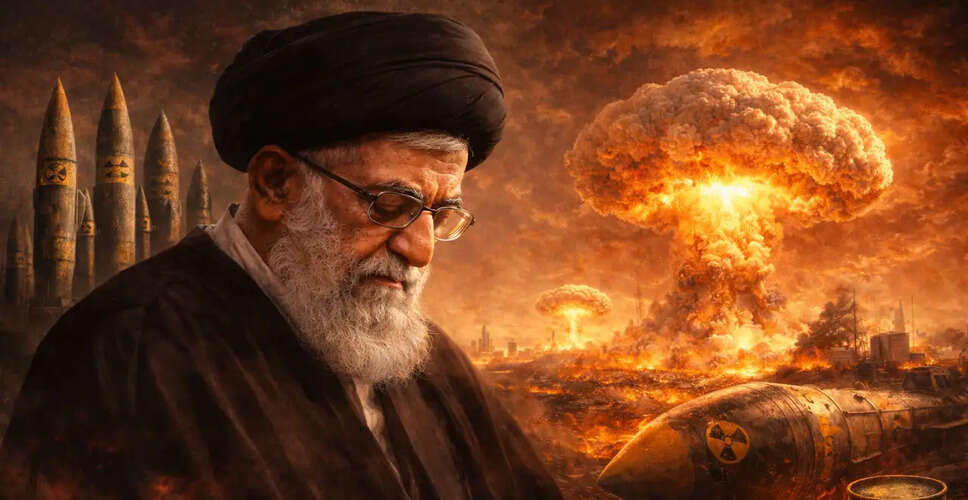
Khamenei's Demise and Its Consequences
On February 28, 2026, Iran's Supreme Leader Ayatollah Ali Khamenei was killed in a coordinated airstrike by US and Israeli forces targeting his residence in Tehran. Iranian state media confirmed his death on March 1, initiating a period of 40 days of national mourning. US President Donald Trump stated that these strikes were part of a larger strategy aimed at neutralizing threats posed by Iran's nuclear and missile capabilities, with further bombings planned as necessary.
Khamenei, who had been in power since 1989, had issued a religious fatwa in the mid-1990s, reaffirmed in 2003, which prohibited the production and use of nuclear weapons under Islamic law. This fatwa was a crucial justification for Iran's claims that its nuclear program was peaceful, despite ongoing uranium enrichment that raised international concerns.
However, this fatwa was a personal ruling and not an immutable principle of Shia Islam, meaning it could be reinterpreted or revoked by future leaders, especially during crises. Historical precedents exist, such as shifts during Ayatollah Khomeini's leadership. In recent years, commanders from the IRGC had urged Khamenei to reconsider the fatwa amid increasing threats. With Khamenei's death during active military operations, the fatwa's authority has effectively diminished, as there is no current leader to enforce it, potentially allowing hardline factions to advocate for its repeal.
The succession process remains uncertain, with power struggles likely favoring IRGC hardliners who view nuclear capability as vital for the regime's survival, drawing comparisons to North Korea's deterrent strategy.
Assessing Iran's WMD Capabilities
While Iran denies having weapons of mass destruction, various intelligence assessments suggest that the country possesses significant capabilities or is close to achieving them in nuclear, chemical, and related areas.
Nuclear Developments
Although Iran does not have confirmed operational nuclear weapons, its stockpile of enriched uranium has long been a source of concern. Prior to the June 2025 strikes that damaged critical facilities like Natanz and Fordow, the IAEA reported that Iran held uranium enriched to 60% purity—sufficient for multiple weapons if further enriched to 90%. A February 2026 IAEA report indicated approximately 440 kg of 60% enriched uranium stored underground at Isfahan, which was unaccounted for after the strikes. Experts believe Iran could quickly produce weapons-grade material in covert facilities, although full weaponization would take longer. Recent military actions have targeted efforts to rebuild these capabilities, but the loss of IAEA oversight raises the risk of a breakout.
Chemical Weapons Concerns
Despite being a signatory to the 1997 Chemical Weapons Convention, multiple sources allege that Iran maintains a secret chemical weapons program. A report from February 2025 detailed the evolution of Iran's chemical agents from the Iran-Iraq War to modern pharmaceutical-based agents, including weaponized fentanyl derivatives. Israel claimed that strikes in June 2025 destroyed the Shahid Meisami Research Complex, associated with this program. Allegations have also surfaced regarding the use of chemical agents against protesters during the December 2025–January 2026 uprisings, with symptoms inconsistent with standard tear gas. The US, Israel, and OPCW have called for investigations into these claims and Iran's alleged transfers of chemical materials to proxies in Syria and elsewhere.
Biological Weapons
Evidence regarding biological weapons is less substantial, with no confirmed active stockpiles. However, the presence of dual-use facilities and a lack of transparency in research raise suspicions about potential capabilities, although public focus remains primarily on nuclear and chemical threats.
Potential for WMD Use
The death of Khamenei removes a significant ideological barrier against pursuing or utilizing weapons of mass destruction. Although Iran's missile capabilities have been diminished due to recent strikes, they still possess regional delivery options targeting Israel and US bases. Proxies like Hezbollah could further complicate any escalation.
Following Khamenei's death, the IRGC issued a stern warning of an impending offensive operation against what they termed the 'occupied territories' (Israel) and American bases in the region. Reports indicate that the IRGC threatened the 'most devastating offensive operation in the history of the Islamic Republic of Iran’s armed forces.' While both Iranian and Israeli media have reported on this escalating rhetoric, there has been no independent confirmation of a large-scale offensive being launched immediately beyond ongoing retaliatory actions.
Despite the regime's focus on survival, deploying WMDs could provoke overwhelming retaliation. However, the chaos resulting from a leadership vacuum, domestic unrest, and economic challenges may drive desperate measures. Hardliners might view nuclear or chemical options as necessary deterrents against further regime-change efforts. The recent strikes aimed to mitigate threats but could inadvertently accelerate radicalization. Without diplomatic engagement or restored monitoring, the likelihood of WMD use increases in this precarious situation, leaving the region and the world facing heightened uncertainty as Iran's future leadership determines its path.