
Tensions Rise in the Strait of Hormuz: Ship Seizures and Attacks Amid Diplomatic Struggles

Incident in the UAE Waters
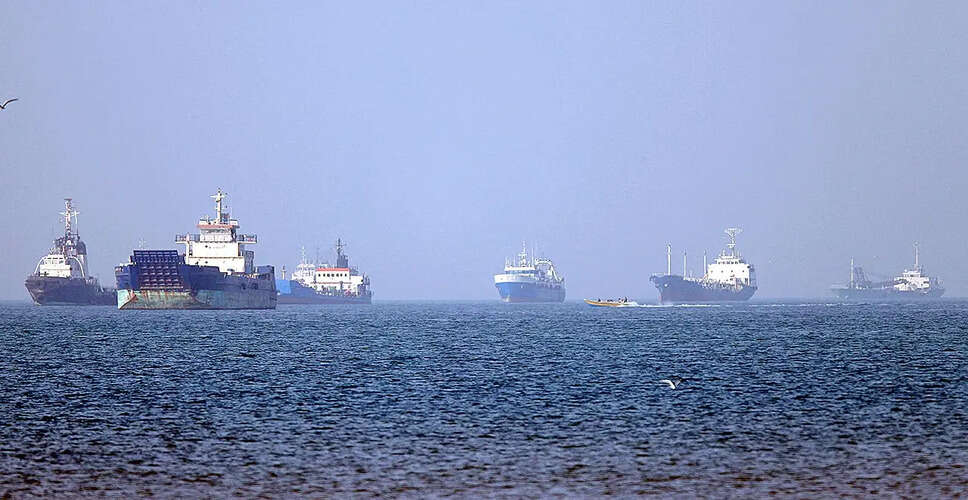
A vessel anchored off the eastern coast of the UAE has been captured and is reportedly moving towards Iranian waters, according to the British military's announcement on Thursday.
The United Kingdom Maritime Trade Operations (UKMTO) reported that the ship was taken by unauthorized individuals while it was stationed 38 nautical miles (70 kilometers) northeast of Fujairah, close to the Strait of Hormuz.
In a related incident, Indian officials disclosed that an Indian-flagged cargo ship sank off the coast of Oman following an attack that ignited a fire on board while it was traveling from Somalia to Sharjah on Wednesday, although the assailants remain unidentified.
Ongoing Tensions in the Strait of Hormuz
The Strait of Hormuz, a vital maritime route through which a significant portion of the world's oil is transported daily, continues to draw global attention as Iran's actions have disrupted the world economy and led to rising fuel prices affecting various sectors beyond the Middle East.
UKMTO has not disclosed the name of the seized ship and is currently investigating the matter. There have been no immediate claims of responsibility for the incident.
Fujairah serves as a crucial oil export terminal and is the UAE's primary port outside the Persian Gulf, having faced multiple attacks during the ongoing conflict with Iran.
Indian Cargo Ship Incident
The attack on the Indian-flagged cargo ship, named Haji Ali, occurred on Wednesday, as confirmed by Mukesh Mangal, a senior official from India's shipping ministry. He reported that all 14 Indian crew members were rescued by the Omani coast guard and are safe.
India's foreign ministry condemned the incident as 'unacceptable' and denounced the ongoing assaults on commercial vessels and civilian sailors, without specifying the attackers.
Diplomatic Context of the Seizures
The seizure of the ship coincides with a significant diplomatic moment as US President Donald Trump met with Chinese leader Xi Jinping during a highly anticipated visit to Beijing, where discussions were expected to address the conflict with Iran.
Reports from Iranian semi-official news agencies indicated that Chinese vessels began navigating through the Strait of Hormuz on Wednesday night under newly established Iranian protocols, following requests from China's foreign minister and ambassador to Iran.
This maritime activity commenced as Trump arrived in China on Wednesday evening.
Israeli Prime Minister's Controversial Visit
The ship seizures occurred shortly after Israeli Prime Minister Benjamin Netanyahu revealed he had made a discreet visit to the UAE amid the Israeli-US conflict with Iran, although the UAE quickly denied any such secret meeting.
The Gulf nation normalized relations with Israel in 2020, a move that Iran has criticized, suggesting that Israel maintains a military and intelligence presence in the UAE.
Israeli officials have made occasional visits to the UAE since the normalization of relations.
Iran's Justification for Ship Seizures
Iran's judiciary spokesperson stated that the country possesses the legal right to seize oil tankers linked to the US in the Strait of Hormuz, citing violations of international maritime laws and acts of piracy by the US.
The spokesperson, Asghar Jahangir, did not specifically mention the tanker that was seized on Thursday.
Iran had previously captured several ships, including a tanker known as the Ocean Koi, last week, claiming it was attempting to disrupt oil exports and protect Iranian interests.
Hezbollah Drone Attack in Israel
In a separate incident, a drone operated by Hezbollah exploded within Israeli territory, injuring three civilians, two of whom sustained severe injuries, as reported by the Israeli military and local hospitals.
This marked the first instance of civilian injuries from Hezbollah attacks since a US-brokered ceasefire on April 17.
Hezbollah has frequently deployed drones against Israeli forces in southern Lebanon and across the border into northern Israel, prompting retaliatory strikes from the Israeli air force.
Continued Violence and Casualties
Lebanon and Israel are set to engage in another round of direct negotiations in Washington on Thursday, as the Trump administration seeks to facilitate a breakthrough between the two nations, which have been in a state of conflict since Israel's establishment in 1948.
The United Nations has also accused Hezbollah of conducting drone strikes near its peacekeeping forces stationed in southern Lebanon, with Secretary-General Antonio Guterres urging both parties to adhere to the ceasefire and cease all hostilities.
According to Lebanon's Health Ministry, since the onset of the war on March 2, at least 2,896 individuals have lost their lives, and 8,824 have been injured, including 18 Israeli soldiers and a defense contractor killed in southern Lebanon.